
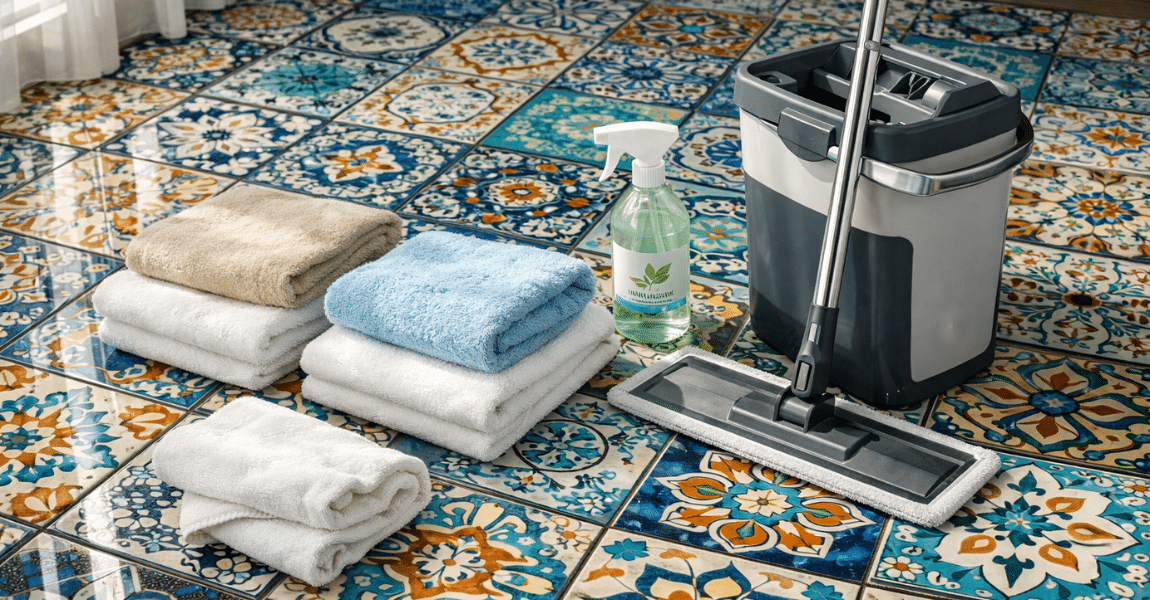
To clean and maintain tile floors, you should use a pH-neutral cleaner for ceramic and porcelain, or a stone-safe formula for natural stone. Sweep or vacuum first to remove grit, then mop with a lightly damp microfiber mop and dry the floor right away. Wipe spills quickly so they don’t stain, and avoid vinegar, bleach, and abrasive scrubbers. For tougher grime and grout care, a few simple habits can make all the difference.
Quick Overview
- Match your cleaner to the tile type; use pH-neutral solutions for ceramic and porcelain, and stone-safe cleaners for natural stone.
- Sweep or vacuum first with a soft broom or brush attachment to remove grit and prevent scratches.
- Mop with a lightly damp microfiber mop using warm water and mild detergent, then dry the floor immediately.
- Clean spills quickly by blotting with a damp cloth; use baking soda or cornstarch for greasy spots.
- Maintain grout by using gentle cleaners, sealing it yearly, and deep-cleaning with tile-safe products and soft scrubbing.
Choose the Right Tile Cleaner
Choosing the right tile cleaner starts with matching the product to your tile type and finish. For ceramic and porcelain, use a pH-neutral or mild soap-based option; it’s the best tile cleaner for routine tile floor maintenance.
On natural stone, choose a stone-safe formula that won’t etch marble, travertine, or slate. If you have nonslip or textured tiles, pick a residue-free, deep-clean solution that lifts grime without harming grip.
Skip vinegar, bleach, and abrasive scrubs. For grout cleaning tips, use a non-acidic cleaner that tackles stains, grease, and microbes while protecting shine. Ardex Endura Non-Acidic Cleaner is recommended for hygienic cleaning.
Sweep or Vacuum Tile Floors First
Before you mop, you should sweep or vacuum to remove loose debris like dust, dirt, and hair from the tile. Vacuuming first helps prevent gritty particles from scratching the surface or getting pushed into grout.
Use a soft attachment on your vacuum so you don’t scratch the surface or disturb the grout.
This quick step keeps dirt from spreading and helps you start with a cleaner floor.
Remove Loose Debris
Start by removing loose debris so you don’t grind dirt into the tile or grout.
To clean tile floors well, use tile floor care habits that match your surface: sweep ceramic, porcelain, or natural stone with a soft broom, or vacuum with a brush attachment on other tiles. Regular cleaning prevents buildup and helps keep tile from looking dull.
Add waterproof membrane in moisture-prone areas (as needed) so you can clean confidently without worrying about moisture getting into the subfloor through grout.
Focus on debris types like dust, crumbs, grit, sand, pet hair, and tracked-in soil. This first step keeps grit from scratching and stops dirt from settling in grout.
- Less scratching, more shine
- Less stress after spills
- More confidence before mopping
Use Soft Attachments
A soft touch matters here: sweep your tile with a soft broom or vacuum it with a brush attachment so you lift dust, grit, and pet hair without scratching the surface.
For deeper cleanup, choose a soft-brush vacuum like the Dyson V15 Detect or a compact canister that glides across bare tile. Its fluffy brushroll and gentle roller action help you reach grout lines, while washable parts keep maintenance easy.
After this pass, your tile grout sealer can work better, and tile floor stain removal starts from a cleaner base. Soft attachments make routine care faster, easier, and more effective.
The Dyson V15 Detect is especially effective on bare floors and crevices.
Prevent Surface Scratches
Soft attachments help, and the next step is to clear away the grit they uncover so it doesn’t scratch your tile.
Sweep with a soft-bristle broom or vacuum with a tile-safe attachment before you mop. You’ll lift sand, small rocks, and dust before shoes grind them across the floor or the mop drags them into a scratch.
Keep a small vacuum handy for quick cleanups in busy rooms, and use non-skid mats at entrances to cut down tracked-in debris. Porcelain tile is especially durable, so it can better withstand everyday wear.
- Protects your tile’s shine
- Reduces wear in high-traffic areas
- Helps you feel proud of a cleaner home
Mop Tile Floors Safely
Once you’ve swept or vacuumed away loose dirt and grit, mop with a lightly damp microfiber, cloth, or flat mop so you don’t scratch the tile or push debris into grout.
Move from the back of the room toward the exit, wringing out excess water as you go. Use warm water with a few drops of mild dish soap, or a neutral cleaner, and avoid soaking the floor.
Change the water when it looks dirty. For grout maintenance, use a baking soda and water cleaner on grout lines when needed.
Dry tiles right away with a clean, lint-free cloth to prevent streaks, spots, and water damage.
Because tile durability depends heavily on moisture effects, minimizing excess water during mopping helps reduce the risk of grout deterioration and cracking over time.
Spot-Clean Spills Before They Set
Act fast when spills hit your tile floors so they don’t have time to stain or soak in.
Blot the spot with a damp cloth instead of rubbing it, which can spread the mess and push dirt deeper.
If needed, finish with a mild, pH-neutral cleaner and rinse well to keep your tile looking clean.
A spray mop can help rinse away cleaner residue after scrubbing.
Act Fast On Spills
When a spill hits your tile, wipe it up within 30 seconds to a minute so it doesn’t seep into the grout or leave a stain behind. Porcelain and ceramic tiles are non-porous and stain-resistant.
Use a damp cloth for water or food spills, and tackle juice or coffee with mild detergent right away. For greasy messes, sprinkle baking soda or cornstarch to soak up oil fast.
- You’ll feel relief when the stain stays shallow.
- You’ll avoid that sinking dread of permanent discoloration.
- You’ll save yourself from a bigger, exhausting cleanup later.
Rinse with warm water, then dry the spot to keep your tile looking fresh.
Blot, Don’t Rub
Instead of rubbing a spill across the tile, blot it right away with a clean, dry cloth or paper towel and press firmly to lift the liquid before it sets.
Work from the outer edge toward the center, and keep replacing the cloth as soon as it dampens. You’ll absorb more with gentle pressure than with scrubbing, and you won’t push the spill into grout or spread it wider.
Use microfiber or other clean, absorbent towels, and avoid abrasive pads.
Keep blotting until the cloth stays dry, then treat any trace left with minimal cleaner if needed. For best results, focus on the outer edges first when cleaning a spill.
Use Gentle Cleaners
Reach for a gentle cleaner as soon as a spill happens, because the faster you wipe it up, the less likely it’s going to stain or leave sticky residue.
Choose a pH-neutral formula or mild dish soap mixed with warm water to protect tile, grout, and stone while lifting grease and dirt. For stubborn spots, use a ready-to-use cleaner like STONETECH or a no-rinse option that won’t leave marks. A pH-neutral cleaner is ideal for natural stone, tile, masonry, and grout.
- Feel relieved when spills don’t become stains
- Protect the shine you worked hard to keep
- Stay confident on cleaner, safer floors
Wipe kitchens quickly, especially around food and oil.
Deep Clean Tile Floors in Sections
Divide the floor into small four-foot sections so you can deep clean tile methodically and avoid missing spots.
Before you begin, check for hazards, vacuum with a HEPA-filtered unit, and test your cleaner on a hidden tile.
Gather a swing machine, deck brush, microfiber mop, and wet-dry vacuum.
Mix the solution with hot water, then flood one section at a time.
Scrub with your chosen pad, working from one area to the next.
Rinse with clean water, extract residue, and dry each section fully before moving on.
Inspect for missed spots and rework them as needed.
Clean Grout Without Damaging Tile
When grout is dirty but the tile itself is sound, use a gentle cleaner that lifts grime without eating away at the surface.
Mix 1 cup sugar with 1 gallon hot water, or make a paste with baking soda and hydrogen peroxide, then apply it only to the grout. Let it sit, scrub, and wipe away residue with a sponge.
Avoid bleach, ammonia, and vinegar alone, which can weaken grout and dull color.
- Feel relief as stains lift
- Protect your tile’s shine
- Prevent future disappointment
After cleaning, seal dry grout yearly to keep dirt and moisture out.
Use Steam on Tile Floors
You can use a steam mop on sealed ceramic, porcelain, and some stone tiles, but you should always test a hidden spot first and check the manufacturer’s instructions.
Use the lowest effective steam setting and let the mop heat up fully before you start, so you don’t leave excess moisture behind.
After steaming, wipe the floor dry to prevent streaks, water spots, and lingering dampness.
Steam Mop Safety
Steam mops can be safe on tile floors, but only if the surface can handle heat and moisture. You should use them on glazed ceramic or porcelain, not on unglazed tile, marble, or travertine.
Check for cracks first, and follow your flooring guide. Keep grout protected, since steam can weaken it over time. Clear the floor, sweep away grit, and dry it after cleaning.
- Relief: your sealed tile stays fresh without harsh chemicals.
- Frustration: unsealed grout can crumble fast.
- Confidence: a quick check now can save repairs later.
Best Steam Temperature
For most tile floors, medium steam is the safest choice: enough to loosen grime, but not so hot that it risks weakening grout or stressing the surface.
You should keep the setting in the comfortable range, similar to radiant floor heat around 80-85ºF, and never push toward sauna-level heat.
Ceramic tile can handle higher temperatures, but you don’t need extreme steam to clean effectively.
In bathrooms, surface temperatures can reach 90ºF, while radiant systems may max out at 104ºF.
If you’re cleaning natural stone, check the manufacturer first, since it can react poorly in humid heat.
Drying After Steaming
After cleaning with the right steam setting, focus on drying the tile fast so moisture doesn’t linger in grout or joints. You’ll usually see tiles dry in 5 to 20 minutes, and fans or open windows can speed that up.
Wipe with a dry microfiber cloth right away, then use a terry towel with the nozzle off to pull up leftover dampness. Don’t rinse; steam leaves no residue.
- Relief when the floor looks spotless
- Confidence that grout stays protected
- Satisfaction as the shine returns
Keep heavy traffic off grout until it’s fully dry, even if the surface feels ready.
Clean Ceramic and Porcelain Tile
Start by sweeping or vacuuming ceramic and porcelain tile with a soft-bristle broom or a vacuum without a beater bar to lift away loose dirt and grit.
Then mop with clean warm water using a microfiber cloth, sponge, or flat mop.
Sweep in two directions, first along the tile, then diagonally, and repeat that pattern when mopping for better debris removal.
For light soil, you don’t need soap.
Dry the floor with a microfiber cloth or dry mop to prevent water spots.
For deep cleaning, use a pH-neutral tile cleaner, scrub gently with a nylon brush, and rinse well.
Protect Natural Stone Tile
You should use stone-specific cleaners on natural tile, because acidic products can etch and stain it.
Wipe up spills fast and avoid vinegar, lemon, or harsh scrubs that can damage the surface.
After cleaning, dry the floor fully so moisture doesn’t seep into the stone.
Use Stone-Specific Cleaners
When natural stone tile needs cleaning, use a stone-specific cleaner with a pH-neutral formula to protect the surface from etching and dulling.
You’ll lift dirt, grease, and spills without harming marble, travertine, granite, or quartzite. Dilute it as directed, scrub lightly with a bristle brush, and rinse with clean water. For floors, use a rag mop; for counters, use a soft cloth.
- Feel confident your stone keeps its rich, natural glow.
- Enjoy streak-free results that don’t leave residue behind.
- Breathe easier with low-VOC formulas that support indoor air quality.
Avoid Acidic Solutions
Even with a stone-specific cleaner, it’s just as important to avoid acidic solutions on natural stone tile.
You should skip vinegar, lemon juice, muriatic acid, and other low-pH products, because acid reacts with calcium carbonate and dulls marble, travertine, limestone, and similar stones.
That reaction can leave rough etch marks, cloudy patches, and white stains that won’t wipe away.
Even coffee, wine, and orange juice can etch if they sit too long.
Use pH-neutral, stone-safe cleaners instead, and blot spills fast so you don’t spread the acid across the surface.
Dry Floors Fully
Drying natural stone tile fully is just as important as cleaning it carefully. You should buff each section with a soft cloth or towel right after mopping, then work in small areas so solution doesn’t sit on the stone.
- You’ll feel relieved when streaks vanish.
- You’ll protect the stone from water spots.
- You’ll avoid that sinking feeling of damage.
Let tiles air-dry in a low-humidity space with good circulation, or use a heat gun carefully if time’s tight.
Finish by ensuring sealant cures completely before use, so moisture can’t sneak back in.
Care for Glass and Unglazed Tile
For glass and unglazed tile, you’ll get the best results by cleaning gently but consistently. Use a pH-neutral cleaner for routine care, and rinse well so grease, oils, and spills don’t linger.
On unglazed surfaces, a mild detergent, degreaser, or glass cleaner can work, but always follow with thorough rinsing. Wipe spills right away with a soft cloth or microfiber mop to stop absorption.
Avoid acids, bleach, ammonia, vinegar, abrasive pads, and steel wool, since they can etch, stain, or scratch. After cleaning, dry the surface with a clean cloth to prevent spots and streaks.
Use the Best Tools for Tile Cleaning
The right tools can make tile cleaning faster, easier, and more effective. You can save effort and get better results when you match the tool to the mess and the surface.
- Feel relieved when an Oreck Orbiter scrubs tile and grout with random orbital motion.
- Feel confident using a Bissell SpinWave on sealed ceramic floors with cordless ease.
- Feel satisfied when a stiff brush or steam mop clears dried stains and grout grime.
For deep cleaning, use steam in small sections after vacuuming.
Add specialized attachments for corners, grout lines, and detailed spots.
Avoid Cleaners That Damage Tile
Some cleaners can do more harm than good, so it’s important to avoid products that damage tile or grout.
You shouldn’t use oil-based products, because they soak into grout, attract dirt, and leave slippery residue.
Skip abrasive powders and gritty scrubs; they scratch sealants and expose porous surfaces.
Avoid ammonia, bleach, and acidic cleaners, including vinegar, since they can discolor tile, weaken grout, and cause cracking.
Don’t rely on multi-surface formulas either, because they often leave residue that traps debris and stains.
Choose tile-safe cleaners instead, so you protect your floors and preserve their finish.
Build a Weekly Tile Care Routine
A simple weekly routine keeps tile looking fresh and helps you avoid bigger cleaning jobs later. Sweep or vacuum with a soft-bristle broom or bare-floor setting, then spot spills before they stain grout.
- Feel confident knowing dirt won’t settle in.
- Enjoy a brighter floor with less effort.
- Relax when quick cleanup becomes a habit.
Mist the floor with a pH-neutral cleaner, let it sit briefly, then mop with a damp microfiber pad and rinse as needed.
Dry the surface to prevent spots, and treat grout stains with a nylon brush or baking soda paste.
Keep High-Traffic Tile Floors Clean
When tile floors see constant foot traffic, you’ll need to stay ahead of dirt before it gets ground in and scratches the surface.
Sweep or dust mop busy zones daily, and vacuum loose grit before mopping twice a week. In wet weather, clean entrances every few hours, and use mats to trap soil and moisture.
Choose low-VOC, tile-safe cleaners, dilute them correctly, and scrub grout lines gently. Rinse well, avoid excess water, and use microfiber mops or soft-bristle scrubbers.
Inspect for stains, cracks, or buildup, then deep clean regularly to keep tiles looking sharp.
Frequently Asked Questions
How Do I Remove Sticky Residue From Tile Without Scratching It?
Use a plastic scrub pad with Goo Gone, vinegar-water, or rubbing alcohol. Let it sit 5–10 minutes, then gently scrape with a plastic putty knife. Wipe clean with soap and water.
Can I Clean Tile Floors With Just Warm Water and Soap?
Yes, you can clean tile floors with warm water and soap if they’re sealed ceramic or porcelain. You’ll still need to sweep first, mop gently, rinse with plain water, and dry them to prevent grime.
How Often Should I Replace Grout Cleaning Tools?
You should replace grout cleaning tools based on type: sponges every 1-2 weeks, brushes every 3-6 months, steel wool every few weeks, and mop heads every 2-3 months. Replace worn tools sooner.
What Is the Best Way to Dry Tile Floors After Mopping?
You should wipe the floor with a clean, dry microfiber mop or lint-free cloth right after mopping, then open windows for airflow; this’ll prevent streaks, mineral deposits, and dullness.
How Can I Prevent Tile Floors From Looking Dull Over Time?
You can prevent dullness by sweeping daily, mopping with pH-neutral cleaners, rinsing well, and sealing grout regularly. Use microfiber mops, avoid harsh chemicals and soap residue, and protect floors with furniture pads.
Conclusion
Keeping your tile floors clean doesn’t have to be complicated. When you choose the right cleaner, sweep or vacuum first, mop safely, and tackle spills quickly, you protect your floors and make daily upkeep easier. Deep cleaning in sections and using the best tools also helps tile stay bright longer. With a simple weekly routine and the right products, you can keep high-traffic areas looking fresh, clean, and well-maintained all year long.