
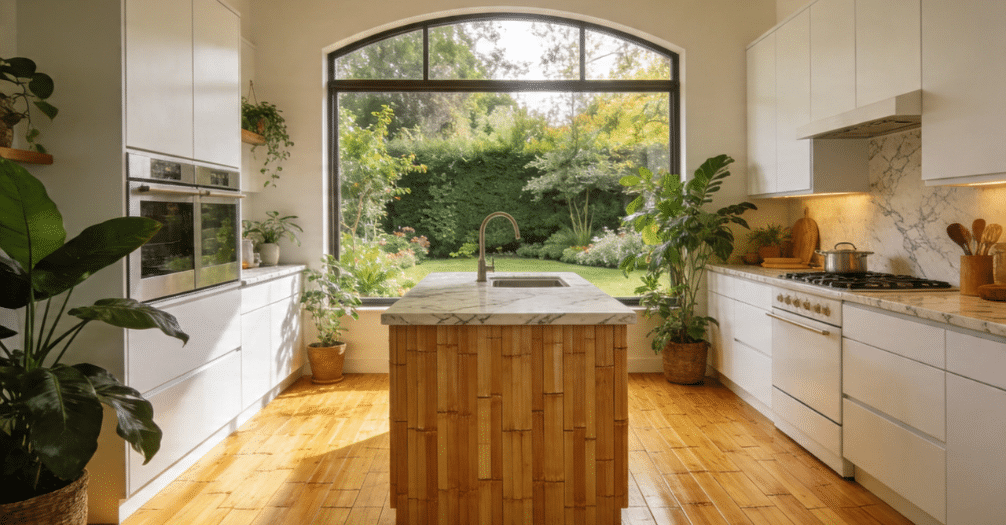
Yes, you can use bamboo flooring in kitchens, and strand-woven bamboo is usually the best choice because it’s the toughest and most scratch-resistant. You’ll get a stylish floor that handles daily wear well and offers better moisture resistance than many people expect, especially with proper sealing and quick spill cleanup. It also feels comfortable underfoot and helps reduce noise. If you keep going, you’ll see which type, finish, and care steps work best.
Quick Overview
- Strand-woven bamboo is the best kitchen choice because it is the hardest, most durable, and most scratch-resistant bamboo flooring type.
- Bamboo handles kitchen moisture well when sealed properly, especially engineered bamboo, but spills should be wiped up quickly.
- It offers a comfortable, quieter surface than tile or stone, making busy kitchens feel softer underfoot.
- Light bamboo tones brighten small kitchens, while darker shades add warmth; match color with cabinets and lighting.
- Install bamboo on a clean, dry, level subfloor, and maintain it with sweeping, damp mopping, and pH-neutral cleaners.
Is Bamboo Flooring Good for Kitchens?
Yes, bamboo flooring can work well in kitchens if you choose the right type. You can use a bamboo kitchen floor in a busy cooking space because it handles traffic, humidity, and normal spills better than many people expect.
Strand-woven bamboo is usually the smartest pick, while solid and engineered options can also suit you.
In your kitchen bamboo pros cons check, weigh its eco-friendly style, insect resistance, and modern look against its non-waterproof limits. Immediate spill cleanup of spills and protective habits help prevent warping, swelling, or mold growth. Don’t treat it as bamboo for wet areas, and wipe spills fast to protect the floor.
How Durable Is Bamboo Flooring?
Bamboo flooring can be very durable in kitchens, especially if you choose strand-woven bamboo, which can reach a Janka hardness rating of up to 5,000—harder than red oak, white oak, and even comparable to Brazilian walnut.
In a bamboo flooring kitchen, you’ll get strong resistance to dents, scratches, and daily wear from kids, pets, and heavy foot traffic. This makes it the best bamboo for kitchen use.
It can also handle bamboo floor moisture better when you clean spills quickly. With proper care, it stays attractive for years and holds up well against impacts and temperature changes.
Engineered bamboo is especially moisture resistant and includes a waterproof layer that helps protect the subfloor.
One key advantage is that bamboo is dimensional stability, helping it resist changes from fluctuating moisture levels.
How Bamboo Flooring Handles Kitchen Moisture
Even in a busy kitchen, bamboo flooring handles moisture better than many people expect. You’ll get better water resistance than hardwood, and sealed or engineered planks add even more protection.
In normal kitchen humidity, bamboo stays stable if you ventilate well and let it acclimate properly. Quick cleanup matters: wipe spills right away, dry the floor after mopping, and keep excess water off the surface. Bamboo is also a moisture-resistant flooring option that can help reduce the risk of water damage in everyday kitchen use.
For bamboo kitchen maintenance, use a pH-neutral cleaner, a damp mop, and a vacuum without a beater bar. With prompt care, bamboo resists daily kitchen messes and moisture fluctuations without trouble. To further support long-term performance, look for engineered planks that add stability in the face of changing humidity.
How Long Can Spills Sit on Bamboo?
Spills on bamboo flooring shouldn’t sit for long, but you usually have some time to clean them up. You can typically wipe them away within about 30 hours before damage becomes a concern.
If you let water sit beyond 20 hours, you raise the risk of stains and surface problems, especially in kitchens. Standard bamboo handles moisture better than hardwood, and sealed or engineered options offer even more protection. You should also consider engineered bamboo because its layered construction helps improve stability when indoor humidity fluctuates.
Still, you shouldn’t wait. Dry the area right away, use a soft cloth, and avoid harsh cleaners so you protect the finish and prevent warping or buckling. pH neutral cleaners are best for preserving the surface and avoiding damage.
Which Bamboo Flooring Type Is Toughest?
When you’re choosing bamboo for a kitchen, toughness matters just as much as moisture resistance. You’ll want strand-woven bamboo if durability is your top priority. It ranks highest on the Janka Hardness Scale, making it up to 2 to 3 times harder than oak and far more dent-resistant than other bamboo styles.
Horizontal-grain bamboo looks similar to hardwood, but it’s softer and scratches more easily. Vertical-grain is also less durable and not ideal for heavy traffic.
Solid bamboo and engineered bamboo both work, yet neither matches strand-woven’s strength for everyday kitchen abuse. strand-woven bamboo is the hardest bamboo flooring option and is especially well suited to busy kitchens.
Why Strand-Woven Bamboo Works Well
Strand-woven bamboo works so well in kitchens because it combines exceptional strength with practical moisture resistance.
You get a floor with a Janka rating around 5,000, so it outperforms oak and maple and stands up to dropped pans, pets, and busy foot traffic. Its compressed fibers create a dense plank that resists dents and scratches.
You also benefit from about 20 hours of water protection, which helps with spills, steam, and everyday humidity.
That toughness makes strand-woven bamboo a smart choice when you want durability, easy care, and long-lasting kitchen performance without sacrificing style. It is over twice as hard as oak, making it a durable choice for busy kitchens.
Solid vs. Engineered Bamboo Flooring
If you want maximum refinishing potential and long-term toughness, solid bamboo gives you a durable option for kitchen floors. Bamboo flooring offers a durable, low-cost alternative to traditional hardwood.
If you need better moisture resistance, extra stability, or wider planks, engineered bamboo often works better.
Both can look nearly identical once installed, so your choice comes down to how you’ll use the room.
Solid Bamboo Durability
Solid bamboo earns its reputation through density and construction: strips of boiled, steamed, and dried bamboo are compressed into planks, creating boards that are exceptionally stable and harder than many hardwoods, including white oak and red oak. Dimensional stability makes solid bamboo a smart choice for kitchens with changing humidity and temperature. You get a floor that shrugs off heavy foot traffic, pet claws, and the occasional dropped pan. It stays dimensionally stable in kitchens with changing humidity and temperature, though you still need to wipe spills quickly.
Properly made solid bamboo resists shrinking, gapping, and wear, and you can refinish it when you want a fresh look.
Engineered Bamboo Advantages
Engineered bamboo gives you a more forgiving option when kitchens see constant moisture, heat shifts, and heavy use.
You get a bamboo wear layer bonded to plywood or HDF, and that cross-ply core boosts stability. It won’t move as much with humidity changes, so you’re less likely to see curling or gapping.
You can install it over concrete, radiant heat, or other subfloors, and wider planks look great. It also softens sound and handles steam better than solid bamboo.
With durable finishes, it stays attractive longer.
Cross-ply structure helps engineered bamboo stay dimensionally stable in kitchen environments where temperatures and moisture levels change.
Bamboo Flooring Styles and Finishes
When you’re choosing bamboo flooring for a kitchen, the style and finish matter as much as the look.
You can pick solid bamboo if you want the most natural feel, but it needs glue or nails and handles moisture less well.
Engineered bamboo gives you steadier boards and works well floating over underlay.
Strand-woven bamboo offers the toughest surface for busy kitchens, with UV-cured or aluminum oxide finishes that boost durability.
Horizontal bamboo shows bold grain and rustic texture, while vertical bamboo gives you a cleaner, more contemporary appearance. Water resistance matters too, since kitchen floors need to stand up to spills and regular cleanup.
How to Choose Bamboo Flooring Color
Choosing the right bamboo flooring color starts with how you want the kitchen to feel and function. You can pick light blond, white, or gray tones to make a small kitchen feel open, fresh, and modern.
Darker browns, caramels, walnut, or cherry shades add warmth and coziness to larger rooms. Natural bamboo gives you golden variation, while carbonized bamboo looks darker but isn’t as durable.
Caramelized options create warm color without stains. Check your lighting, since sun can fade floors, and match the shade to your cabinets, décor, and existing flooring for a balanced result.
Is Bamboo Comfortable Underfoot?
You’ll find that bamboo can feel pleasantly firm yet still comfortable underfoot in a kitchen. It also helps soften footsteps a bit, so your space can feel quieter during busy meal prep.
If you want a floor that balances support and comfort, bamboo’s a strong option.
Soft Feel Underfoot
Bamboo flooring can feel pleasantly comfortable underfoot in a kitchen, thanks to its natural resilience and slight flexibility. You’ll notice that it supports walking, standing, and meal prep without feeling overly rigid.
- It cushions daily movement better than many hard surfaces.
- It comes in solid, engineered, and strand-woven styles, so you can choose the feel you want.
- It handles kitchen traffic and frequent cleaning well.
- It stays a smart, stylish option if you want comfort plus durability.
With regular sweeping and mopping, you’ll keep that comfortable feel looking great for years.
Quiet Kitchen Comfort
One of bamboo flooring’s quiet strengths in a kitchen is how it softens sound as you move, cook, and clean.
You’ll notice less clatter than with tile, concrete, or brick, and strand-woven or engineered bamboo can make footsteps feel calmer in busy spaces.
Its resilient surface also cushions your feet better than stone, so standing at the counter feels easier.
Add an underlayment, and you’ll improve acoustic insulation even more.
Keep the planks well acclimated, the subfloor flat, and the finish matte, and you’ll enjoy steady comfort and quieter cooking every day.
Does Bamboo Flooring Reduce Kitchen Noise?
Yes—bamboo flooring can help make a kitchen quieter. It absorbs sound better than tile, stone, or concrete, so you’ll notice less clatter and echo.
- It softens footfall impact.
- It beats hardwood and vinyl at reducing noise.
- Strand-woven bamboo dampens sound best.
- Proper underlayment and a floating or glue-down install cut hollow sounds.
You’ll still hear more than with carpet, but bamboo gives you a solid, comfortable surface that stays fairly quiet.
Keep spills cleaned up, and choose stable bamboo to limit squeaks from moisture or expansion.
Best Places to Use Bamboo Flooring
For busy kitchens, bamboo flooring is a smart fit because it stands up well to heavy foot traffic, daily meal prep, and the occasional spill.
You’ll get the best results in high-traffic zones, especially with strand-woven bamboo, since it resists dents and scratches.
It also works well near sinks and other moisture-prone spots when you choose engineered bamboo.
In open-plan kitchens, its clean look blends with cabinets and appliances.
If you want a greener home, bamboo’s fast renewal makes it appealing.
It’s versatile, stylish, and practical for family kitchens too.
Bamboo Flooring Installation Basics
Once you’ve picked bamboo for a kitchen, the next step is getting the installation right so it performs as well as it looks. Before you begin, make sure the subfloor’s clean, dry, flat, and ready, and check concrete moisture below 6%.
Let the planks acclimate, then follow the product guide.
- Choose nailing for wood subfloors.
- Glue on or above grade concrete, and use a moisture membrane below grade.
- Use floating installs with underlayment, not glue.
- Leave 10mm gaps and stagger rows.
Use the right tools and cut carefully.
How to Maintain Bamboo Kitchen Floors
Keeping bamboo kitchen floors in good shape starts with simple daily care: sweep or vacuum often with a beater bar-free vacuum, and use a broom and dustpan for crumbs and other small debris before they scratch the finish.
Wipe spills right away to prevent stains and moisture damage. For wet cleaning, use a lightly damp microfiber mop with a pH-neutral cleaner, and wring it well.
Skip steam mops, soaking water, and harsh cleaners. Keep humidity between 40% and 60%, limit direct sun, and buff minor scratches with a soft cloth.
Frequently Asked Questions
Is Bamboo Flooring Compatible With Radiant Heating Systems?
Yes, you can use bamboo flooring with radiant heat if you choose engineered or strand-woven bamboo, keep temperatures under 85°F, and install it properly. You’ll need manufacturer approval, moisture testing, and stable humidity.
Does Bamboo Flooring Increase Home Resale Value?
Yes, bamboo flooring can boost your resale value because you’ll add eco-friendly style, durability, and easy maintenance. You’ll appeal to buyers, refresh worn spaces, and create a polished look that stands out.
Can Bamboo Floors Be Refinished After Damage?
Yes, you can refinish bamboo floors after damage if the wear layer’s thick enough. You’ll sand out scratches and dents, then seal it again. Engineered bamboo may only refinish twice; solid bamboo handles more.
Are Bamboo Kitchen Floors Safe for Pets?
Yes, you can use bamboo kitchen floors safely for pets if you choose quality, strand-woven boards and clean spills quickly. You’ll get scratch resistance, easy cleanup, and lower allergen buildup for happier paws.
What Underlayment Works Best With Bamboo Flooring?
You’ll do best with a bamboo-specific underlayment that includes a vapor barrier, soundproofing, and cushioning. For floating click-lock floors, choose one around 1.0 tog; use low-tog underlay if you’ve got underfloor heating.
Conclusion
So, if you’re thinking about bamboo flooring in your kitchen, you’re choosing a floor that can look great and handle daily life well. You’ll want to focus on moisture control, quick cleanup, and the right bamboo type for the best results. With proper installation and simple maintenance, your bamboo floor can stay strong and stylish for years. If you care for it well, you’ll enjoy a warm, durable kitchen surface.