
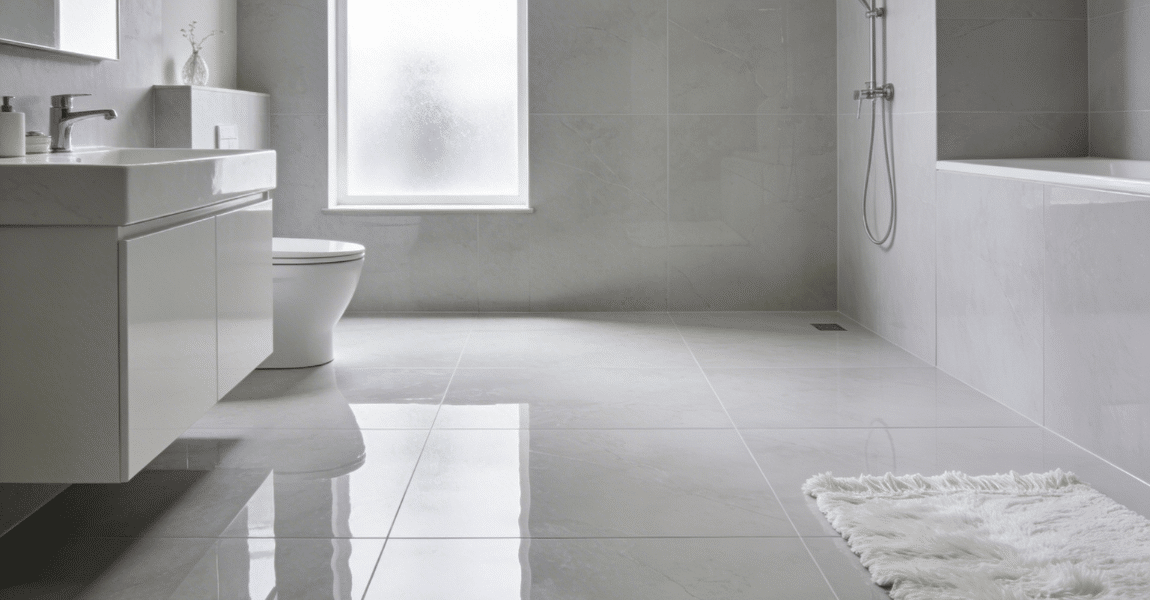
For bathroom floors, you should choose a tile that handles moisture, resists slips, and cleans up easily. Porcelain is usually the best pick because it’s dense, waterproof, and tough enough for daily wear. Ceramic can also work well, especially on walls or lighter-use floors. If you want more grip, try matte, textured, or smaller penny tiles. Natural stone looks beautiful, but it needs sealing and more care. Keep going, and you’ll see which option fits your space best.
Quick Overview
- Porcelain is the best bathroom floor tile because it is highly water-resistant, durable, and low-maintenance.
- Choose slip-resistant matte or textured finishes to improve safety in wet bathroom areas.
- Large-format tiles reduce grout lines, making bathrooms look cleaner, larger, and easier to maintain.
- Light colors like white, beige, and soft gray help reflect light and make small bathrooms feel more open.
- For natural stone, use proper sealing; avoid floor ceramics in very wet zones if maximum moisture resistance is needed.
What Matters Most in Bathroom Tile
When you choose bathroom tile, durability should come first, because high moisture, daily cleaning, and constant humidity can quickly damage the wrong material.
You need bathroom floor tile with low water absorption so moisture won’t seep in, cause mold, or weaken the surface. A waterproof tile floor helps you avoid stains, warping, and costly repairs.
For safety, pick slip resistant tile with a textured or matte finish, especially near showers and tubs. Slip resistance is especially important in wet bathrooms because glossy tiles can be more slippery on floors.
If you like natural stone, remember it needs sealing to stay protected and perform well over time. Proper pH-neutral cleaners help prevent surface damage during routine maintenance.
Porcelain Tile for Bathroom Floors
Porcelain tile is one of the best choices for bathroom floors because it’s dense, durable, and highly water-resistant. You’ll get bathroom tile flooring that handles heavy foot traffic, resists scratches, and won’t fade or crack easily.
With a water absorption rate near 0.5%, it’s ideal for wet rooms and shower floor tile applications. You can choose styles that mimic stone, wood, or concrete, so the best tile for bathroom design doesn’t sacrifice looks.
It’s easy to clean, stain-resistant, and built to last for decades, though you’ll want professional installation because of its hardness. Slip resistance ratings are also important to consider for bathroom safety.
Why Ceramic Tile Works in Bathrooms
Ceramic tile works especially well in bathrooms because it handles constant moisture without breaking down. You get a dense, low-porosity surface that resists water, helps prevent mold, and meets wet-area performance standards.
It also stands up to daily wear, cracking, and thermal shock, so it can last for decades with little replacement. Cleanup stays simple: sweep or mop with a pH-neutral cleaner, and the non-porous surface helps block stains, bacteria, and odors.
For bathroom tile ideas, ceramic gives you wide style choices, strong value, and easy maintenance in one practical floor solution.
Penny Tile for Better Bathroom Traction
Penny tile gives you a slip-resistant surface because its small rounds and grout lines add extra grip under wet feet.
You’ll also get a vintage bathroom look that feels classic without sacrificing safety.
If you pick matte porcelain or ceramic, you can boost traction even more while keeping the style clean. Unglazed porcelain is especially good for wet areas because its micro-texture helps maintain grip over time.
Slip-Resistant Surface
When you want a bathroom floor that grips better under wet feet, penny tile is a smart choice because its dense network of grout lines creates extra micro-friction and helps disperse water.
You’ll get better traction from matte porcelain or ceramic than from glossy finishes, and sanded grout adds helpful texture.
Keep the joint depth consistent, and let wider lines move water away faster. Modular layout can also help manage moisture and drainage in a wet bathroom.
A properly sloped subfloor and level installation reduce slip risks, while a waterproof membrane controls moisture below.
With careful installation, you’ll have a safer, more stable surface.
Vintage Bathroom Charm
If you want your bathroom floor to feel both charming and secure, penny tile is a classic choice that brings vintage character and better traction underfoot. Born in early 1900s bathrooms and subway stations, it gave homes a clean, bright look.
Today, you can use it to add retro style without sacrificing performance.
- Choose porcelain for durability and easy care
- Pick white for a timeless look or bold hues for personality
- Mix colors and borders for a custom pattern
- Count on tight grout lines for extra grip
- Small mosaic sheets can make installation easier while preserving the classic look
With smart installation, your penny tile can last for decades.
Natural Stone Tile for a Spa-Like Look
Natural stone tile can bring a bathroom that calm, spa-like feel you’re after, especially with materials like marble, travertine, limestone, and slate. Timeless beauty makes natural stone a lasting choice for spa bathrooms.
Choose Carrara marble for soft veining, or Calacatta for bold luxury; seal both to protect against stains and water.
Travertine adds warm, organic texture and works well on shower floors, while limestone gives you a serene, matte finish.
Slate creates rich contrast with natural slip resistance.
Use large-format stone on walls, and pick honed or textured finishes on floors for a seamless, tranquil look throughout your bathroom.
LVP vs. Tile for Bathroom Floors
For a bathroom with a softer, warmer feel than stone, luxury vinyl plank can be a smart alternative to tile. You’ll usually pay less upfront, and you can install it faster, especially over a less-than-perfect subfloor.
- LVP feels warmer and softer underfoot.
- Tile lasts longer and resists scratches better.
- Both handle moisture, but tile has the edge. water damage
If you want budget-friendly comfort for a secondary bath, LVP works well. If you want maximum durability and long-term value, tile still wins. Tile offers unmatched durability and can last 30–40 years with basic maintenance.
Best Tile Options for Small Bathrooms
In a small bathroom, you can make the space feel larger by choosing large-format tiles that cut down on grout lines and visual clutter.
Light colors like white, beige, or soft gray help reflect light and keep the room feeling open and fresh.
If you want extra impact, you can use porcelain or subtle patterns like hexagon or herringbone to add style without crowding the space. Tile size affects the perception of bathroom space, and large-format tiles create a clean, modern aesthetic while minimizing grout lines.
Space-Enhancing Tile Choices
How do you make a small bathroom feel bigger? You can choose large-format tiles, like 12×24 or 24×48, to cut grout lines and create a seamless look.
You’ll also improve flow with smart layouts that stretch the room.
- Use diagonal square tiles to add dynamic sight lines.
- Try herringbone to widen the floor visually.
- Set rectangular tiles horizontally to broaden narrow walls.
- Choose mosaics or penny tiles where you need grip.
Porcelain slabs, ceramic, and textured finishes help you balance durability, traction, and style without crowding the space. Glossy finishes can also reflect more light and make the bathroom feel more open.
Light Colors, Big Impact
Light colors can make a small bathroom feel open and airy, especially when you pair them with reflective finishes. You can choose white, beige, ivory, cream, or light gray tiles to bounce light around the room and visually expand the space.
Glossy ceramic tiles work especially well because they reflect natural and artificial light, while matte finishes can make the room feel tighter. Large-format tiles reduce grout lines and create a smoother look.
If you want more personality, try light hexagon, subway, or fishscale tiles without losing that spacious feel.
Best Tile for Wet Rooms
When you’re choosing tile for a wet room, porcelain is usually the best option because it absorbs the least water, resists stains and chemicals, and stands up well to daily use. You can also consider natural stone if you’re willing to seal it, or mosaic tile for smooth drainage around tray slopes. Apply waterproof membrane in moisture-prone areas as part of your wet-room setup to help protect the subfloor. Avoid ceramic on floors; it’s better suited to walls.
- Porcelain offers top moisture resistance
- Mosaic tiles help guide water to drains
- Natural stone needs sealing for protection
- Large-format tiles need careful installation
Slip-Resistant Bathroom Tile Options
When you want better bathroom traction, choose tiles with textured or matte surfaces that help you stay steady under wet feet.
You can also boost grip by using smaller tiles, since extra grout lines add more traction.
Together, these features make your bathroom feel safer without giving up style.
Textured Tile Surfaces
- Matte for low-key, slip-resistant floors
- Sugar texture for spa-like shine
- Wood texture for cozy, durable style
- 3D porcelain for bold visual interest
Grout Line Traction
Grout lines can do more than fill gaps—they act like tire treads, giving you extra grip in wet bathroom areas and helping prevent slips.
You’ll get even better traction when you choose small tiles, like 2x2s or mosaics, because they create more grout lines underfoot. That makes them smart for sloped shower floors and humid spaces.
Pair them with matte porcelain, honed stone, or textured surfaces for added safety.
If you want stronger wet-floor performance, look for DCOF ratings of 0.42 or higher, or StepWise™ porcelain, which delivers lasting slip resistance that won’t wear off.
Best Grout Choices for Bathroom Floors
Choosing the right grout for your bathroom floor affects both durability and upkeep, so you’ll want a formula that matches your tile size and daily moisture exposure.
Epoxy grout gives you top-tier stain, crack, and chemical resistance, while urethane adds flexibility and color consistency.
Sanded grout works best for wider joints and supports busy floors, and unsanded grout suits narrow joints and delicate tiles.
Pick colors wisely, too.
- Epoxy for wet, high-use areas
- Sanded for 1/8-inch to 5/8-inch joints
- Unsanded for polished or glass tile
- Medium to dark colors hide wear
Easy-Clean Bathroom Tile Flooring
For easy-clean bathroom tile flooring, you’ll want low-maintenance materials like porcelain that resist water, stains, and daily wear.
Choose large-format tiles and smooth glazed finishes to cut down on grout lines and make wiping up faster.
Pair them with modern grout and a finish that’s easy to clean so your floor stays fresh with less effort.
Low-Maintenance Materials
When you want a bathroom floor that’s easy to clean and built to last, porcelain tile is hard to beat: it’s denser and less porous than ceramic, so it resists water infiltration, stains, scratches, and daily wear without needing sealing.
- You can wipe porcelain with mild soap and water.
- Ceramic gives you low-cost, low-maintenance performance.
- LVT lets you sweep, vacuum, and mop fast.
- Properly installed tile stays durable for years.
If you want comfort and quick installation, LVT works well too.
For budget-friendly upkeep, ceramic can handle busy bathrooms while staying simple to maintain.
Grout And Finish Choices
Even with a low-maintenance tile like porcelain or ceramic, the grout and finish you choose will shape how easy your bathroom floor is to keep clean.
Matte finishes hide water spots, fingerprints, and soap residue, so your floor looks cleaner longer and stays safer for kids or older adults.
Glossy tile brightens small baths, but it shows streaks fast. Satin or textured finishes give you a balanced, practical look with better grip.
For grout, choose epoxy for stain and moisture resistance, or pick dark sanded grout to mask buildup and handle traffic without constant sealing or scrubbing.
Bathroom Tile Colors That Make Rooms Feel Bigger
Light colors can make your bathroom feel bigger by bouncing more light around the room. You’ll get the best effect with white, off-white, soft gray, or light beige tiles, since they brighten surfaces and soften shadows.
Cool shades also help, because pale blue, seafoam, and light teal seem to recede and open up compact spaces. Glossy finishes add even more brightness, while matching grout keeps the look seamless.
- Use light tiles on walls and floors
- Try soft blues or pale greens
- Choose glossy or reflective surfaces
- Keep grout close to tile color
Textured Tile Ideas for Safer Floors
Textured tile can make your bathroom safer without sacrificing style, especially in wet areas where slips are a concern.
You can choose fine linear grooves, light cross-hatching, or subtle ripple patterns for better grip underfoot. Matte porcelain and textured finishes help you stay steady while resisting water, stains, and wear.
Wood-look tiles with grainy texture give you warmth and slip resistance, too. If you want more traction, try hexagonal or embossed designs.
Just avoid surfaces that feel too rough, since comfort matters in showers, entryways, and busy family bathrooms every day.
Budget-Friendly Bathroom Flooring Picks
If you’re balancing safety with savings, there are plenty of bathroom flooring options that look good without pushing your budget. You can choose ceramic for the lowest cost, easy upkeep, and a wide range of styles. Porcelain gives you a pricier look without the premium price, while staying durable and water-resistant.
Vinyl can cut costs even more and still handle moisture well. Concrete floor durability also provides a long-lasting surface that withstands significant wear and tear.
- Ceramic tiles work well in busy bathrooms.
- Porcelain mimics marble at a lower cost.
- Vinyl installs fast and stays comfortable.
- Penny rounds and mosaics add grip and style.
Latest Bathroom Tile Trends
This year’s bathroom tile trends lean into calm, natural color and tactile detail, so you can update the space without making it feel busy.
You’ll see soft earth tones, muted greens, blues, and warm whites leading 2026 palettes, with clay and terracotta adding warmth.
Porcelain still dominates because it’s dense, water-resistant, and easy to care for.
Stone-effect and onyx-effect tiles give you marble-like drama without sealing.
For texture, try fluted, hand-glazed, or 3D tiles on a feature wall.
Large-format panels, vertical stacking, and tile drenching can make your bathroom feel seamless, modern, and serene.
How to Pick Bathroom Tile
Choosing bathroom tile starts with your room’s size, moisture level, and the look you want to live with every day.
In small spaces, pick light colors and larger formats like 12x24s to open the room up. For showers and busy floors, choose porcelain, glazed ceramic, or glass for better water resistance.
Keep these in mind:
- Use matte or textured finishes for slip resistance.
- Limit colors to two or three for cohesion.
- Match tile with cabinets and hardware.
- Seal stone if you want marble or travertine.
Choose durable, low-maintenance tile that fits your cleaning habits and budget.
Frequently Asked Questions
Can Bathroom Tile Be Installed Over Radiant Floor Heating?
Yes, you can install bathroom tile over radiant floor heating if you choose ceramic or porcelain, use flexible heat-rated thinset and grout, wait 7–10 days, then gradually raise the temperature.
How Often Should Bathroom Tile Grout Be Resealed?
You should reseal bathroom tile grout every 12 to 18 months, but you’ll need it every six months in high-use bathrooms or showers. In guest bathrooms, you can often wait up to two years.
What Underlayment Works Best Beneath Bathroom Tile Flooring?
You’ll usually get the best results with cement backer board on sound subfloors, or an uncoupling membrane like DMX over wood. Add a crack isolation or moisture barrier when your subfloor needs extra protection.
How Do You Transition Bathroom Tile to Adjacent Flooring?
You can shift bathroom tile to adjacent flooring by leveling the subfloor, matching heights with underlayment, then using thin-set, spacers, and mesh tape. For different materials, add T-molding, mosaics, or a clean direct butt joint.
Can Bathroom Tile Be Installed Over Existing Vinyl Flooring?
Yes, you can install bathroom tile over existing vinyl if it’s firmly attached. You’ll need to scuff it, check for foam backing, and add cement backer board or underlay before tiling for lasting results.
Conclusion
Choosing the best tile flooring for your bathroom comes down to balancing safety, style, and budget. You’ll want a material that handles moisture well, feels comfortable underfoot, and matches the look you want. Whether you pick porcelain, ceramic, penny tile, natural stone, or a textured option, the right choice can make your bathroom safer and more inviting. Keep your needs in mind, and you’ll end up with a floor you love for years.