
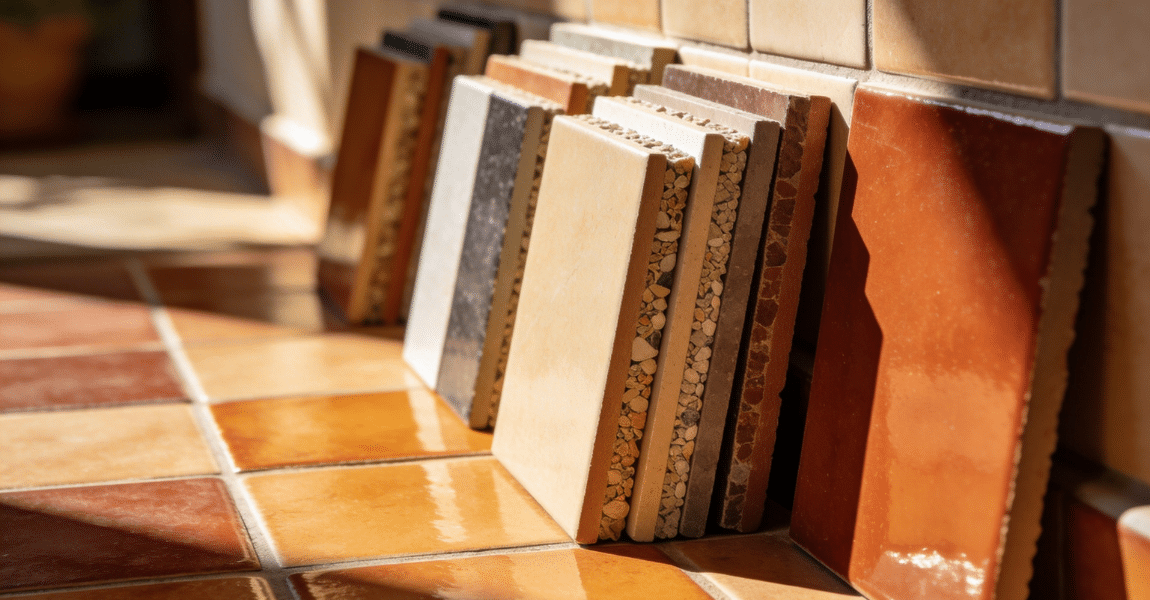
Choose grout for floor tile by matching it to your joint width, tile type, and room conditions. Use sanded grout for joints 1/8 inch or wider, especially on most floors and high-traffic areas. Pick unsanded grout for tighter joints and delicate tiles like marble or glass. Choose epoxy grout in bathrooms or kitchens for stain and water resistance. For easy DIY work, pre-mixed grout can help. Pick a color that hides dirt, and you’ll see why details matter.
Quick Overview
- Use sanded grout for floor tile joints 1/8 inch or wider; it resists cracking and suits high-traffic areas.
- Use unsanded grout for joints under 1/8 inch, especially with delicate tiles like marble or glass.
- Choose epoxy grout for bathrooms or kitchens when maximum stain, water, and mold resistance is needed.
- Match grout color to the tile for a seamless look, or use contrast grout to highlight patterns and tile shapes.
- Seal cement-based grout after curing to improve durability, reduce staining, and make maintenance easier.
Choose the Right Grout Type
When you choose grout for floor tile, start by matching the grout type to the space and the tile itself.
Cementitious grout is the common choice for general projects because it’s easy to use and comes in many colors, but you’ll need to seal it.
For delicate tiles or narrow joints, compare sanded vs unsanded grout to avoid scratches and get a smooth finish. Unsanded grout works especially well for narrow joints and delicate surfaces.
If you need maximum stain and water resistance, choose epoxy grout floor products for bathrooms, kitchens, and showers.
Polymer-modified grout can also boost flexibility and color consistency without epoxy’s complexity.
When to Use Sanded Grout
Use sanded grout for floor tile when the joints are 1/8 inch wide or more, since the sand gives it the strength to resist cracking, shrinking, and minor tile movement.
You should pick it for most interior floors because it handles foot traffic and works well with ceramic, porcelain, slate, granite, and matte finishes.
For wider joints, choose a wide-joint mix. This floor tile grout bonds firmly, making it a strong contender for the best grout for tile in busy spaces. Sanded grout is also better suited to wider grout lines because its added texture improves durability and reduces shrinkage.
Seal it after curing, and follow grout maintenance tips to protect the surface and preserve durability.
When Unsanded Grout Fits Better
You’ll want unsanded grout when your joints are under 1/8 inch, especially on mosaic or small-format tile where it spreads easily and fills tight spaces well.
It also gives you a smoother finish on walls, backsplashes, and other vertical surfaces because it sticks without sagging.
If you’re working with marble, glass, or other delicate tile, it helps protect the surface from scratches. For narrow grout lines, unsanded grout is usually the better choice because it reduces the risk of cracking and shrinking.
Narrow Joints Under 1/8
For grout lines under 1/8 inch, unsanded grout is usually the better fit because its smooth, creamy consistency packs easily into tight joints without clogging or leaving gaps.
You’ll find it works best in 1/16- to 1/8-inch joints, especially with mosaic or small-format tiles. Because it contains no sand, it spreads evenly, won’t scratch delicate tile, and helps you keep grout color selection looking consistent across the floor.
Use it in low-traffic areas, since narrow joints can still crack or wear faster over time. This choice gives you a cleaner, more precise finish.
Unsanded grout is also preferred for vertical surfaces because its minimal shrinkage helps it stay in place more easily during installation.
Smooth Finish For Walls
When walls call for a smooth, polished look, unsanded grout often fits the job better. You’ll get a fine, non-abrasive finish that won’t scratch glossy glass, polished marble, glazed ceramic, or porcelain.
Its sticky, creamy mix spreads easily on vertical surfaces and stays put without sagging or dripping, so you can shape clean joints on backsplashes, accent walls, and bathroom walls. It also works well on mosaic sheets and polished stone. PROMA’s polymer-modified unsanded grout offers exceptional durability and color consistency for a reliable finish.
Choose it when you want uniform color, a professional look, and easy cleanup. Polymer-fortified versions can add strength while keeping that smooth appearance.
Delicate Tile Protection
Delicate surfaces deserve extra care, and unsanded grout is often the safer choice for the job. You can use it on glass, polished tile, natural stone, metal, and stainless steel because it won’t scratch during installation.
Its smooth, non-abrasive texture slides into tight joints from 1/16 to 1/8 inch, so it fits small-format tile and fine lines well. You’ll also get easier application on sensitive edges.
Just remember that unsanded grout can shrink, crack, and stain more easily, so it’s best for protection, not heavy-duty floor wear. Seal it after 48 hours for extra defense.
Why Epoxy Grout Works in Wet Areas
In wet areas, you’ll want grout that blocks moisture instead of soaking it up, and epoxy does that well.
It forms a non-porous seal that helps keep water out of shower lines, kitchens, and pool areas. You’ll also get better protection against stains, mold, and mildew, which makes cleanup easier and the surface stay fresher longer. Epoxy grout also offers superior waterproofing by creating a durable barrier that helps prevent water penetration over time.
Moisture Resistance Benefits
Epoxy grout works especially well in wet areas because its resin-and-hardener mix creates a dense, non-porous barrier that repels water instead of absorbing it.
You get far better moisture resistance than with cement grout, so showers, bathrooms, and pool edges stay protected.
Because it doesn’t absorb water, it helps prevent seepage through tile lines and reduces the chance of substrate damage.
You also won’t need routine sealing.
In constant humidity, it keeps its shape, resists cracking, and maintains a tight seal, helping your tile floor last longer and perform reliably. It is also highly stain-resistant, which makes it easier to keep clean in busy, splash-prone areas.
Stain And Mold Protection
A key reason to choose epoxy grout for wet areas is its strong stain and mold resistance. You get a non-porous seal that blocks moisture, so mold and mildew can’t take hold.
It also repels spills and cleaning chemicals, keeping joints looking clean longer.
- You prevent discoloration.
- You stop bacteria growth.
- You avoid stubborn stains.
- You simplify cleanup with a damp cloth or mild detergent.
Because epoxy grout doesn’t absorb contaminants, it helps your kitchen or bathroom stay sanitary, even in humid, high-traffic spaces. Its waterproof seal makes it especially effective in bathrooms and kitchens.
Where Pre-Mixed Grout Makes Sense
When you want a grout that’s ready to use right out of the pail, pre-mixed grout makes sense for DIY projects and smaller installs where convenience matters. You skip onsite mixing, cut the chance of errors, and spread it more easily. Resealable pails also help you waste less.
You’ll get strong stain, water, and mold resistance, plus factory-blended color that stays consistent. It’s a smart pick for residential and commercial floors in non-submerged areas, but you shouldn’t use it in steam rooms or movement joints.
Expect higher cost and a steadier hand for best results. ANSI A118.19 sets performance standards for many single-component grouts, helping ensure reliable results.
Match Grout to Floor Tile Size
Once you’ve picked the grout type, match the joint width to the tile size and edge style so the floor looks balanced and performs well.
- Small format and mosaic tiles usually look best with 1/16″ to 1/8″ lines; those widths keep patterns aligned, and 1/16″ can spotlight motifs.
- Rectified tiles work well with 1/16″ because their clean edges need less spacing.
- Handmade or natural stone tiles often need 1/8″ to handle uneven edges.
- Glass tiles also suit 1/16″, since their crisp edges allow a tight, neat install.
Pick the Right Grout Width
The right grout width depends on your tile size, edge quality, and where you’re installing it. Start at 1/16″ for ceramic, stone, and glass tile, since ANSI standards set that minimum.
If your tiles are rectified, you can often go to 1/8″; calibrated or handmade tiles usually need 3/16″ to handle variation.
Keep grout joints smaller than 1/8″ to unsanded cementitious grout. In wet rooms, 1/8″ helps drainage and cleanup.
Large-format tiles also work better with 1/8″ or wider joints, which can reduce lippage and suit the tile’s scale.
Choose Grout for Seamless Floors
To create a seamless floor, you’ll want grout color that blends with your tile’s dominant shade and undertone.
You should also match the joint width to the grout type, since narrow seams call for unsanded or epoxy grout rather than sanded grout.
For lasting results, choose a grout that can handle your floor’s traffic, moisture, and cleaning demands.
Grout Color Matching
For a seamless floor, choose grout that closely matches the tile’s dominant or lightest tone, especially in wood-look planks or marble-look porcelain with mixed shades. You’ll reduce contrast and keep the surface looking continuous, especially in smaller rooms.
Use this quick guide:
- Match warm brown tiles with warm grout, not cool gray.
- Pair cool white marble-look tile with light gray grout.
- Use medium gray for gray-base porcelain with metallic veining.
- Test grout samples in your home light before you commit.
Gray, beige, and greige usually work well, and they’ll help the floor feel balanced.
Joint Width Selection
Joint width matters as much as color when you want a floor to read as one continuous surface, because the right spacing keeps lines clean and helps prevent cracking or uneven edges.
If you’re installing rectified tile, aim for 1/16 to 1/8 inch, with 2 to 3 mm often giving a seamless look. For non-rectified or handmade tile, use 3 to 5 mm, or even 3/16 inch, so edge variation doesn’t stand out.
Match small tiles to tighter joints, large formats to wider ones, and pair narrow lines with unsanded grout. Test spacing with spacers before you set anything.
Floor Durability Needs
Once you’ve set the joint width, the next step is matching grout to how the floor will actually be used. For busy spaces, choose wisely:
- Epoxy grout for kitchens and bathrooms, since it resists stains, moisture, and chemicals.
- Sanded grout for wide joints and high-traffic hallways, because it adds strength and helps prevent cracking.
- Polyurethane grout for decks or patios, where flexibility and waterproofing matter.
- Furan grout for industrial areas that face heat, abrasion, and harsh substances.
If you want easy upkeep and a seamless look, urethane and epoxy both deliver color stability.
Use Contrast for a Bolder Tile Pattern
When you want your floor tile to make a stronger visual statement, contrasting grout is one of the easiest ways to do it. You can outline each tile piece, sharpen the layout, and turn a plain pattern into a graphic feature.
Light tile with darker grout creates immediate definition, while bold contrast makes shapes and sizes read more clearly. This approach adds depth, drama, and visual interest without changing the tile itself.
On floors, it can elevate simple patterns into design moments and help decorative layouts stand out with purpose.
Best Grout Colors for Floor Tile
Choosing the best grout color for floor tile starts with the tile’s undertones and the look you want to create. To narrow your choice, compare samples under room light and then:
- Pick cool gray or silver grey grout for blue or gray tiles.
- Choose beige, taupe, or warm beige grout for yellow, brown, wood-look, or stone-effect tiles.
- Use jasmine grout to lift green, orange, pink, terracotta, or purple tiles.
- Select black, charcoal, or dark grey only when you want strong contrast and crisp pattern definition.
Test on the tile first.
Why Warm Gray Grout Works So Well
Warm gray grout is a smart middle ground if you want the floor to feel clean, balanced, and timeless.
You get soft contrast that flatters white subway tile, Carrara marble, and darker tile without the glare of bright white. It also works with gray tile that has red, yellow, or brown undertones, so your layout feels cohesive.
On floors, it hides dirt and minor stains better than white grout, and its stain-resistant, crack-resistant formula stands up to busy kitchens, bathrooms, and powder rooms.
You’ll keep the look flexible, durable, and easy to maintain.
Test Grout Samples on Your Tile
Before you commit to a full floor, mix a small grout batch and test it on spare tile that matches your project. Use the same tile type and a simple float or trowel motion.
Then:
- Spread one sample thick, another thinner, so you can see workability.
- Let each piece cure 24 to 48 hours under damp cover.
- Compare the dried color with the package and your target.
- Check for scratches, bubbles, and setting speed.
Make a few boards with different colors if needed. This quick test helps you avoid surprises once you grout the whole floor.
Match Grout to Tile Finish and Light
The finish and color of your tile should guide your grout choice, since the two work together to shape the room’s overall look.
If you want bold definition, choose contrasting grout. It’ll sharpen glossy tiles, bring out matte surfaces, and make geometric or mosaic patterns pop.
If you’d rather create a calm, unified look, match the grout closely to the tile. Light gray, beige, or medium gray can blend beautifully with glossy, stone, or veined tiles.
Also consider light: lighter grout brightens spaces, while darker grout adds depth and drama, especially in larger rooms or with dark tiles.
Choose Grout That Hides Dirt and Wear
You’ll want grout that works with real life, so choose medium to darker shades that hide dirt and daily wear better than light colors.
Darker grout does a great job masking scuffs and discoloration in high-traffic areas, while white grout on floors usually shows every mark.
If you want your tile to stay looking cleaner longer, skip pale grout and pick a tone that can handle foot traffic.
Darker Grout Conceals Wear
When floor tile gets a lot of daily traffic, darker grout is often the smarter choice because it hides dirt, spills, and wear far better than lighter shades.
You’ll see the benefit in kitchens, mudrooms, and bathrooms, where grime builds fast and footprints show less.
- It masks stains and daily discoloration.
- It reduces the need for constant scrubbing.
- It keeps traffic patterns from standing out.
- It pairs well with darker tiles or bold patterns.
Seal cement-based grout regularly, and you’ll help preserve color and keep your floor looking cleaner longer.
Medium Tones Hide Dirt
Medium tones offer a smart middle ground when you want grout that hides dirt and wear without making the floor look too dark.
You’ll see that medium gray disguises everyday grime, especially in busy kitchens, baths, and other high-traffic spaces. It gives you subtle contrast, helps wide joints look cleaner, and stays more forgiving between cleanings.
If you choose sanded medium grout, it won’t look dingy as quickly. This shade also works well with ceramic, porcelain, terracotta, and many stone tiles, so you can balance style and practicality while keeping the floor looking fresh longer.
Avoid White On Floors
White grout looks crisp at first, but on floors it quickly shows dirt, grease, and mold, especially in busy kitchens, baths, entryways, and other high-traffic areas.
You’ll clean it more often, and you’ll still need regular sealing to keep stains down.
- Choose dark grout for strong stain hiding.
- Pick beige, brown, or gray for a balanced look.
- Use gray when you want the best mix of style and upkeep.
- Seal every grout color to resist moisture and wear.
In active homes, practical color beats bright grout every time.
Seal Cement Grout for Long-Term Protection
Sealing cement grout is one of the simplest ways to protect your floor tile for the long haul. You’ll create a barrier that helps stop stains, repels water, and slows mold and mildew in damp rooms.
It also boosts durability, so your grout can handle daily wear better and keep your tile looking good for years.
Wait 48 hours after installation, then clean and dry the grout before applying sealer evenly. After 10 minutes, wipe off the excess and test with water beads.
Reapply annually, or sooner in busy areas, to keep protection strong.
How Grout Width, Color, And Type Change the Look
Once your grout is sealed, you can start thinking about how it shapes the room’s overall style.
- Narrow joints, around 1/16″ to 1/8″, give you a seamless look; wider ones spotlight each tile.
- Match grout to tile for a calm, monolithic feel, or use dark grout for sharp contrast and a busier pattern.
- Neutral shades like gray or taupe balance definition and versatility.
- Choose sanded grout for joints 1/8″ or larger, since it handles floor traffic better and resists cracking.
Frequently Asked Questions
How Often Should Floor Grout Be Resealed?
You should reseal floor grout every 12 to 18 months, though high-traffic or wet areas may need annual sealing. If water stops beading, stains appear, or grout darkens, you’ll need it sooner.
Can Grout Be Cleaned Safely With Vinegar?
No, you shouldn’t clean grout with vinegar regularly because it can etch and dull it over time. You can try a brief test spot, but safer options like hot water, baking soda, or peroxide work better.
Does Grout Color Fade Over Time?
Yes, grout color can fade over time. Sunlight, moisture, harsh cleaners, and uneven drying can change it, especially with cement-based grout. You’ll get longer-lasting color with quality grout and proper sealing.
What Causes Grout to Crack After Installation?
You’ll see grout crack after installation when you mix it too wet, leave joints underfilled, use the wrong grout, or let tile movement, moisture, heavy traffic, and harsh cleaners weaken it over time.
How Long Should Grout Cure Before Foot Traffic?
You should wait at least 24 to 48 hours before foot traffic on most grout, and up to 7 days in wet areas. Don’t rush it, or you’ll risk cracks, loose tiles, and uneven color.
Conclusion
Choosing the right grout makes your floor tile look better and last longer. You should match the grout type to your tile, room moisture, and joint width. Use sanded grout for wider joints, unsanded for narrow ones, and epoxy where you need extra water resistance. Pick a color that hides dirt and wear, and seal cement grout for protection. When you choose carefully, you’ll get a cleaner, stronger finish.