
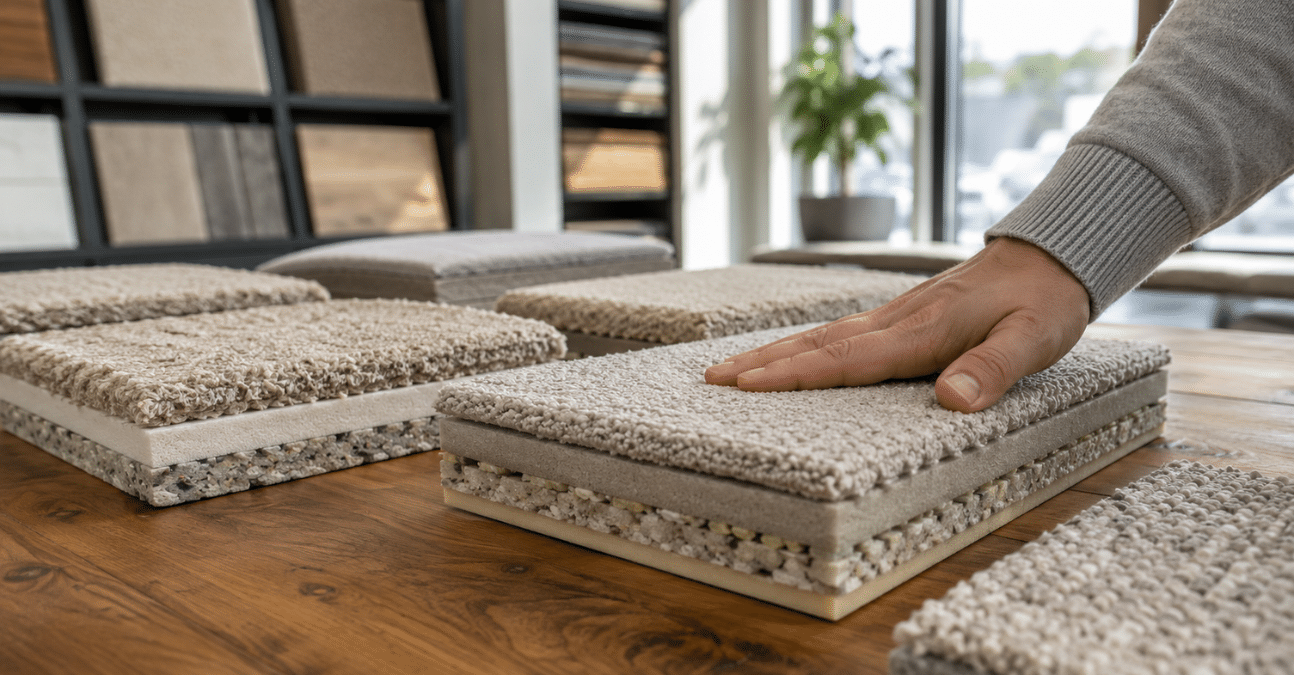
Choose carpet padding by matching it to your carpet type, room traffic, and comfort goals. You’ll want firm, dense padding for Berber and loop carpets, and rebond foam works well under plush or cut-pile styles. Keep thickness around 1/4 to 3/8 inch for stairs and busy areas, and aim for at least 8 lb/ft³ density where durability matters. The right pad protects your carpet, reduces noise, and helps it last longer, and there’s more to know.
Quick Overview
- Choose padding based on carpet type, since Berber, plush, loop, and low-pile carpets need different support.
- Pick the right thickness: usually 1/4 to 3/8 inch for most carpets and stairs, with firmer padding for Berber.
- Prioritize density over softness; aim for at least 6 lb/ft³, with 8 to 10 lb/ft³ for busy areas.
- Select durable materials like rebond foam, rubber, or dense fiber, and avoid overly soft memory foam.
- Check padding quality for indenting, lumps, tears, moisture resistance, and overall comfort before buying.
What Carpet Padding Does
Carpet padding does more than sit beneath your carpet—it protects, cushions, and insulates. You’ll feel less impact from footsteps and furniture shifts because it absorbs shock and reduces friction damage.
The right carpet pad thickness helps your carpet spring back, resist matting, and stay comfortable underfoot. Carpet pad density also matters, since it affects support, sound control, and thermal insulation.
In damp spaces, padding can block moisture from reaching the subfloor. Vapor barrier carpet padding can help protect against moisture damage in these areas. By choosing the best carpet padding, you extend carpet life, cut noise, and keep rooms warmer and more comfortable every day.
Choose Carpet Padding by Carpet Type
The type of carpet you choose should guide the padding you put underneath it, since the wrong pad can cause stretching, rippling, or premature wear.
For Berber, choose a firm fiber or flat rubber carpet underpad; it supports loops and often meets warranty rules.
With low-pile carpet, use dense fiber, not soft foam, to keep the surface stable.
Plush or cut-pile carpets do well with rebond foam for comfort and durability.
For loop carpet, pick synthetic fiber for a flat profile.
High-traffic rooms need tough carpet cushion types, so your carpet pad selection matches the carpet’s weave and use. Proper thickness also matters, and most carpet pads should stay at or below 1/2 inch to avoid problems.
Pick Carpet Padding Thickness
You should match padding thickness to your carpet and the room’s traffic level, since the right choice affects comfort and wear.
For most homes, 3/8 inch works well, while high-traffic areas usually need 1/4 to 3/8 inch and softer spaces can use up to 7/16 inch.
Stay within recommended limits, because padding that’s too thick can cause wrinkling or buckling. Thicker padding also provides more cushioning and support, while thinner padding gives a firmer feel.
Recommended Thickness Limits
For most residential spaces, aim for carpet padding between 3/8 inch and 7/16 inch, since that range gives you the best balance of comfort and support.
3/8 inch works well for everyday use, while 7/16 inch adds a softer feel under plush carpet.
Your carpet padding guide should also cap thickness at 1/2 inch, because more can cause ripples, seam separation, and instability.
If you install Berber, stay at 3/8 inch or less.
Choose 1/4 inch for low-profile areas, and use higher density to support thicker padding without sagging or shortening warranty coverage.
Density matters most because a higher-density pad usually delivers better support and compression resistance than a thicker, lower-density one.
Match Pad To Carpet
Matching pad thickness to your carpet keeps the floor feeling right and helps it wear well over time.
If you’ve got Berber or another low-pile carpet, choose 1/4 to 3/8 inch padding, and don’t exceed the Carpet and Rug Institute’s 3/8 inch limit. A 3/8 inch, 8-pound pad works well for loop pile.
For plush or thick carpet, you can go with 7/16 to 1/2 inch padding for more cushioning.
Check your carpet warranty, since manufacturers often specify 8-pound padding at 3/8 inch or less.
Pick the pad that matches your carpet’s structure. Proper thickness also helps prevent buckling and wrinkling while extending the carpet’s life.
Choose By Traffic Level
Traffic level should guide your carpet padding thickness as much as the carpet type itself.
In bedrooms and other low-traffic rooms, you can choose 3/8 to 7/16 inch padding with about 6 lb/ft³ density for extra softness.
For living rooms and family rooms, aim for 3/8 inch and 8 lb/ft³, which balances comfort and support.
In hallways, stairs, and other high-traffic spots, use 1/4 to 3/8 inch padding with 10 lb/ft³ density.
Pick rebond, rubber, or other high-density pads so they resist compression and last longer. Density matters more than thickness because many buyers prioritize 8 lb density over extra padding thickness.
Match Carpet Padding Density
Carpet padding density matters because it tells you how much support the cushion will give and how well it will hold up over time.
You should measure density in pounds per cubic foot, or lb/ft³, and aim for at least 6 lb/ft³ in most homes. For the best mix of comfort and durability, 8 lb/ft³ usually works well, especially in living rooms.
Choose 10 lb/ft³ for busy areas and lighter commercial spaces. Lower-density pads feel softer, but they crush sooner.
Always follow your carpet maker’s guidelines, since density affects long-term performance more than thickness. carpet type also plays a key role in choosing the right padding.
Best Padding for Berber Carpets
Berber carpet needs a firmer, thinner pad than many other styles because its looped construction can ripple, stretch, or show seams if the cushion is too soft.
Choose a pad no thicker than 3/8 inch, and keep density at 8 pounds per cubic foot or higher. Rubber or synthetic fiber felt works best because it stays stable and limits abrasion.
In basements, pick a moisture-barrier rubber pad. Skip soft foam, since it can break loops and cause movement.
A proper pad helps protect your warranty and prevents picture framing along walls and visible seam edges. Rubber pads are often recommended for Berber because they provide better comfort, durability, and support than foam.
Best Padding for Cut Pile and Twist
For cut pile and twist carpets, you’ll usually want a pad that balances comfort with stability: a 7/16-inch, 8-pound rebond foam is the all-around best choice, while 1/2-inch or less works for most residential installs. Thickness and density matter because choosing the wrong pad can lead to premature wear, wrinkles, or buckling.
You get solid cushioning without too much give, so your carpet wears evenly and keeps its shape. Choose 6 to 8 pounds per cubic foot, with 7.5 to 8 pounds ideal for durability.
Rebond foam, especially with a moisture barrier, protects against spills and resists matting. For softer feel, consider prime or combo polyurethane.
Carpet Padding for Hallways and Stairs
For stairs, you’ll want a thinner pad—about 1/4 to 3/8 inch—to keep the carpet stable while still adding comfort.
In hallways and other high-traffic areas, you should choose a dense pad that resists compression and holds up to constant use.
Rubber and felt pads are usually your best options because they add grip, durability, and long-term support. Duralux stair pad offers extra security and stability for stair installations.
Thickness For Stairs
When you’re choosing carpet padding for stairs and hallways, keep it thin and firm: 1/4 to 3/8 inch is the sweet spot, with 8 mm (about 5/16 inch) often better than 11 mm because it helps prevent a spongy feel.
You’ll get safer footing and better support when you stay at 3/8 inch max, or even thinner for heavy wear.
- Choose 8-pound density or more for firm stair support.
- Pick rubber or bonded foam for lasting compression resistance.
- Keep padding thin so your carpet fits snugly over treads and risers.
Density For High Traffic
After keeping stair padding thin and firm, the next thing to lock in is density, especially in hallways and stairs where foot traffic is constant.
You need high-density padding to resist friction, crushing, and matting in these spots. Aim for at least 6.5 pounds per cubic foot for synthetic fiber pads, but 8 to 10 pounds works better in busy hallways and stairs.
Thinner, denser pads outperform thicker, soft ones because they hold carpet structure longer.
In active homes, that extra density helps your carpet handle winter boots, heavy steps, and daily wear without breaking down.
Best Pad Materials
The right pad material makes all the difference in hallways and stairs. You should pick rubber for the strongest support, lasting thickness, and slip resistance, especially if you deal with pets or moisture.
Choose high-density foam at 3/8 inch when you want firm, durable stair performance without compression. Rebond foam at 7/16 inch works well in busy hallways and gives you a practical comfort-support balance.
- Rubber helps prevent bunching and mildew.
- High-density foam improves stair safety.
- Rebond foam offers affordable, eco-friendly durability.
Avoid memory foam; it’s too soft and can shift dangerously.
Compare Rebond, Rubber, and Foam Padding
Rebond padding gives you the best all-around value for most homes because it blends softness, support, and affordability. It’s made from 100% recycled urethane foam scraps bonded into durable sheets. You’ll often see its confetti-like look, but what matters is its versatility in living rooms, bedrooms, hallways, and medium-dense carpets.
Choose rubber when you want maximum durability, spill resistance, and a longer lifespan, though it’s heavier, pricier, and firmer.
Pick foam if you want the plushest feel and a lower upfront cost, but expect faster breakdown and less moisture tolerance over time.
Why 8-Pound Padding Works So Well
You’ll find that 8-pound padding hits a smart density balance, giving you firm support without feeling hard underfoot.
It cushions your carpet enough to add comfort, yet it stays stable enough to resist crushing and extend wear.
That mix makes it a practical choice when you want both comfort and durability.
Ideal Density Balance
While thicker, denser pads can sound better on paper, 8-pound carpet padding usually hits the sweet spot for most homes because it balances comfort, durability, and cost. You get enough resistance to handle furniture, traffic, and daily pressure without paying commercial-grade prices.
- It helps your carpet keep its shape longer.
- It supports proper installation and reduces backing movement.
- It frees up budget for a better carpet.
You don’t need overbuilt padding for normal rooms. Eight-pound padding gives you a practical middle ground, so you avoid waste, protect appearance, and match what most residential carpets need.
Comfort And Durability
Eight-pound carpet padding gives you the comfort most homeowners want without giving up the durability that keeps carpet looking good over time.
You’ll feel a cushioned, springy step that’s softer than dense commercial pads but firmer than 6-pound options that flatten too fast.
In living rooms, bedrooms, and hallways, it supports daily traffic, resists crushing, and helps your carpet keep its shape.
That means fewer dents under furniture, better backing stability, and a longer service life.
If you want a balanced pad that feels good now and still performs years later, 8-pound padding is a smart choice.
Choose Carpet Padding for Heavy Traffic
For heavy-traffic areas, choose a dense, supportive pad that won’t break down under constant use. You’ll get better results with 8 lb or 10 lb density, especially in hallways, stairs, and busy rooms.
Use thinner options, like 3/8 to 1/2 inch, so your carpet stays stable. Rebond, rubber, felt, and dense foam all perform well in demanding spaces.
- Pick moisture barriers when spills or humidity are common.
- Match the pad to your carpet maker’s warranty specs.
- Choose firm support to limit sagging and indentations.
How Padding Affects Comfort and Carpet Life
The right carpet padding can make a room feel softer underfoot and help your carpet last longer. You’ll notice each step feels cushioned because padding absorbs impact and adds sink-in comfort.
That extra softness can ease leg and back fatigue when you stand or walk for long periods. It also acts like a shock absorber, reducing friction at the carpet’s base so fibers spring back instead of matting.
Signs Your Carpet Padding Is Too Soft
When carpet padding gets too soft, it often stops supporting the carpet properly, so you may notice flat spots, uneven areas, or a thin, hard feel underfoot.
You might also feel the subfloor in busy paths, or see lumps and dips that create tripping risks. Watch for crunching sounds, persistent wrinkles, or matting that won’t spring back. Musty odors and allergy flare-ups can signal trapped moisture and mildew.
- Press the carpet; it shouldn’t stay indented.
- Look for ripples, bulges, or sagging.
- Notice wear, noise, and smells in high-use areas.
Test Carpet Padding Before You Buy
Soft, worn padding can leave your carpet feeling weak underfoot, so it helps to test new padding before you buy it. Inspect each sample for discoloration, tears, mold, flattened spots, and seam failure.
Press firmly and walk on it; quality padding bounces back fast and resists compression. Measure thickness and density, aiming for about 7/16 inch and 6 to 8 pounds per cubic foot, with lower limits for Berber.
Sniff for musty odors and check moisture. Compare specs, warranty, and CRI testing results, then place the sample under carpet to judge real comfort and support before you commit.
Frequently Asked Questions
How Often Should Carpet Padding Be Replaced?
You should replace carpet padding every 3–15 years, depending on type and traffic: cheap padding sooner, premium padding later. Inspect it regularly, and replace it when cushioning fades, odors linger, or carpet wrinkles appear.
Can Carpet Padding Help With Sound Reduction?
Yes, you can reduce noise with carpet padding. Denser rubber or memory foam underlays absorb footsteps, voices, and echoes, and they’ll help most in apartments or multi-story homes, though they won’t fully soundproof your space.
Is Carpet Padding Necessary Over Concrete Subfloors?
Yes, you’ll want padding over concrete if you want comfort, insulation, and carpet support. You’ll also need moisture control and a vapor barrier, since concrete can trap dampness and cause mold, mildew, and damage.
Does Carpet Padding Affect Warranty Coverage?
Yes, your carpet padding can affect warranty coverage because manufacturers often require specific thickness, density, and approved materials. If you use the wrong pad, install it improperly, or reuse old padding, you can void protection.
What Padding Works Best for Homes With Pets?
You’ll want pet-proof padding with a moisture barrier, odor resistance, and 6-10 lb density. Choose frothed or memory foam with a waterproof layer; it’ll protect floors, handle accidents, and stay comfortable.
Conclusion
Choosing the right carpet padding helps you get more comfort, better support, and a longer-lasting carpet. You should match the pad to your carpet type, traffic level, and the feel you want underfoot. If you pick padding that’s too soft, too thick, or too dense, you may shorten your carpet’s life. Before you buy, test the padding and trust how it feels in your space.