
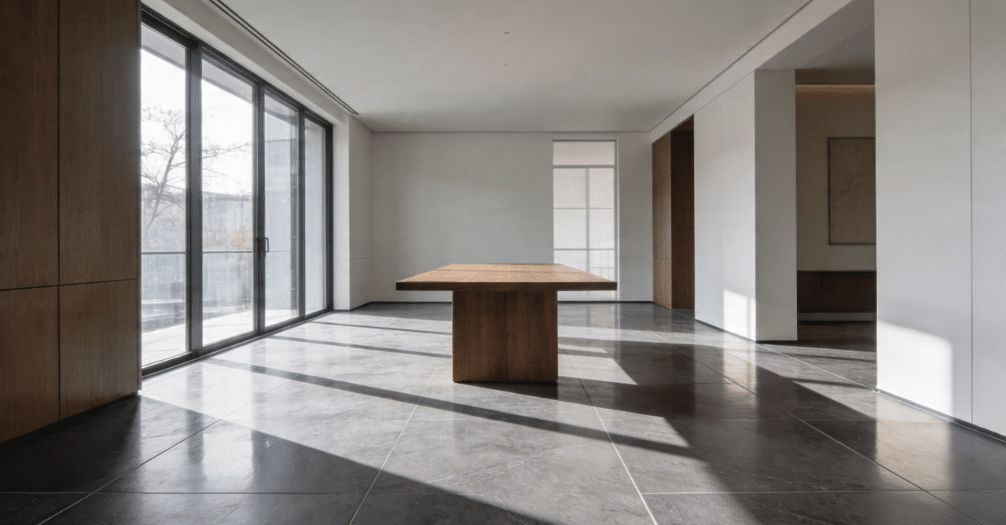
Large format floor tiles, like 12×24, 18×36, or 24×48 inches, can make your space feel bigger, brighter, and more modern because they need fewer grout lines. You’ll also find them easier to clean, since dirt and mildew have fewer places to hide. For the best results, you need a flat, stable subfloor, proper thinset, back-buttering, and careful grout control. Keep going, and you’ll see how to choose and install them with confidence.
Quick Overview
- Large format floor tiles have at least one side 15 inches or more, with popular sizes like 12×24, 18×36, and 24×48 inches.
- They create a spacious, modern look by reducing grout lines and reflecting light, which helps small rooms feel larger.
- Porcelain is the most durable option, while ceramic, travertine, marble, and wood-look porcelain offer different styles and performance levels.
- Large tiles are easier to clean because fewer grout lines trap less dirt, grime, and mildew.
- Successful installation requires a flat subfloor, proper back-buttering, a larger trowel, 3/16-inch grout joints, and lippage control systems.
What Are Large Format Floor Tiles?
Large format floor tiles are porcelain, ceramic, or stone tiles with at least one side measuring 15 inches or more, with common sizes starting around 12 x 24 inches and often extending to 24 x 48 inches or beyond.
You’ll often see a large format tile in 18 x 36, 24 x 24 floor tile, or even bigger slab-style formats.
These tiles use durable, moisture-resistant materials that stand up to wear, scratches, and stains.
Because they cover more area, you get fewer grout lines and a cleaner look.
You can also find finishes that mimic marble, wood, or concrete.
Matte finishes and earthy tones are especially popular for creating a modern, minimalist look.
Why Large Format Tiles Make Rooms Look Bigger
When you use large format floor tiles, the room instantly feels more open because fewer grout lines break up the surface. You get large format tile benefits like a smoother plane that keeps your eye on the whole room, not a busy grid.
Oversized floor tiles also reflect light across broader areas, especially with glossy or pale finishes, so corners look brighter and walls seem farther apart. This visual expansion illusion works well in small bathrooms, kitchens, and narrow halls.
With less clutter and more continuous surface, your space feels calmer, wider, and more balanced overall, even when square footage stays the same. Minimal grout widths help maintain that seamless look and keep the space feeling more cohesive.
The Clean, Seamless Look They Create
Beyond making a room feel bigger, large format floor tiles also give it a cleaner, more seamless look.
With large tile installation, you’ll notice fewer grout lines, so the floor reads as one smooth plane instead of a patchwork of joints. In big tile flooring, matching grout to the tile color can nearly erase visual breaks, letting the surface finish stand out.
That uninterrupted expanse creates a polished, modern feel and supports contemporary design. Large format tiles also help create a sense of spaciousness in compact rooms, making the overall layout feel more open and connected. You’ll also get a tidier appearance on walls or connections, since the clean lines keep your space looking cohesive and refined.
Why Large Format Tiles Work in Busy Homes
In a busy home, large format tiles make daily life easier by cutting down on grout lines that trap dirt, grime, and mildew, so routine cleaning takes less effort.
You’ll spend less time scrubbing and more time enjoying a floor that stands up to kids, pets, spills, and constant foot traffic.
Their dense porcelain body resists chips and cracks, while proper sealing helps block moisture and stains.
You also get a durable surface that holds up in active spaces and lowers long-term upkeep, making everyday care simpler and more reliable in your home.
Large format tiles also create a cleaner, more seamless look that can make busy rooms feel more open.
Where Large Format Floor Tiles Work Best
You’ll get the best results from large format floor tiles in kitchens and bathrooms, where fewer grout lines make cleaning easier and moisture control better.
They also shine in living areas and hallways, where their seamless look makes spaces feel bigger and more connected.
For outdoor and wet zones, they bring durability and a clean finish that stands up to heavy use.
Large format tiles are also ideal for shower walls and floors because fewer joints help reduce water absorption.
Kitchens And Bathrooms
Large-format floor tiles work especially well in kitchens and bathrooms because they create a clean, cohesive look while standing up to heavy daily use.
In your kitchen, they unify floors and backsplashes, reduce grout lines, and make cleaning easier after spills.
In your bathroom, they help walls, floors, and showers feel larger and more luxurious.
You’ll also appreciate their moisture resistance, stain resistance, and durability in damp, high-traffic areas.
With fewer joints, you cut down on grime, mold, and upkeep, while giving both rooms a polished, modern finish that feels seamless and practical.
They also deliver a sleek, contemporary appearance that fits modern design trends.
Living Areas And Hallways
When you want living areas and hallways to feel bigger, brighter, and more polished, large format floor tiles are an excellent choice. You’ll notice fewer grout lines, which makes rooms look more open and less cluttered.
In long hallways, bigger tiles draw the eye forward and add depth. Their smooth, continuous surface also gives your home a clean, modern feel, especially in open-concept layouts.
Because they handle heavy foot traffic well and’re easy to clean, they suit busy family spaces. You can also choose sizes that fit your style and create a cohesive flow from room to room. Large format tiles also offer low-maintenance surfaces that make everyday cleaning simpler and more hygienic.
Outdoor And Wet Zones
Beyond living spaces and hallways, large format floor tiles also shine in outdoor and wet zones.
You can rely on porcelain options to resist weather, UV fading, scratches, and water damage on patios, decks, pool surrounds, and fountains. Their slip-resistant surfaces help you stay safer when rain or splashes make floors slick.
Fewer grout lines mean less grime, mold, and cleaning, so upkeep stays simple. You’ll also get a seamless, expansive look that ties outdoor areas together.
For the best results, choose properly rated tiles and guarantee professional installation with solid drainage. Porcelain tiles are especially recommended for outdoor areas because they offer strength and low porosity. Additionally, pairing tile surfaces with control joints in fluctuating climates can help reduce cracking from expansion and contraction.
Best Materials for Large Format Tiles
Porcelain is often the best choice for large format tiles because it’s dense, durable, and resistant to scratches, stains, and moisture, even in thinner slabs that are still larger than standard tile. Large format tiles typically have at least one edge measuring 15 inches or more, which helps reduce grout lines for a cleaner look.
You’ll also find ceramic as a solid option for floors, walls, and outdoor pavers, especially in high-traffic spaces.
If you want a natural look, travertine or marble can work, but they’re heavier and need careful prep.
Wood-look porcelain gives you the warmth of planks with easier upkeep.
Glass, cement, metal, and resin can add style, though they need specialized adhesives.
How to Choose Tile Size and Finish
How do you choose the right large-format tile? Start by matching size to your room. Tiles 12×24 inches or larger, including 24×48 options, create a clean flow, and bigger rooms usually need bigger tiles. In line with surface area consideration, the best format depends on how much floor or wall space you need to cover.
In small rooms, large tiles can still open the space if you keep grout lines minimal. Choose vertical 12×24 layouts to raise ceilings or horizontal ones to widen walls.
Then pick a finish that fits your style: polished stone for drama, glazed ceramic for marble-like ease, or textured stone looks for warmth.
Check color, pattern, and grout for a seamless result.
Why Subfloor Prep Matters So Much
Even the best large-format tile won’t look right if the floor underneath isn’t ready. You need a flat, stable subfloor because these rigid tiles can’t hide dips, humps, or flexing. Even small deviations can lead to cracked tile, hollow spots, lippage, and weak grout lines. Most slabs and wood floors need prep, so don’t assume yours is ready out of the box. Clean away dirt, grease, and old materials, then level and reinforce the surface. When you skip prep, you risk warranty problems, costly repairs, and a floor that won’t last. For accuracy, use a straightedge to identify high and low spots before you start leveling.
How to Install Large Format Floor Tiles
Set the first course by dry-laying the tiles, then snap your lines and confirm your pattern before you spread mortar.
Make sure your substrate is flat and sound, then key in a thin skim coat.
Spread mortar for one or two tiles at a time, smooth it with the flat trowel side, and comb straight ridges with the right notch at a 45-degree angle.
Use a bigger trowel for larger tiles, back-butter each piece, and set it with a slight twist.
Tap it level, keep 1/4-inch perimeter gaps, and cut edge pieces last.
Grout, Spacers, and Lippage Control
Getting grout joints right starts with the tile itself: individual pieces in the same carton can vary by as much as 1/16″, so a joint of about 3/16″ is often needed to stay within tolerance and avoid uneven spacing and lippage.
You should follow manufacturer guidance, since ANSI A108.02 allows floor lippage of 1/32″ plus inherent warpage with 1/16″ to under 1/4″ joints.
Use mechanical leveling systems, not just spacers, because they align tiles and hold them steady while mortar cures.
Flat substrates and proper thinset help you keep large-format floors true and clean.
Common Installation Mistakes to Avoid
Common installation mistakes usually start before the first tile goes down, when you skip surface prep, choose the wrong trowel, or rush the layout.
You need a flat, stable base; uneven subfloors, missing backer board, or skipped straightedge checks can cause lippage and cracking.
Match cement board thickness to framing, and verify old vinyl can handle tile weight.
Use the right notch size and medium bed mortar for large tiles.
Plan patterns carefully, avoid narrow edge cuts, and set tiles in small sections.
Don’t skip back-buttering, spacers, or movement joints, or you’ll invite failure later.
How to Keep Large Format Tiles Looking New
You can keep large format tiles looking new by sweeping or vacuuming daily and mopping with a soft microfiber head using a cleaner made for tile.
Protect the grout by wiping spills quickly, cleaning away buildup, and resealing it when needed.
Prevent surface damage by avoiding abrasive tools, harsh chemicals, and dirty mop water.
Gentle Daily Cleaning
To keep large format tiles looking new, start with gentle daily cleaning: sweep, dust mop, or vacuum to remove dust and loose dirt before they can scratch the surface.
In high-traffic areas, use a soft-bristle broom or dust mop to limit wear.
After dry cleaning, wash with warm water and a properly diluted neutral or slightly alkaline detergent.
Skip oil-based or waxy products that can streak or film.
Finish by rinsing and wiping with a clean microfiber cloth so you restore brightness, remove residue, and keep the surface looking fresh.
Protect Grout Lines
Grout lines are the first place large format floors show wear, so protecting them goes a long way toward keeping tile looking fresh.
You should seal new grout after it’s cured for 24 to 48 hours, and clean older grout thoroughly before you start. Use a penetrating sealer on the grout only, then wipe any residue off the tiles right away.
Apply two to four coats, letting each dry for an hour. Test the finish with a water drop; if it doesn’t bead, add more.
Reseal yearly, and keep up with routine cleaning and spill control.
Prevent Surface Damage
Beyond grout care, the tile surface itself needs regular protection to stay looking new. You should dry dust daily with industrial microfiber mops to remove grit before it scratches.
In busy areas, use soft-brush auto scrubbers and mild, pH-balanced cleaners; harsh chemicals can dull the finish. Don’t flood the floor when mopping, since excess water can seep into seams.
Protect furniture and equipment with pads, felt, or rubber stoppers, and lift heavy items instead of dragging them. Use entry mats, seal porous areas, and inspect regularly for cracks or moisture.
Frequently Asked Questions
Can Large Format Tiles Be Used on Walls Too?
Yes, you can use large format tiles on walls too. They’ll give you a sleek, seamless look with fewer grout lines, and you can use them in bathrooms, showers, and feature walls beautifully.
Are Large Format Tiles Suitable for Heated Floors?
Yes, you can use large format tiles on heated floors because they transfer heat well and stay durable. You’ll need a flat subfloor, proper adhesive, and gradual heat activation to prevent cracking.
Do They Cost More Than Standard-Sized Tiles?
Yes, you’ll usually pay more for large-format tiles than standard sizes. They cost more per square foot and need extra-skilled installation, flatter subfloors, and special tools, though fewer grout lines can reduce maintenance later.
Can I Install Them Over Existing Tile?
Yes, you can install them over existing tile if it’s stable, level, and clean. You’ll need to repair damage, roughen the surface, use proper mortar, and check height, clearance, and weight limits first.
Are Large Format Tiles Slippery When Wet?
Yes, they can be slippery when wet if you choose glossy, low-rated tiles. You’ll want R10 or higher, or DCOF above 0.42, and matte or textured finishes for safer traction.
Conclusion
Large format floor tiles give your home a clean, open look while making everyday upkeep easier. You can use them to make small rooms feel bigger, busy spaces feel calmer, and high-traffic areas feel more durable. If you choose the right tile, plan the layout carefully, and use proper installation tools, you’ll get a smooth finish that lasts. With simple cleaning and regular care, your floors will keep looking fresh for years.