
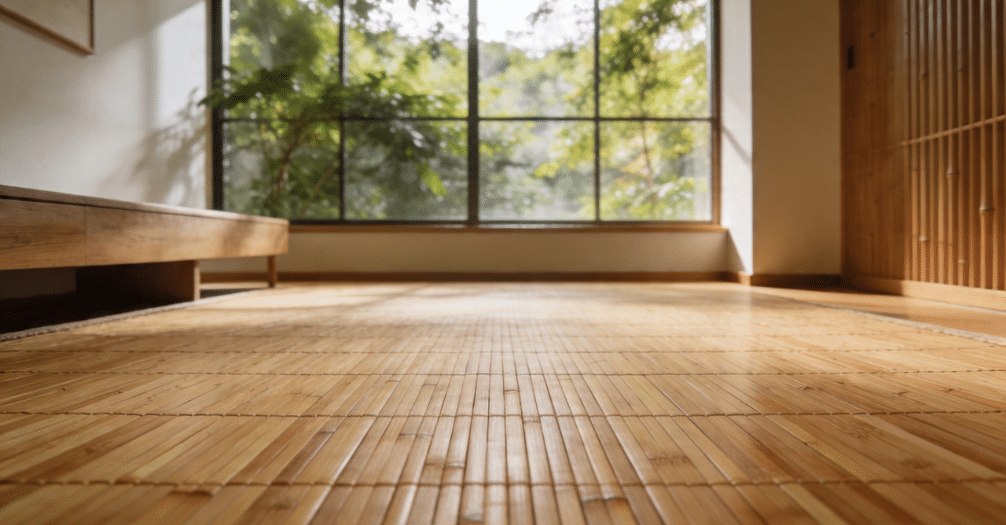
Strand woven bamboo flooring is one of the hardest flooring options you can choose, often reaching 2,600 to 3,000+ Janka and beating many hardwoods in dent resistance. It’s made by compressing shredded bamboo strands under heat and pressure into dense planks. You’ll get strong stability, good moisture resistance, and a durable surface for busy spaces. It’s also a greener choice, and there’s more to know about how it performs, installs, and cares.
Quick Overview
- Strand woven bamboo flooring is extremely hard, often reaching 2600+ Janka and sometimes above 3000.
- Its compressed strand structure gives it excellent dent, scratch, and wear resistance.
- It is harder and more dimensionally stable than many hardwoods, including red oak.
- Installation options include floating, glue-down, or nail-down methods with proper expansion gaps.
- It is low-VOC, renewable, and easy to maintain with sweeping, vacuuming, and damp mopping.
What Makes Strand Woven Bamboo So Hard?
Strand woven bamboo gets its exceptional hardness from its manufacturing process: bamboo strands are compressed under extreme pressure and heat, then woven together into dense planks.
You get strand woven bamboo with bamboo hardness that can reach 2600 on the Janka scale, and some samples exceed 3000. That means it’s about twice as hard as oak and far harder than red oak.
The dense strand structure boosts strand woven durability, resists dents, and handles daily wear well. Strand woven bamboo is typically 2-3 times harder than oak, which helps explain its strong performance.
Because the compressed fibers pack tightly, you’re choosing flooring that outperforms traditional bamboo and many hardwoods in strength and stability. This rapid-regrowth material is also a renewable resource compared to traditional hardwoods, supporting its overall sustainability profile.
How Is Strand Woven Bamboo Flooring Made?
You start with bamboo strands that get compressed under intense heat and pressure into dense planks. For the raw material, Moso bamboo is typically harvested at 5–6 years old and split into uniform strips before shredding. During this process, the intense heat and pressure help create the dense structure that gives strand-woven bamboo its high strength. After that, you machine each plank into shape, add the tongue-and-groove or click-lock profile, and sand away imperfections. Finally, you seal the surface with protective lacquer so your flooring’s ready for installation.
Bamboo Strands Compressed
First, manufacturers select mature Moso bamboo—usually 5 to 6 years old—because it offers the density and hardness needed for flooring. You’ll see the tubes split, shredded, and boiled, then mixed with NAUF resin before compression. Thousands of pounds of pressure squeeze the strands into dense blocks, so the bamboo janka rating climbs far above ordinary wood. Compared with strand woven vs solid bamboo, this method creates the toughest bamboo floor because the fibers lock together tightly. Heat and pressure also improve stability, giving you a harder, more resilient core, and dimensional stability helps the material resist fluctuating moisture levels. Low-VOC adhesive helps keep the product environmentally friendly while still allowing the strands to bond securely.
Planks Finished And Sealed
After the bamboo blocks are pressed, the mill cuts them into planks, usually no longer than 6 feet. Machines tongue-and-groove or lock profiles into each piece before finishing. You then get a final sanding that removes defects and evens the surface. Next, the planks rest for 1 to 2 weeks, so they stay stable and resist cupping or warping. After that, workers fill the ends with putty and apply a protective seal. This step gives hardest bamboo flooring its smooth look and helps the tough bamboo floor finish stay dense, hard, and ready for installation. Protective layers are also added to enhance surface strength and durability, engineered stability helps reduce warping in similar multi-layer flooring systems.
How Does Strand Woven Bamboo Compare to Hardwood?
You’ll find that strand woven bamboo is far harder than many hardwoods, with a Janka rating over 3,000 lbf—well above red oak and white oak. That extra density also helps it resist dents, scratches, and everyday wear better in busy spaces. Compared with hardwood, you can also benefit from bamboo’s lower material cost and stronger eco profile. Strand woven bamboo is also less prone to warping, cracking, or splitting under pressure.
Hardness Versus Hardwood
Strand woven bamboo is often harder than many popular hardwoods, thanks to its compressed fiber structure and resin bonding. You’ll usually see Janka ratings around 4,000 to 5,000, which puts it above oak, maple, and even many hickory products.
Traditional bamboo sits far lower, closer to red oak’s range, so strand woven bamboo gives you a dramatic jump in hardness. That extra density helps it shrug off dents and scratches better than most wood flooring.
If you want a floor that outperforms common hardwoods in hardness, strand woven bamboo clearly stands out. Dense fiber packing also helps limit moisture absorption, which improves dimensional stability.
Durability And Stability
Beyond hardness, strand woven bamboo also holds up impressively well in daily use.
You get far better dent, scratch, and wear resistance than with most hardwoods, so pets, chairs, and heavy traffic leave fewer marks. Its compressed fiber structure and resin binding help keep planks tough and stable.
You’ll also notice less seasonal movement than red or white oak, because the material handles humidity shifts more predictably.
Strand woven bamboo’s Janka hardness rating is typically much higher than red or white oak, helping explain its superior dent resistance.
Strong click or tongue-and-groove joints stay secure, and many planks resist moisture for up to 30 hours, giving you dependable performance in busy rooms.
Eco Benefits Compared
Compared with traditional hardwood, strand woven bamboo offers a greener profile because it regenerates in about five years, while many hardwood trees need more than 30 years before harvest.
You get a rapidly renewable grass that eases pressure on forests and doesn’t require the long replanting cycles hardwood needs.
Its dense construction also lasts longer, so you replace it less often and create less waste.
When manufacturers use low-VOC finishes and responsible sourcing, you can lower indoor emissions too.
This makes it an attractive eco-friendly flooring option for homeowners who want durability without relying on slow-growing timber.
Where Does Strand Woven Bamboo Flooring Work Best?
Because it’s extremely hard wearing and more moisture resistant than solid bamboo, strand woven bamboo flooring works best in busy, everyday spaces like hallways, living rooms, kitchens, and homes with kids or pets.
You can rely on it in high-traffic areas because it handles heavy use better than oak and stays looking good.
It also suits bedrooms, nurseries, and home offices when you want a clean, low-maintenance surface.
In kitchens and other humidity-prone rooms, it performs well too, as long as you avoid wet rooms and bathrooms.
It’s also a strong choice for heated floors and some commercial spaces.
Its click-lock installation makes it easier to fit as a floating floor over plywood or concrete.
What Are the Best Installation Options?
When you’re choosing how to install strand woven bamboo flooring, the best option depends on your subfloor, the room’s conditions, and how permanent you want the result to be.
You can float planks over a level, clean, dry subfloor with underlayment, which makes DIY work easier and allows movement.
Choose glue-down if you want a permanent bond, especially over concrete, but prep and moisture control matter.
Use nail-down on solid wood subfloors when you need maximum hold.
In every case, plan expansion gaps, order extra material, and use matching moldings to finish edges neatly. Strand woven bamboo flooring is valued for its strength, durability, and added stability compared with standard bamboo flooring.
Why Is Strand Woven Bamboo Flooring So Stable?
Strand woven bamboo flooring stays stable because its manufacturing process turns bamboo strands into a dense, solid material under extreme heat and pressure.
You get a floor made from compressed bamboo parings, not loose strips, so the structure stays uniform through the full thickness.
That density gives you higher dimensional stability, with less shrinking, swelling, cupping, and warping than solid wood.
It also handles moisture better, so spills and humid rooms cause fewer problems.
Because it’s much harder than oak and regular bamboo, it resists dents and keeps its shape longer, even in busy homes.
How Do You Care for Strand Woven Bamboo Floors?
To keep strand woven bamboo floors looking their best, you’ll want to clean them gently and consistently. Sweep daily with a soft bristle broom, and vacuum weekly using a soft brush attachment. Use a dust mop indoors to catch grit before it settles into beveled edges.
- A quiet broom gliding over sunlit planks
- A lightly damp microfiber mop, never soaking wet
- Felt pads under chairs, rugs by the sink
Choose bamboo-safe cleaners, and use diluted alcohol for stubborn spots. Skip wax, vinegar, and harsh detergents.
Wipe spills immediately, dry the floor after mopping, and lift furniture when you move it.
Frequently Asked Questions
Can Strand Woven Bamboo Be Refinished?
Yes, you can refinish strand woven bamboo, but you’ll want to check the manufacturer’s specs first. You can sand and reseal it, though you’ll usually only get one or two refinishes before wear limits.
Is Strand Woven Bamboo Flooring Eco-Friendly?
Yes, you can consider strand woven bamboo flooring eco-friendly because it regenerates quickly, needs no replanting, and often carries FSC certification. You’ll want to note adhesive use, but it still beats many hardwoods and plastics.
Is It Suitable With Underfloor Heating?
Yes, you can use it with underfloor heating if you choose a reputable, heating-rated product, preferably engineered bamboo. You’ll need proper installation, a dry, level subfloor, and controlled humidity to avoid warping or cracking.
Can It Be Installed in Basements?
No, you can’t install solid strand woven bamboo in basements because moisture causes problems. You can use engineered click-lock bamboo there instead, since you can float it over underlayment and a vapor barrier for protection.
What Adhesives Are Used in Manufacturing?
You’ll see specially formulated adhesive soak the bamboo filaments during manufacturing, with about 10% glue and 90% bamboo. Excess adhesive drains back, fully saturating each strand and helping create the dense flooring.
Conclusion
Strand woven bamboo flooring gives you the hard-wearing beauty you want with the stability you need. Because it’s made by compressing bamboo fibers under intense pressure, it can stand up to daily traffic better than many hardwoods. You can use it in busy living areas, offices, and other high-traffic spaces with confidence. If you install it properly and care for it regularly, you’ll enjoy a floor that looks great and performs well for years.