
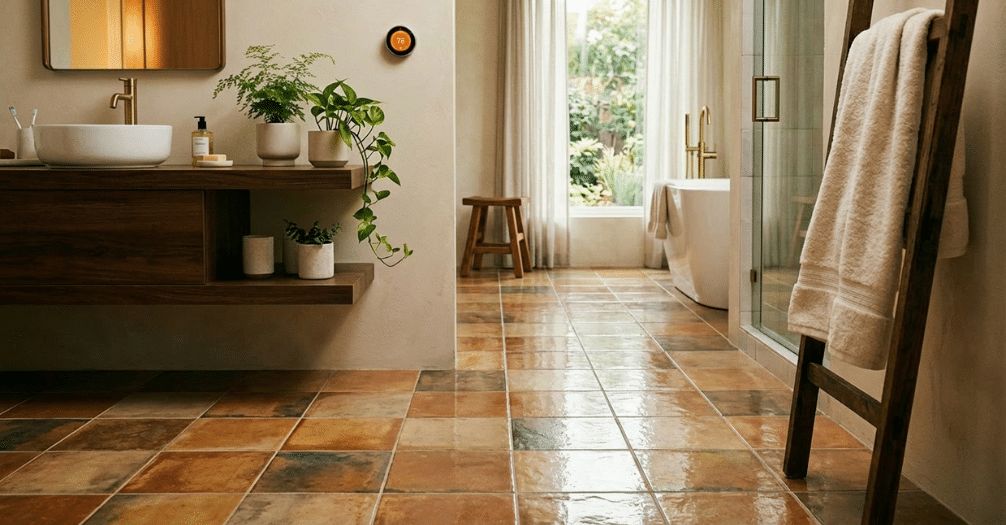
Heated tile floors usually cost $8 to $20 per square foot, with smaller bathrooms often costing more because of fixed labor and materials. Electric systems are cheaper to install and heat up faster, while hydronic systems can save more in larger spaces. Porcelain and ceramic tile work best for heat transfer and durability. You’ll get even, quiet warmth, lower energy use, and added home value, and there’s more to compare on costs, installs, and upkeep.
Quick Overview
- Heated tile floors typically cost $8 to $20 per square foot, with small rooms costing more per square foot.
- Electric systems are cheaper to install and heat faster, while hydronic systems cost more but can be more efficient.
- Installation requires a clean, level, insulated subfloor, plus testing mats or cables before covering them with tile.
- Porcelain, ceramic, and natural stone tiles transfer heat best and work well with radiant floor systems.
- Heated floors improve comfort, energy efficiency, and home value by creating a warm, spa-like upgrade buyers like.
How Much Do Heated Tile Floors Cost?
Your tile floor heating cost often lands between $8 and $20 per square foot, and basic radiant heat installation runs about $8.86 to $12.80 per square foot in 2026. Smaller bathrooms usually cost more per square foot because fixed expenses like the thermostat, electrician work, and membrane roll sizes get spread across fewer square feet.
A small 73-square-foot bathroom can total about $2,500, while a 225-square-foot area may reach roughly $4,200.
Labor, floor removal, electrical upgrades, permits, and minimum fees can raise your price.
Electric Vs. Hydronic Heated Tile Floors
When you compare electric and hydronic heated tile floors, you’ll notice big differences in upfront cost, installation complexity, and long-term operating expenses. Electric systems usually cost less to install and heat up faster, while hydronic systems need more equipment but can save you more over time. Your best choice depends on how you weigh performance, efficiency, and the size of the space. Electric floor heating is often the better choice for bathrooms and kitchens because it’s ideal for targeted areas and remodels.
Electric System Costs
Electric heated tile floors usually cost less to install than hydronic systems, with most projects running about $5 to $10 per square foot for materials and installation, or roughly $8 to $15 per square foot with professional labor.
Your heated tile floor budget often climbs in small rooms because fixed charges, like a $1,000 electrician fee and thermostat, weigh more on fewer square feet. You’ll also pay for heating cable, membrane, and tile labor.
For underfloor heating tile, larger areas spread costs better, and total electric system costs stay clear, predictable, and easier to plan. Radiant floor systems can also be cost-efficient over time when paired with smart thermostats and used during milder weather.
Hydronic System Costs
Although hydronic heated tile floors usually cost more upfront than electric systems, they can be a smart choice for larger spaces because the installed price typically runs about $7 to $15 per square foot, with PEX tubing alone often accounting for $7 to $22 per square foot of that total.
You’ll also need to budget for a boiler, which can add $3,200 to $9,000, plus plumbing labor at $45 to $200 per hour.
For radiant floor heating tile, the payoff is a warm tile floor across more rooms, which can spread infrastructure costs and make whole-house projects easier to justify. Hydronic systems often cost more upfront but can be cheaper to run over time with efficient boilers or heat pumps.
Performance And Efficiency
Once you’ve weighed installation costs, the next question is how each system performs day to day. You’ll notice electric tile heat responds fastest, often warming smaller rooms in 30–60 minutes, while hydronic systems take longer but reward you with lower operating costs in larger spaces. In a well-insulated home, a low heat loss design can make either system feel more effective with less energy.
- Electric floors convert nearly 99% of power to heat.
- Hydronic floors can be 25–30% more efficient than forced air.
- Heat-pump hydronic systems may deliver 400–700% efficiency.
Both systems spread warmth evenly and quietly. If you want quick comfort in one room, choose electric; for whole-home efficiency, hydronic usually wins.
What Affects Heated Tile Floor Costs?
Heated tile floor costs depend on more than just square footage. You’ll pay more in small rooms because fixed items like membranes, thermostats, and electrician fees spread over fewer square feet.
Larger spaces lower the per-foot cost, and you usually need heating only in 60% to 80% of the area. Your system choice matters too: electric often costs $8 to $15 per square foot, while hydronic can vary more and may need a boiler.
Tile and stone transfer heat best. Older homes, awkward layouts, poor insulation, and subfloor repairs can also raise your total. Sweeten matches homeowners with trusted general contractors to help streamline the renovation process.
How Heated Tile Floors Get Installed
Before the system goes in, you need to prep the floor carefully: clean the subfloor, vacuum away debris, measure the space, and map out heating zones so you can avoid fixtures like vanities.
Dry-fit mats, membranes, or cables, and insulate or seal the subfloor if needed.
Then install your system:
- Roll out electric mats and fasten them carefully.
- Press cables or tubing into their channels with even spacing.
- Set the floor sensor, test resistance, and protect wire penetrations.
Finish by covering everything with thinset, self-leveling compound, or backer board, then let it cure before you wire the thermostat. Schluter Heated Floor Kit helped make the basement bathroom installation especially straightforward.
How Much Do Heated Tile Floors Cost To Run?
When you run heated tile floors, your cost depends on the system size and your electricity rate, with small mats costing just a few cents an hour and larger floors running closer to a few tenths of a dollar.
If you use them about 8 hours a day, daily and monthly totals can add up, but they’re often lower than you’d expect once the floor reaches temperature.
You can also cut costs with thermostat cycling and programmable settings, since they keep the system from running at full power nonstop. Programmable thermostats can also help manage energy use by allowing zone-specific control, which may reduce overall heating costs.
Hourly Operating Costs
Running heated tile floors usually costs less than you might think: a 73 sq ft floor runs about $0.11 per hour at $0.12/kWh, while a 225 sq ft area is about $0.34 per hour.
Your actual hourly cost depends on room size and wattage, but most radiant systems stay under $0.15 per hour when they’re operating normally.
- Small mats can cost about 2 cents per hour.
- Larger floors can still remain affordable.
- Electric systems typically don’t run nonstop.
Because the thermostat cycles the heat, you won’t pay full output all the time, and that helps keep each hour manageable.
Hourly operating costs can range from $0.01 to $0.15 per hour.
Usage Factors And Savings
Your heated tile floor’s running cost depends on a few key factors, and the biggest ones are electricity rate, system size, and how often the thermostat calls for heat.
If you pay around the national average of $0.12 per kWh, costs stay moderate, but local rates from $0.10 to $0.30 can swing your bill sharply.
Bigger zones use more power, so a 225 sq ft area costs more than a 73 sq ft one.
You’ll save most when your thermostat cycles heat, insulation is solid, and you run it only 4 to 8 hours daily.
Smart thermostats can also lower costs by using scheduled heating cycles so the floor warms only before you need it.
Best Tile Materials For Heated Floors
For heated floors, porcelain tile is often the best all-around choice because its dense, thin profile transfers heat quickly and resists water exceptionally well, making it ideal for bathrooms, showers, and saunas. Ceramic tile also conducts heat efficiently and holds warmth for hours in kitchens or lobbies.
Natural stone works too, especially granite, if you want strong, durable performance. If you’re still weighing your options across all these materials, our complete guide to tile flooring covers the differences between porcelain, ceramic, natural stone, and more to help you pick the right fit for your project.
Luxury vinyl tile and engineered wood can also work with radiant systems, but tile usually gives you the best heating response.
Why Heated Tile Floors Add Home Value
Heated tile floors can boost your home’s value because they combine comfort, efficiency, and a high-end feel that buyers notice right away.
You’ll attract eco-conscious shoppers with lower energy use, smaller utility bills, and less wasted heat than forced-air systems.
Buyers also love the spa-like warmth, especially in bathrooms and kitchens, where cold tile usually turns them off.
That emotional appeal can raise listing views, speed up offers, and support a stronger asking price.
What To Check Before Installing Heated Tile Floors?
Before installing heated tile floors, check the subfloor, the heating components, and the tile materials to make sure everything is ready for a safe, long-lasting result.
Make sure your subfloor is clean, level, dry, and TCNA-compliant, with insulation where needed to limit heat loss.
- Test heating mats or cables with a multimeter.
- Inspect for damage and verify resistance stays within spec.
- Confirm your tile, thinset, and grout suit radiant heat.
Plan cable placement away from fixtures, secure spacing, and let the system cure before you turn it on.
Frequently Asked Questions
What Maintenance Do Heated Tile Floors Require?
You’ll usually need little upkeep. You should inspect tiles for damage, recalibrate thermostats sometimes, and call a pro if you notice cold spots, noise, or uneven heat. Hydronic systems need yearly pressure, water, and pump checks.
Can Heated Floors Be Installed Under Existing Tile?
Yes, you can install heated floors under existing tile if you’ve got access from below. You’ll use under-joist panels or mats, keep the tile in place, and add insulation for efficiency.
How Long Do Heated Tile Floor Systems Last?
Heated tile floor systems usually last 30–40 years for electric mats and 30–50 years for hydronic tubing. You can stretch that lifespan with quality installation and maintenance, though boilers and pumps may need replacement sooner.
Are Heated Tile Floors Safe for Children and Pets?
Yes, you can feel confident that heated tile floors are generally safe for children and pets. They keep temperatures low, hide wiring underneath, avoid hot spots, and use thermostat controls and certifications for added protection.
Can a Thermostat Control Multiple Heated Floor Zones?
Yes, you can control multiple heated floor zones with one thermostat in some setups, but you’ll usually need a zone-capable smart controller or separate thermostats for different rooms, flooring types, or load limits.
Conclusion
Heated tile floors can make your home more comfortable, stylish, and valuable. You’ll pay more upfront for the system and installation, but you may enjoy lower energy use, better warmth, and a higher resale appeal over time. Before you install, make sure your flooring, subfloor, and budget all line up with your goals. If you choose the right setup, you’ll enjoy efficient, luxurious heat under your feet for years.