
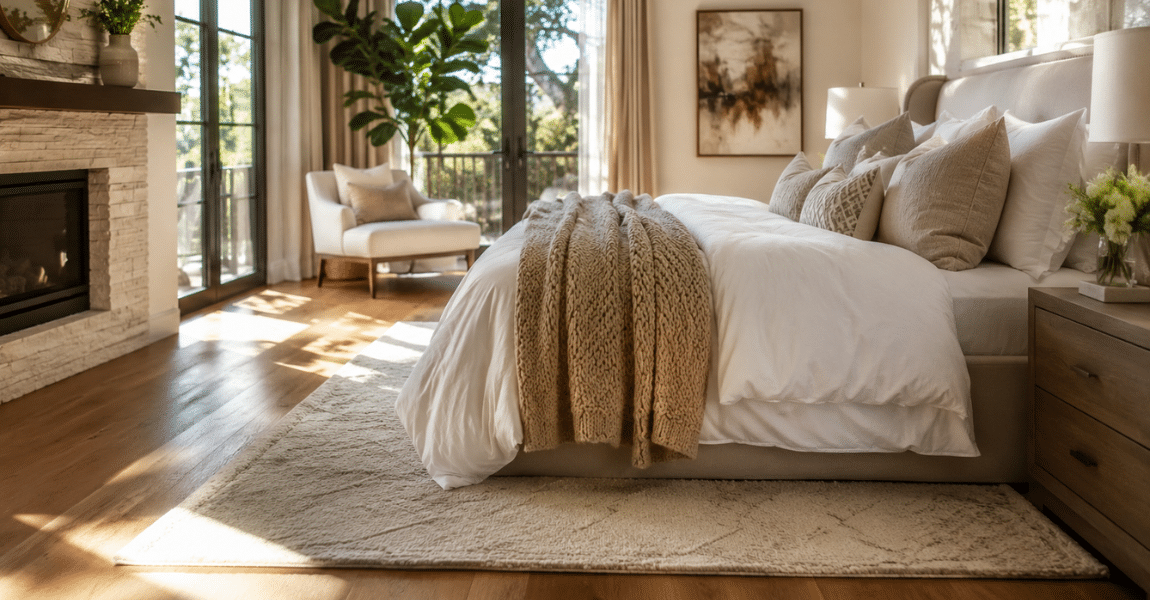
The best bedroom flooring comes down to two great options — carpet for warmth and softness underfoot, or hardwood for a timeless, allergy-friendlier surface (add rugs for comfort). Luxury vinyl plank and laminate are solid budget alternatives. Because bedrooms are low-traffic and never wet, durability barely matters here — comfort, warmth, and air quality lead.
The bedroom is the one room where I tell people to lead with their feet, not their head. It’s private, low-traffic, and moisture isn’t a concern, so you can prioritize how the floor feels at 6 a.m. on a cold morning. The classic decision is carpet versus hardwood, and there’s no universal right answer — it depends on whether you value cozy warmth or clean simplicity. Here’s how to decide.
What makes a floor right for a bedroom
- Comfort and warmth underfoot. Bare feet, getting out of bed — this is the priority that separates bedroom flooring from everywhere else.
- Low-traffic durability. Bedrooms see little wear, so heavy-duty durability isn’t essential.
- Healthy indoor air / allergies. What’s under your nose for 8 hours a night matters; some floors trap allergens, others don’t.
- Sound insulation. Soft floors absorb sound for a quieter, calmer room — and matter in upstairs bedrooms over living spaces.
Bedroom flooring compared at a glance
| Material | Comfort/ warmth | Allergy-friendly | Sound absorption | Typical installed cost (per sq ft) |
|---|---|---|---|---|
| Carpet | Warmest, softest | Lower (traps allergens) | Best | $3–$8 |
| Hardwood / engineered | Warm | Best (wipes clean) | Low (rug helps) | $6–$15 |
| Luxury vinyl (LVP) | Medium–warm | Good | Low–medium | $4–$11 |
| Laminate | Medium | Good | Low | $3–$8 |
The best options, ranked
1. Carpet — the warmest, coziest choice
For pure comfort, nothing beats carpet in a bedroom. It’s soft and warm underfoot, it’s the best sound insulator (a real plus in upstairs bedrooms), and it’s inexpensive. The trade-off is air quality: carpet traps dust, dander, and allergens, so it needs regular vacuuming and isn’t ideal for allergy sufferers. Choose a quality low-VOC carpet and pad, and vacuum with a HEPA machine, and it’s a cozy, budget-friendly winner.
Pros: warmest and softest, best sound absorption, inexpensive, safe (kids fall on it).
Cons: traps allergens, shows stains, needs regular cleaning. See the carpet flooring guide.
Best for: cold climates, kids’ rooms, anyone who wants maximum cozy comfort.
2. Hardwood & engineered hardwood — timeless and clean
Hardwood gives a bedroom a warm, classy, timeless look and — importantly — it doesn’t trap allergens, so it’s the healthier pick for anyone with asthma or allergies. It wipes clean in seconds. It’s harder and cooler than carpet, but a large area rug under and around the bed solves that beautifully, giving you the best of both: clean air with soft landing spots. Engineered wood is the smarter choice over concrete slabs.
Pros: timeless, adds value, allergy-friendly, easy to clean.
Cons: harder/cooler than carpet, costs more, wants a rug for softness. See the hardwood flooring guide.
Best for: allergy sufferers, long-term homes, a clean classic look (with rugs).
3. Luxury vinyl plank (LVP) — the practical middle ground
LVP gives you a wood look, easy cleaning, and allergy-friendly hard surface for less than real wood. It’s warmer and quieter than tile or laminate, comfortable enough for a bedroom, and a great choice for guest rooms, rentals, or budget refreshes. Pair it with a rug for warmth.
Pros: affordable, easy clean, allergy-friendly, comfortable, durable.
Cons: less premium than wood, lower resale value. See the vinyl flooring guide.
Best for: guest rooms, rentals, budget-conscious bedrooms.
4. Laminate — the value wood look
Laminate is the budget option for a wood-look bedroom: scratch-resistant, easy to install, and inexpensive. It can sound a little hollow and hard underfoot (a good underlayment helps), and it can’t be refinished, but for a low-traffic bedroom it holds up fine.
Pros: cheapest wood look, scratch-resistant, easy install.
Cons: harder/hollow underfoot, no refinishing. See the laminate flooring guide.
Best for: budget bedrooms and quick updates.
What I tell people to avoid
- Tile — it’s cold and hard, the opposite of what a bedroom wants. Fine in hot climates, otherwise skip it.
- Any hard floor with no rug — if you go hardwood, LVP, or laminate, budget for a rug; bare feet on a cold morning will change your mind fast.
- Cheap carpet and pad if you have allergies — go low-VOC and vacuum often, or choose hardwood instead.
What bedroom flooring actually costs
Rough 2026 ranges (materials + install): carpet and laminate $3–$8/sq ft, LVP $4–$11, engineered/solid hardwood $6–$15. Bedrooms are mid-sized, so a 150 sq ft bedroom runs roughly $450 in carpet to $2,000+ in premium hardwood. Carpet’s low cost is a big reason it remains popular for bedrooms despite the air-quality trade-off.
Bedroom flooring ideas
- Hardwood with a large plush rug under the bed — the clean-air-plus-soft-landing combination I recommend most.
- Wood-look LVP to match the rest of an upstairs level seamlessly.
- Soft, neutral low-VOC carpet in a child’s room for warmth and safety.
- Wide-plank light oak for a calm, modern, hotel-like bedroom.
Frequently asked questions
Carpet or hardwood for a bedroom?
Carpet is warmer, softer, quieter, and cheaper; hardwood is cleaner for allergies, adds resale value, and looks timeless (add a rug for softness). Choose carpet for cozy comfort, hardwood for clean air and value.
What is the healthiest bedroom flooring?
Hardwood or another hard surface (LVP, laminate) is healthiest for air quality because it doesn’t trap dust and allergens the way carpet does. If you prefer carpet, choose low-VOC products and vacuum with a HEPA filter.
Best flooring for bedrooms with allergies?
Hardwood, engineered wood, or luxury vinyl — hard surfaces that wipe clean and don’t harbor dust mites or dander. Add washable rugs for warmth.
Is vinyl plank good for bedrooms?
Yes — LVP is comfortable, quiet enough, easy to clean, allergy-friendly, and affordable. It’s a great practical choice, especially for guest rooms and rentals.