
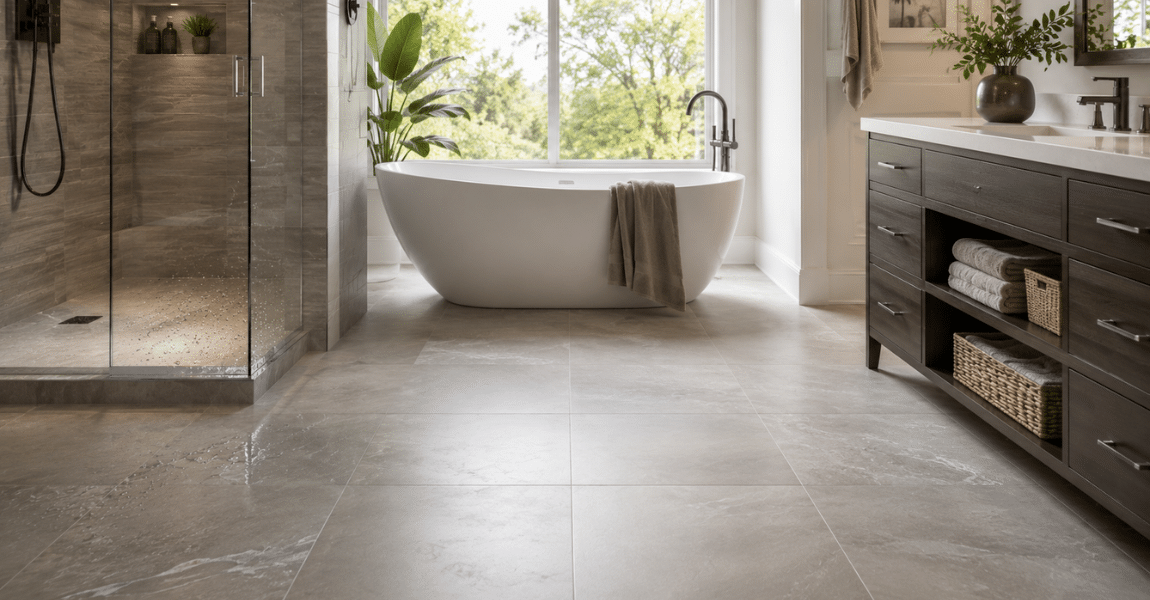
The best bathroom flooring is porcelain tile or waterproof luxury vinyl (LVP/LVT). Both handle constant moisture, resist slips when chosen correctly, and clean easily. Tile is the gold standard for durability and resale; waterproof vinyl is warmer, softer, and cheaper to install. Real wood and standard laminate don’t belong in a bathroom.
A bathroom is the harshest room in the house for flooring. Standing water, steam, humidity swings, and the safety risk of a wet surface all stack up. In 25 years of installs, almost every bathroom floor failure I’ve been called to fix came down to one thing: someone used a material that couldn’t truly handle water. Let’s make sure that isn’t you.
What makes a floor right for a bathroom
- Truly waterproof — not “water-resistant.” Water will sit on this floor and seep toward seams and edges.
- Slip resistance when wet — this is a safety issue, not a nice-to-have. Look for textured or matte finishes and, for tile, a higher slip rating.
- Easy to clean — bathrooms grow mildew; a low-maintenance surface saves you constant scrubbing.
- Comfort — bare feet, cold mornings. Worth weighing against the harder options.
Bathroom flooring compared at a glance
| Material | Waterproof? | Slip safety (wet) | Comfort | Typical installed cost (per sq ft) |
|---|---|---|---|---|
| Porcelain / ceramic tile | Yes | Good–excellent (textured/matte) | Hard, cold | $7–$20 |
| Luxury vinyl (LVP/LVT) | Yes (rigid core) | Good | Warm, soft | $4–$12 |
| Vinyl sheet | Yes (seamless) | Good | Soft | $2–$6 |
| Natural stone | With sealing | Varies (hone for grip) | Hard, cold | $10–$30 |
The best options, ranked
1. Porcelain & ceramic tile — the bathroom standard
Tile is the most durable, water-resistant choice and the one I install most in bathrooms. Porcelain is denser and more moisture-resistant than ceramic, so it’s my pick for floors and especially wet zones. The two things people get wrong: grout (seal it, and consider epoxy grout in showers) and slip safety (choose a matte or textured tile with a decent slip rating — glossy tile is dangerous when wet). Tile is also the natural partner for heated floors, which takes the chill off.
Pros: waterproof, extremely durable (50+ years), pairs with radiant heat, endless styles.
Cons: hard and cold, grout needs sealing, higher install cost. See the tile flooring guide.
Best for: primary bathrooms, long-term homes, anyone wanting a forever floor.
2. Waterproof luxury vinyl (LVP/LVT) — warm and forgiving
Rigid-core waterproof vinyl has become a genuinely excellent bathroom floor. It’s warmer and softer than tile, more forgiving on bare feet and dropped bottles, and a competent DIYer can install it. It convincingly mimics wood and stone. For a powder room or a family bathroom, it’s often the smarter, cheaper choice.
Pros: waterproof, warm, comfortable, affordable, DIY-friendly.
Cons: edges/seams must be installed well; not as premium or durable as tile. See the vinyl flooring guide.
Best for: family bathrooms, powder rooms, budget-conscious or DIY renovations.
3. Vinyl sheet — the seamless, budget-proof option
Sheet vinyl is underrated for bathrooms precisely because it’s nearly seamless — fewer seams means fewer places for water to get underneath. It’s the cheapest fully-waterproof option and soft underfoot. It looks less premium than tile or plank, but in a kids’ bathroom or rental, it’s hard to beat for the money.
Pros: seamless waterproofing, cheapest option, soft, easy clean.
Cons: lower-end look, can be punctured, harder to repair (replace the sheet).
Best for: kids’ bathrooms, rentals, tight budgets.
4. Natural stone — beautiful, demanding
Stone (marble, slate, travertine) is stunning and adds real luxury, but it’s porous and needs regular sealing to stay waterproof, and some stones are slippery unless honed. It’s the highest-maintenance, highest-cost option here. Gorgeous in the right home, wrong choice if you want low fuss.
Pros: unique, high-end, adds value.
Cons: needs sealing, can be slippery, expensive, high maintenance.
Best for: high-end primary baths where you’ll commit to upkeep.
What I tell people to avoid
- Solid hardwood — it warps, cups, and rots with bathroom moisture. Don’t.
- Standard (non-waterproof) laminate — swells at the seams the first time water sits on it.
- Carpet — it traps moisture and grows mildew. Even a bath mat is better than carpeting a bathroom.
- Glossy tile on the floor — a slip hazard when wet; save high-gloss for walls.
What bathroom flooring actually costs
As a rough 2026 guide (materials + install): vinyl sheet $2–$6/sq ft, LVP $4–$12, porcelain tile $7–$20, natural stone $10–$30. Bathrooms are small, so material choice matters less to the total than you’d think — a 40 sq ft bathroom in mid-range tile might run $400–$800 installed. The bigger costs are waterproofing prep, removing old flooring, and any subfloor repair from past leaks.
Bathroom flooring ideas that work
- Wood-look porcelain plank — the warmth of wood with total waterproofing.
- Small hex or penny tile — more grout lines actually mean more grip underfoot (great near tubs/showers).
- Large-format porcelain to make a small bathroom feel larger with minimal grout.
- Matte stone-look LVP for a spa feel that’s warm and slip-friendly.
Frequently asked questions
What is the best non-slip bathroom flooring?
Textured or matte porcelain tile with a good slip rating, or small mosaic tile (more grout = more grip). Matte-finish LVP is also a safe, warm choice.
Is vinyl plank good for bathrooms?
Yes — rigid-core waterproof LVP is an excellent bathroom floor: warm, soft, and fully waterproof when installed properly. Just don’t use non-waterproof “water-resistant” budget vinyl.
What flooring lasts longest in a bathroom?
Porcelain tile, easily 50+ years with properly maintained grout.
Can you put laminate in a bathroom?
Only fully waterproof laminate lines, and even then I’d choose LVP or tile instead. Standard laminate will fail in a bathroom.