
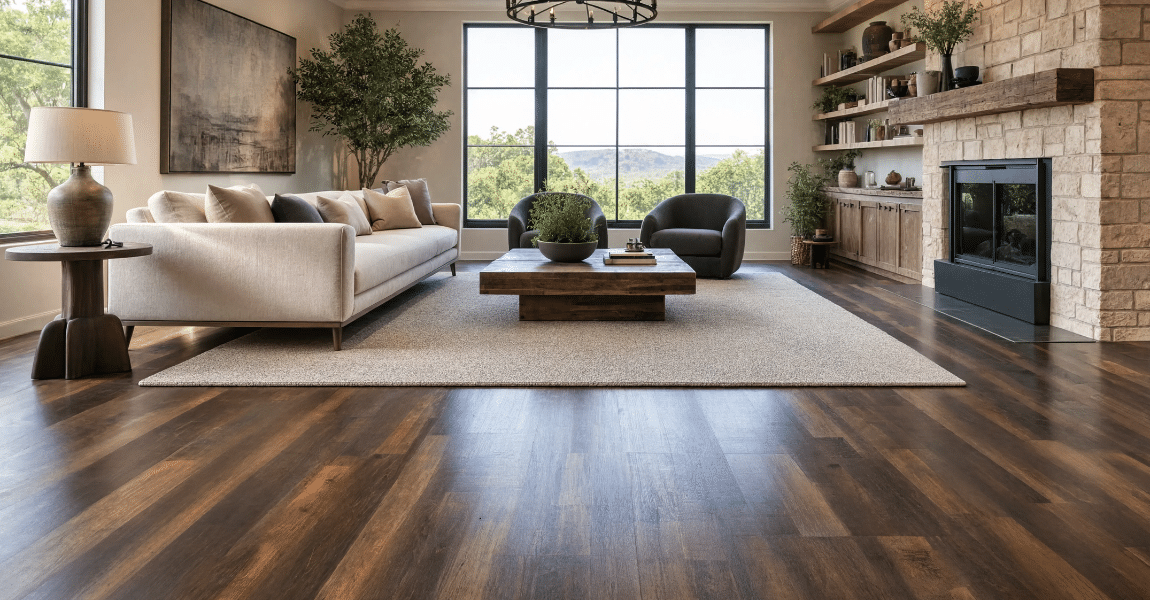
The best living room flooring is hardwood or engineered hardwood for warmth, style, and resale value, with luxury vinyl plank (LVP) as the durable, budget-friendly runner-up that handles family life. Tile suits warm climates, carpet adds cozy comfort, and laminate is the value pick. Unlike a kitchen or bath, you have real freedom here — so the choice comes down to lifestyle and budget more than survival against water.
The living room is the room people agonize over most, and I understand why — it’s the floor you see and use the most, and the one guests notice. The good news is that without the moisture constraints of a wet room, almost every material is on the table. After 25+ years of installs, here’s how I help people narrow it down.
What makes a floor right for a living room
- Durability for traffic. This is one of the highest-traffic rooms in the house; the floor needs to wear well for years.
- Warmth and comfort. You sit, walk barefoot, and kids play here. Cold, hard floors work but want rugs.
- Style and resale value. This is your home’s showpiece floor — looks and buyer appeal matter.
- Easy maintenance. Living rooms collect dust, spills, and foot traffic; easy cleaning keeps them looking good.
Living room flooring compared at a glance
| Material | Durability | Comfort/ warmth | Resale appeal | Typical installed cost (per sq ft) |
|---|---|---|---|---|
| Hardwood | High | Warm | Highest | $6–$15 |
| Engineered hardwood | High | Warm | High | $6–$14 |
| Luxury vinyl (LVP/LVT) | High | Medium–warm | Medium | $4–$12 |
| Tile | Very high | Cool/hard | Medium | $7–$20 |
| Laminate | High (scratch) | Medium | Low–medium | $3–$8 |
| Carpet | Medium | Warmest | Low–medium | $3–$8 |
The best options, ranked
1. Hardwood & engineered hardwood — the classic showpiece
Real wood is still the floor that makes a living room feel finished, and it’s the strongest resale play — buyers consistently respond to hardwood. Solid hardwood can be refinished several times over decades; engineered hardwood gives you the same look with more stability, which matters over concrete slabs or in homes with humidity swings. Both are warm underfoot and age beautifully. The trade-offs are cost, and that they scratch and dent (though a refinish revives solid wood).
Pros: timeless, warm, highest resale value, refinishable (solid).
Cons: scratches/dents, higher cost, sensitive to big spills. See the hardwood flooring guide.
Best for: long-term homeowners and anyone prioritizing resale and a premium feel.
2. Luxury vinyl plank (LVP) — durable family-proof value
LVP is what I recommend for busy households that want the wood look without the worry. It’s waterproof, scratch- and dent-resistant, comfortable, and far cheaper than real wood. Kids, pets, spills — it shrugs them off. It won’t add as much resale value as hardwood and a flooring person can tell it isn’t wood up close, but for everyday living it’s hard to beat.
Pros: durable, waterproof, kid/pet-proof, affordable, low maintenance.
Cons: less resale value than wood, not “real.” See the vinyl flooring guide.
Best for: families, pet owners, rentals, and budget-conscious renovations.
3. Tile — durable and great in warm climates
Tile is bulletproof and stays cool, which is a feature in hot climates and a drawback in cold ones. It’s the most durable option and easy to clean, but it’s hard underfoot for a room where you relax, so it usually wants area rugs. In the right setting — a Southern or Southwestern home, an indoor-outdoor living space — it’s excellent.
Pros: extremely durable, cool in heat, easy clean, water-resistant.
Cons: hard and cold, less cozy, higher install cost. See the tile flooring guide.
Best for: warm climates, indoor-outdoor living, high-durability needs.
4. Laminate — the budget wood look
Modern laminate offers a convincing wood look with a very scratch-resistant surface for the lowest cost of the hard-surface options. It can’t be refinished and adds little resale value, but for a living room on a budget it performs well and installs fast.
Pros: affordable, scratch-resistant, easy click install, wood look.
Cons: no refinishing, lower resale value, can sound hollow underfoot. See the laminate flooring guide.
Best for: tight budgets and quick refreshes.
5. Carpet — the cozy, quiet choice
Carpet is the warmest, softest, quietest option, and for a media room or a family that wants a cozy space to sprawl, it’s still a great choice. It traps allergens and shows stains, and it’s fallen out of fashion for main living rooms, but for comfort and sound absorption nothing beats it.
Pros: warmest and softest, quiet, inexpensive, great for media rooms.
Cons: stains, traps allergens, dated for main living spaces. See the carpet flooring guide.
Best for: media rooms, cozy dens, cold climates.
What about avoiding anything?
Unlike wet rooms, the living room has no hard “never use this” list — every material works. The only real mistakes are gloss finishes that show every footprint, very dark floors that show dust and pet hair, and choosing a delicate floor for a house full of kids and dogs. Match the floor to how you actually live.
What living room flooring actually costs
Rough 2026 ranges (materials + install): carpet and laminate $3–$8/sq ft, LVP $4–$12, engineered hardwood $6–$14, solid hardwood $6–$15, tile $7–$20. The living room is usually one of the larger rooms, so material choice has a big impact on the total — a 300 sq ft living room ranges from about $900 in laminate to $4,500+ in premium hardwood or tile.
Living room flooring ideas
- Wide-plank engineered oak in a light, natural tone — the current go-to for a warm, modern look.
- Wood-look LVP carried from the kitchen into the living room for a seamless open-plan flow.
- Large-format tile with big area rugs to define seating zones in a warm-climate home.
- Low-pile or patterned carpet in a media room for sound and coziness.
Frequently asked questions
What is the most popular living room flooring?
Hardwood and wood-look luxury vinyl plank are the two most popular choices — hardwood for resale and warmth, LVP for durability and value.
Hardwood or vinyl for a living room?
Hardwood adds more resale value and a premium feel; LVP is more durable, waterproof, kid/pet-proof, and cheaper. Choose hardwood for a long-term home you’ll keep nice; LVP for a busy household.
What flooring adds the most home value?
Real hardwood consistently adds the most resale value in living spaces — buyers seek it out.
Best flooring for a high-traffic living room?
Luxury vinyl plank or tile for maximum durability, or a hard, durable engineered hardwood if you want real wood that can take a beating.
Related: best flooring for bedrooms· best flooring for kitchens· best flooring for every room· hardwood flooring guide