
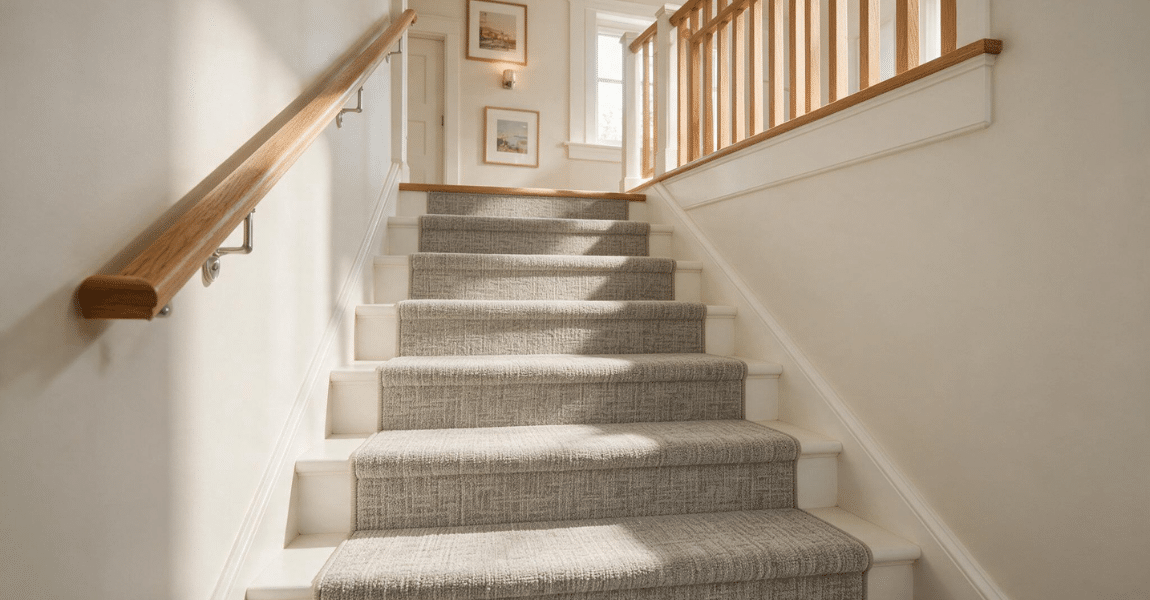
For the best carpet for stairs, choose a low-pile nylon, triexta, or wool style that gives you firm grip, strong crush recovery, and lasting durability. You’ll get safer footing with a dense, tightly woven carpet, plus high-density padding that adds stability without bounce. Darker or multi-tonal colors hide wear better, while regular vacuuming keeps dirt from building up. The right choice also depends on your stair traffic, and there’s more to know beyond the basics.
Quick Overview
- Choose low-pile nylon, Triexta, or wool for stairs because they offer strong traction, durability, and crush recovery.
- Use firm, high-density padding and proper installation to prevent shifting, wrinkles, and slip hazards.
- Select loop-pile, Berber, or textured cut-loop styles for better grip and wear resistance on high-traffic stairs.
- Pick darker or multi-tonal colors like charcoal, taupe, or navy to hide dirt, footprints, and everyday wear.
- Vacuum regularly and spot-clean spills quickly to maintain safety, appearance, and carpet longevity.
What Makes Stair Carpet Safe?
What makes stair carpet safe is a combination of traction, secure installation, and the right padding. You get better grip from nylon or loop-pile Berber, and silicon carbide treads can add long-lasting traction.
A secure backing or adhesive keeps each carpet runner stairs in place on wood, tile, or concrete, so it won’t shift underfoot. Choose padding that’s firm and high-density, not too thick or soft, because you need stability, not bounce.
Stair safety isn’t a minor concern: research published in the American Journal of Emergency Medicine found that stair-related falls send more than one million Americans to emergency rooms every year – and the right carpet is one of the simplest ways to improve traction on every step.
When you install everything on a clean, dry surface, you improve safe stair carpet performance and stair carpet durability without creating wrinkles, gaps, or loose edges. Regular maintenance helps prevent dirt buildup and keeps the treads safe over time.
Why Low-Pile Carpet Works Best
Low-pile carpet works best on stairs because it gives you a firm, stable surface that’s easier to walk on and less likely to shift or mat down over time.
You get better traction and fewer trip risks, which boosts safety and stability for kids, older adults, and anyone using mobility aids.
Its dense, tightly woven construction handles heavy foot traffic, so you’ll enjoy strong durability and longevity.
If you want the stair carpet best type, choose a low-profile option that resists crushing, cleans easily, and keeps its shape without losing performance after repeated use.
High twist levels in carpets reduce matting and crushing – for cut-pile styles on stairs, look for a twist level of at least 5 turns per inch (TPI). Low-pile carpets also help reduce dust and allergens, making them a cleaner choice for busy homes.
Best Carpet Fibers for Stairs
When you’re choosing the best carpet fiber for stairs, focus on durability, traction, and how well the material handles constant foot traffic. For stairs, look for a face weight of 40–63 oz per square yard – heavier face weight in a low pile means denser, more durable construction that stands up to concentrated wear on each tread.
Wool gives your carpet for stairs natural resilience, stain resistance, and a rich look, though it costs more and needs careful cleaning. Nylon 6,6 is the most durable choice for stairs because of its crush recovery. Triexta offers softness, built-in stain protection, and strong performance for busy steps.
Polyester feels plush and keeps color well, but it’s less durable.
Olefin-Polypropylene resists stains and saves money.
Loop-pile Berber boosts grip and hides wear, making stair carpet installation safer.
Pick the best stair carpet fiber for your traffic, budget, and maintenance needs.
| Fiber | Durability on Stairs | Stain Resistance | Cost | Best For |
|---|---|---|---|---|
| Nylon 6,6 | Excellent – best crush recovery | Good (excellent if solution-dyed) | –$ | Busy family staircases |
| Triexta (PTT) | Very good – springs back well | Excellent – built into fiber | $$ | Homes with kids and pets |
| Wool | Very good – natural resilience | Good – needs prompt cleanup | $$$$ | Formal or low-moisture stairs |
| Olefin (polypropylene) | Fair – mats under heavy traffic | Very good | $ | Light-use or basement stairs |
| Polyester (PET) | Fair – crushes faster | Very good | $ | Guest staircases, tight budgets |
| Berber (loop) | Good – dense loops hide wear | Good | –$ | Traction-focused stairs (no pets) |
Nylon Carpet for Busy Staircases
When you choose nylon for busy staircases, you get strong durability that stands up to heavy foot traffic and resists crushing and wear.
Its low-pile, tightly woven texture can help reduce slipping on stairs while staying comfortable underfoot.
You’ll also find it easy to vacuum and spot-clean, so your stairs stay neat with less effort.
Nylon’s high tensile strength makes it a smart choice for stairs that see constant use.
Nylon Durability
Nylon is a workhorse for busy staircases because its fibers have the strength and resilience to handle constant foot traffic without quickly breaking down. You get a carpet that keeps bouncing back after compression, so your stairs stay plush longer.
Consider:
- high tensile strength for repeated pressure
- resistance to matting and crushing
- lasting performance over 15 years with care
- easy maintenance with regular vacuuming and prompt spill cleanup
Treated nylon also helps you fight stains and fading, making it a smart choice when you want durability, value, and everyday reliability on stairs. Solution-Dyed Nylon can offer even better resistance to fading and stains, making it especially practical for stairways exposed to frequent use.
Slip-Resistant Texture
Because busy staircases need more than good looks, a dense low-pile nylon carpet gives you firmer footing and better traction than plush or high-pile options.
You’ll feel the difference in its tightly woven, low-profile texture, which helps footwear grip instead of slide. Loop pile nylon also creates secure contact points, so you’re less likely to misstep going up or down.
In high-traffic homes, it keeps its shape and grip under pressure, even with kids and pets. Flooring experts often recommend it because it outperforms polypropylene, Berber, and shag when you need stable, slip-resistant stairs every day. Non-slip carpet treads can further reduce the risk of slips and falls.
Easy Stair Maintenance
Once you’ve got the right stair grip, upkeep should stay simple, and nylon makes that easier than many other carpet choices.
- Vacuum 2–3 times weekly, or daily on busy stairs, making three passes from top to bottom.
- Use a handheld vacuum or hose brush to catch edge grit, and add entry mats to trap soil early.
- Blot spills fast with a white cloth and warm water; for stains, use mild detergent, then rinse well.
- Schedule deep cleaning, like hot water extraction, every 24 months.
Nylon’s protective coatings help resist moisture, stains, and matting.
Steam cleaning can help remove dirt deep in the carpet fibers when stairs need a more thorough clean.
Wool Carpet for Natural Strength
Wool brings natural strength to staircase carpeting, thanks to fibers that spring back after foot traffic instead of flattening out. You get a resilient surface that resists crushing, keeps its plush feel, and looks good for years.
Its natural coil structure helps each fiber bounce back, while microscopic scales add durability and help dirt stay less visible. You’ll also appreciate wool’s moisture-rich makeup, which makes it harder to ignite and naturally safer indoors. Wool carpet durability
With regular vacuuming and basic care, your stairs can keep their shape, comfort, and appearance without relying on harsh treatments.
Olefin Carpet for Budget-Friendly Stairs
Olefin carpet gives you a budget-friendly, moisture-resistant option that can handle moderate traffic in places like hallways, entryways, basements, and screened-in areas.
You’ll like its polypropylene fibers because they repel water and resist fading in sunny spots.
- Spills wipe up fast with a damp cloth.
- It resists wear better than natural fibers.
- It’s affordable and low-maintenance.
- It works best where traffic is steady, not brutal.
Choose loop pile if you want to hide wear.
Avoid dragging heavy furniture, since olefin can mat, crush, and flatten faster than nylon under constant pressure.
While olefin isn’t the top choice for the busiest staircases, it’s a smart pick for basement stairs, secondary staircases, or budget projects where moisture resistance matters more than long-term crush recovery.
Triexta Carpet for Stain Resistance
Triexta gives you built-in stain resistance, so spills are easier to wipe away before they soak in.
Its soft, durable fibers also feel comfortable underfoot while standing up well to stair traffic. You can count on that protection without relying on topical treatments that wear off over time. Triexta’s helical fiber structure helps it spring back better than standard polyester, which is one reason it performs so well on busy stairs.
Built-In Stain Resistance
Unlike nylon carpets that depend on topical treatments, triexta builds stain resistance right into the PTT fiber itself, so spills have far less chance to bond with the yarn. You get long-lasting protection that doesn’t wash or wear off.
- Water-based messes, like wine or juice, wipe up with warm water.
- The fiber’s low absorbency helps block staining and dulling.
- It resists bleach, food dyes, and many everyday soils.
- Routine vacuuming and quick cleanup usually keep it looking fresh.
That built-in defense makes stairs easier to maintain, even in busy homes.
Soft Durable Fiber
Soft underfoot and built to last, this fiber brings a plush, almost silk-like feel without sacrificing strength.
You’ll notice a matte, nylon-like look and a smoother step than polyester or nylon, thanks to its untreated softness. Triexta’s springy structure helps it rebound after vacuuming and heavy foot traffic, so it stays resilient on stairs.
It also resists water, mold, and mildew, while dense fibers help reduce trapped dust and pollen.
Because it’s easy to clean and pet-friendly, you get comfort, durability, and stain resistance in one smart stair carpet choice.
Berber Carpet for Stair Traction
Berber carpet can work well on stairs when it’s dense, tightly packed, and properly installed. You’ll get better traction when the pile yarn is close together and the fiber choice supports grip, like bulked continuous filament (BCF) nylon. BCF yarn is spun from continuous strands rather than short staple fibers, so it sheds less and resists the fuzzing and pilling that staple-fiber carpet can develop under heavy stair traffic.
A high density rating improves slip resistance, and secure installation keeps the carpet from shifting.
- Choose dense construction.
- Use professional installation.
- Add adhesive strips or tape if needed.
- Clean it regularly to preserve traction.
Berber isn’t inherently slippery, but loose edges or buildup can reduce safety fast.
Best Stair Carpet Styles
When you choose stair carpet styles, low-pile textures can give you a smooth, practical surface that handles daily traffic well. Durable patterned weaves add traction, hide wear, and bring visual interest to your staircase. Together, these options help you balance safety, style, and long-term performance by supporting durable and easy to clean flooring choices that stand up to everyday use.
Low-Pile Textures
For stair carpeting, low-pile textures give you the best mix of durability, traction, and safety. You’ll get better grip, less matting, and easier cleaning when you choose a tighter surface. As a benchmark, aim for a carpet density rating of 3,000 or higher – calculated as 36 × face weight ÷ pile height – which is the threshold most installers consider stair-grade.
- Level loop: You’ll benefit from strong crush recovery and steady traction.
- Cut-loop patterns: You’ll hide wear and keep stairs looking cleaner.
- Textured cut pile: You’ll enjoy a softer feel without losing safety.
- Berber loops: You’ll get a durable, affordable option for moderate use.
Pick nylon-based low-pile styles and keep the height low, so you reduce tripping risk and handle daily traffic well.
Durable Patterned Weaves
Durable patterned weaves are a smart choice for stair carpet because they hide wear, handle daily traffic, and keep stairs looking cleaner longer.
You can choose nylon for the toughest performance; it resists abrasion, stains, and daily foot traffic. Olefin also stands up well to constant use and keeps its shape.
If you want warmth and texture, wool blends offer strong durability and patterned surfaces that mask dirt. Flatweaves with intentional color shifts add an earthy, handcrafted look.
For extra comfort and fit, try padded stair treads or custom sizes.
How Carpet Color Hides Wear
Color choice can make a big difference on stairs, because darker and more neutral tones tend to hide everyday wear better than light, solid shades.
You’ll see fewer obvious marks when you choose shades that absorb light and blend with messes. Consider:
- Charcoal or deep brown for dirt, crumbs, and stains
- Beige, taupe, or greige for balanced coverage
- Navy, forest green, or burgundy for rich camouflage
- Multi-tonal textures and speckles for footprints and lint
These colors don’t erase wear, but they do make it less noticeable between cleanings, helping your stairs stay polished longer.
Stair Runners vs Full Coverage
When you weigh stair runners against full coverage, safety and traction should come first.
You’ll also want to compare how much each option exposes to dirt and how easy it’s to clean.
From there, think about style and installation, since each choice changes both the look of your stairs and the effort required.
Safety And Traction
On a staircase, traction matters just as much as appearance. You’ll usually choose between runner grip and full-coverage stability, and each helps in different ways.
- Runners boost traction where you step most, while exposed edges can show boundaries clearly.
- Full carpet gives you even grip from edge to edge, which can feel steadier on turns.
- Quality padding and secure fastening matter either way, since they reduce slips and impact.
- If kids, pets, or socks are common, you’ll want the option that keeps footing predictable and safe.
Coverage And Cleanability
Coverage affects both how your stairs look and how easy they’re to keep clean.
If you choose a stair runner, you’ll cover the center of each tread and leave the wood edges visible. That means less material, lower cost, and simpler cleaning. You can vacuum and spot-clean runners quickly, and you can replace worn sections without redoing the whole stairway.
Full carpet covers every tread and riser, hides the original surface, and feels more uniform. It also traps more dust, hair, and dirt, so you’ll usually need deeper cleaning more often to keep it fresh and neat.
Style And Installation
Style also plays a big role in choosing the best carpet for stairs, especially when you’re weighing a runner against full coverage.
A runner shows off wood edges and lets you use bold patterns without crowding the stairwell, while full carpet gives you a smooth, unified look.
- Runners need less material, so you’ll usually save 20–40%.
- Installation takes moderate effort with tack strips, adhesive, and nosing.
- Full coverage costs more and needs more labor.
- Rods can add flair, but they’ll raise your total.
Waterfall vs. Hollywood Installation
The two main ways to install carpet on stairs are the waterfall method and the Hollywood method (also called cap-and-band). Your choice affects appearance, cost, and how well the carpet grips each step.
With a waterfall installation, the carpet flows continuously over the edge of each tread and down the riser without being tucked under the nosing. It uses slightly more carpet but installs faster, making it the more affordable and most common option in residential homes.
With a Hollywood installation, the installer wraps the carpet tightly around the nosing of each stair and staples it beneath the overhang. This creates a tailored, contoured profile that shows off the stair’s shape. It takes more labor and skill, so it costs more, but the tight wrap also leaves less loose material at the nosing — the exact spot where your foot lands.
Which is safer? The Hollywood method holds a slight edge for safety because the carpet is secured directly to the nosing, reducing any give underfoot. For thick or patterned carpets, waterfall is often the practical choice since tight nosing wraps can distort patterns.
Carpet for Pets and Kids
If you’ve got pets and kids running up and down the stairs, nylon is usually the smartest pick because it’s tough, flexible, and holds its shape well, while solution-dyed nylon and triexta add stronger stain resistance for accidents and spills.
You’ll also want a low-pile texture, like loop, cut-and-loop, or frieze, because it gives better traction, resists snagging, and cleans more easily after mud, crumbs, or pet messes.
Synthetic fibers handle heavy wear better than natural ones, and they’re easier to maintain. If you want extra longevity, look for warranties that back texture retention and stain protection. For households with young children, it’s also worth choosing carpet and padding that carry the Carpet and Rug Institute’s Green Label Plus certification, which verifies through independent lab testing that a product meets strict limits for volatile organic compound (VOC) emissions – a meaningful factor for indoor air quality in the stairways and hallways kids use all day.
How Carpet Padding Improves Grip
A good stair pad does more than add cushioning—it helps keep your runner locked in place. You’ll get better grip because padding adds friction, buffers hard treads, and stops bunching under foot traffic.
For safer stairs, choose:
- Rubber padding for firm, durable traction
- Felt-rubber blends for stable positioning
- 8 lb density padding, ¼-inch to ⅜-inch thick, for balance
- Skilled installation with tackless strips and even placement
Proper padding can cut slip risk and support children, seniors, and busy households. When your runner stays put, you move with more confidence on every step.
Stick to that thickness ceiling: many carpet manufacturers void their stair warranties when padding exceeds 7/16 inch, because overly thick, soft padding creates the bounce that leads to slips.
Keep Stair Carpet Clean Longer
Once your stair carpet stays firmly in place, the next step is keeping it looking fresh for as long as possible. You’ll get better results with stain-resistant fibers like nylon or olefin, which handle daily traffic and cleanups well. Choose a low-pile, high-density style so dirt doesn’t settle in as easily and fibers bounce back after each step. Patterns and darker colors also help hide soil and wear. Vacuum often, especially along edges and stair noses, and spot-clean spills right away. Professional sealing now and then helps protect against lingering pet odors and stains, which supports longer-lasting cleanliness on carpeted areas. A professional cleaning now and then helps your stairs stay crisp longer.
How to Read Carpet Warranties
When you compare carpet warranties, don’t just look at the length of coverage—check what each one actually protects. Read the definitions closely, because wear, stains, and texture aren’t the same.
- Wear warranties usually cover fiber loss, not normal flattening.
- Texture retention may protect against crushing and fuzzing.
- Stain coverage often requires prompt cleanup with approved methods.
- Manufacturing defect warranties cover construction or dyeing errors, not bad installation.
Keep invoices, cleaning receipts, and photos. Follow vacuuming, professional cleaning, and padding rules, or you could void coverage.
Choose Carpet by Stair Location
The best carpet for your stairs depends on where those stairs lead and how much traffic they get.
For basement or lower-level stairs, you should choose nylon, ideally solution-dyed, because it stands up to moisture, spills, and constant use. Keep the pile low to reduce trip risk.
For front-entry stairs, go with nylon or wool, plus dense padding and a textured cut pile or Berber for grip.
For light-use stairs, polyester can work. If you’ve got pets or kids, prioritize nylon and skip snag-prone loops.
For formal stairs, wool adds warmth and polish. Since carpet can trap allergens, it’s especially important to select a durable pile and keep up with regular cleaning for healthier indoor air.
How Much Does It Cost to Carpet Stairs?
Carpeting stairs typically costs $15 to $55 per step installed, or about $180 to $880 for a standard 13–16 step staircase, including carpet, padding, and labor. Stairs cost more per square foot than open rooms because each step requires individual cutting, tack strips, and shaping around nosings and spindles.
Several factors move the price:
- Fiber choice: Budget olefin and polyester sit at the low end, mid-grade nylon and triexta in the middle, and wool at the premium end.
- Installation method: Waterfall installs cost less; Hollywood (cap-and-band) wraps add labor per step.
- Stair shape: Curved, spiral, and L-shaped staircases cost significantly more than straight runs. Spindles and open risers add per-step charges, and any landing is measured and billed separately as a small room-rate area.
- Runner vs. full coverage: A stair runner uses less material, but the bound edges and precise centering often make installed runner costs comparable to – or higher than – full coverage.
For a busy family staircase, mid-grade solution-dyed nylon usually delivers the best cost-per-year of service, since it lasts longer under traffic than cheaper fibers that need replacing sooner.
Frequently Asked Questions
Can Stair Carpet Be Installed Over Existing Hardwood Treads?
No, you shouldn’t install stair carpet directly over hardwood treads without proper prep. You can add a runner with pads, tape, or staples, but you’ll need secure fastening to avoid slipping, bunching, and wear.
How Often Should Stair Carpet Be Professionally Deep Cleaned?
You should professionally deep clean your stair carpet every 6 to 12 months; if you’ve got pets, kids, or heavy traffic, aim for 3 to 6 months, and vacuum stairs two to three times weekly.
What Carpet Underlay Thickness Works Best for Stairs?
You should use 6–9mm underlay on stairs, with 8mm high-density padding often best. Keep stair runners at 7mm or less so you avoid tripping hazards, edge lifting, and installation problems.
Are Patterned Stair Carpets Harder to Match During Repairs?
Yes-patterned stair carpets are harder for you to match during repairs because repeats, fading, and stair angles complicate alignment. You’ll usually need precise measurements and professional matching to avoid visible seams and mismatched patterns.
Can Stair Carpets Improve Noise Reduction Between Floors?
Yes, you can cut noise between floors with stair carpets. You’ll absorb footstep impact, reduce echo, and limit vibration transfer, especially when you pair dense carpet with high-density padding or rubber underlay.
What Pile Height Is Best for Stairs?
The best pile height for stairs is ½ inch or less. Low pile keeps footing firm, reduces trip risk at the nosing, and resists crushing under concentrated foot traffic. Combine it with a dense construction and firm padding for the safest result.
How Long Does Carpet on Stairs Last?
Stair carpet typically lasts 5 to 10 years – noticeably less than the same carpet in a bedroom – because traffic concentrates on the center of each tread. High-quality nylon with dense construction and proper padding lasts longest, while budget polyester or olefin may show wear in 3 to 5 years on busy stairs.
What Is the Difference Between Waterfall and Hollywood Carpet Installation?
Waterfall installation drapes carpet continuously over each stair nosing, while Hollywood (cap-and-band) installation wraps and secures the carpet tightly around each nosing for a tailored look. Waterfall costs less and suits patterned carpet; Hollywood offers a crisper profile and a more secure grip at the step edge.
Conclusion
Choosing the best carpet for stairs means balancing safety, durability, and style. You’ll get better traction with low-pile carpet, and strong fibers like nylon or wool will help your stairs handle daily wear. Don’t overlook padding, because it adds grip and comfort. If you keep your stair carpet clean and check the warranty, you’ll protect your investment longer. Pick the right carpet for your staircase, and you’ll make every step safer and more inviting.