
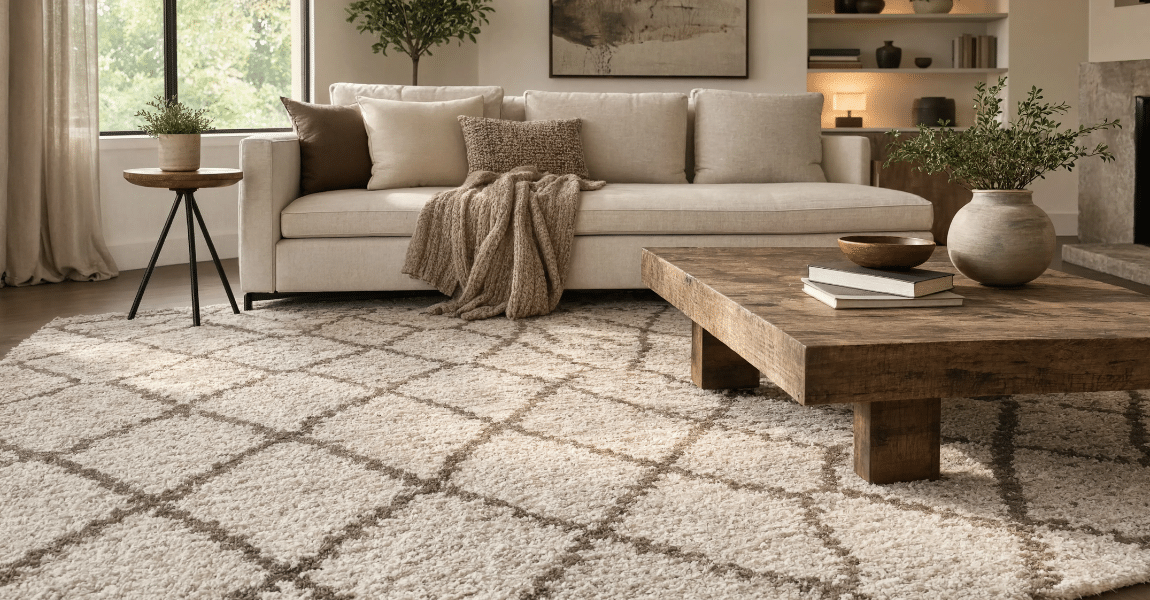
Berber carpet is a loop-pile flooring choice made from fibers like nylon, olefin, wool, or polyester, and it’s known for its dense texture and speckled look. You’ll often like it if you need something durable, stain-resistant, and good at hiding dirt in busy rooms. It works well for hallways, stairs, and family spaces, but snagging and cleaning can be concerns. If you keep going, you’ll see how it compares with other carpets and where it fits best.
Quick Overview
- Berber carpet is a loop-pile carpet with uncut loops that create a dense, textured surface and help hide dirt.
- It comes in nylon, olefin, wool, and polyester, with material choice strongly affecting durability, stain resistance, and cost.
- Berber is well-suited for high-traffic areas because it resists crushing, wears well, and can last 10 to 15 years with proper care.
- It works best in family rooms, hallways, stairs, offices, basements, and playrooms where durability and easy maintenance matter most.
- Consider snagging risk, regular vacuuming, prompt spill cleanup, and your budget before choosing Berber carpet.
What Is Berber Carpet?
Berber carpet is a loop-pile carpet with uncut loops that create a dense, textured surface and a speckled look from color flecks. You’ll often see berber carpet in neutral tones with flecks that hide dirt and everyday marks.
It’s a style, not one material, and you can find it in nylon, olefin, wool blends, or polyester. The loop pile carpet design gives it a rugged, informal feel that works well in busy rooms.
Berber carpet durability depends on the fiber you choose, but its tight loops help it stand up to traffic and maintain a low, tidy profile. Its looped construction can also snag on sharp objects or pet claws, so it is best to keep an eye on wear in active households.
How Berber Carpet Is Made
When you look at Berber carpet, you’ll see its loop-pile construction, where weavers build dense, sturdy texture by looping the yarn through the backing.
You’ll also notice that makers use fibers like wool, often hand-spun and naturally dyed, to shape the carpet’s look and feel.
During weaving, they thread the pile into a backing that holds the structure together and gives the carpet its lasting strength.
Berber women also spin wool by hand using drop spindles, carefully controlling finger pressure to create uniform threads.
Loop-Pile Construction
The hallmark of Berber carpet is its loop-pile construction, where yarn fibers are pulled through the backing and left as uncut loops. You’ll notice that this design gives you natural stain resistance and helps hide footprint marks.
When you compare berber carpet pros cons, you’ll see loop height variations matter: level loops look even, while multi-level loops add pattern and texture.
Berber’s chunky loops can boost durability in busy rooms, but they also increase snag and pull vulnerability.
Because cut-pile carpet needs an extra step, loop pile often costs less and keeps a textured, practical feel. Extremely durable loop carpets are also a popular choice for every room in the home.
Fiber Materials Used
Fiber choice shapes how a Berber carpet looks, feels, and performs, so you’ll want to match the material to the room and your budget.
In this berber carpet guide, you’ll see why fibers matter for berber carpet rooms and berber carpet snags.
- Wool costs more, but it’s soft, durable, and naturally stain-resistant.
- Nylon offers strong crush resistance and solid value.
- Olefin and polyester cost less, yet they suit lighter use.
- Blends can improve comfort and performance.
Choose wool for longevity, nylon for busy areas, and synthetics when you need savings. Berber carpet is often a great value for improving home aesthetics.
Weaving And Backing
Behind every Berber carpet is a weaving process that shapes its texture, strength, and fringe. You’ll usually see wool yarn spun from carded Atlas sheep fibers, then woven on a vertical loom with twisted warp cords that hold everything tight.
You can choose hand-knotting for dense, durable piles, or flat-weaving for a thinner, sturdy rug with no knots. Traditional pieces end with tied warp threads and visible fringe, while modern versions often use tufted loops stitched into a backing, sealed with latex, and stabilized with a secondary layer. Berber carpets are traditionally made by women artisans in Morocco, preserving a long artisanal heritage.
Why Berber Carpet Lasts So Long
You’ll notice Berber carpet lasts so long because its tight loop construction resists crushing and holds up well under daily foot traffic. The low-pile fibers also spread weight evenly, which helps prevent matting and breakdown. When you choose durable fibers like nylon, you get even more long-term performance. Regular deep cleaning once or twice a year can also help extend its lifespan.
Tight Loop Construction
Berber carpet lasts so long because its tight loop construction holds fibers in place and resists everyday wear. You get a dense surface where continuous loops stay connected, so the pile doesn’t separate easily. That structure also helps the carpet keep a neat look in busy rooms.
- Low-profile loops resist crushing
- Uniform height spreads wear evenly
- Proper installation keeps backing hidden
- Quality padding supports loop stability
You’ll still need regular vacuuming, but the tight weave makes upkeep simpler. It also helps the carpet handle stairs, hallways, and other high-traffic spots without losing its shape quickly. In a floor plan, the main carpet area often sees the most wear.
Resilient Low-Pile Fibers
Because the low-pile fibers support one another instead of standing alone, wear spreads across the whole surface and the carpet resists matting and crushing.
You get a tougher carpet because each loop helps carry pressure, so high-traffic areas like stairs, basements, and family rooms hold up better.
Nylon usually lasts the longest, while olefin fights stains and moisture and wool adds eco-friendly durability.
With good padding and regular deep cleaning, you can expect Berber to last 10 to 15 years, often longer with quality fibers and steady care.
Regular vacuuming helps keep Berber looking new and supports its durability over time.
How Berber Carpet Resists Stains?
Thanks to its tight loop construction, Berber carpet resists stains by keeping spills near the surface instead of letting them sink deep into the pile. You can blot liquids before they absorb, and the dense weave helps stop wicking into the backing.
- Nylon and olefin improve cleanability.
- Built-in stain treatments add protection.
- Flecked patterns disguise soil and spills.
- Prompt vacuuming and blotting preserve resistance.
You’ll still need to act fast, especially with oily messes, because they cling more stubbornly.
With quick care and approved cleaners, you can keep Berber looking cleaner longer without relying on it to be stain-proof. Nylon Berber is especially durable in high-traffic areas, making it a strong choice for busy homes.
Berber Carpet vs Cut-Pile Carpet
When you compare Berber carpet with cut-pile carpet, the biggest difference starts in the fiber construction.
Berber uses tight loops, so you get a durable, low-maintenance textured, resilient surface that resists crushing and keeps looking neat in active spaces.
Cut-pile carpet trims those loops into tufts, giving you a softer, plusher feel and more style options, from Saxony to shag.
If you want easy upkeep and stronger wear resistance, Berber fits better.
If you value comfort and a smoother look, cut-pile wins.
Your choice comes down to durability, softness, and maintenance.
Best Rooms for Berber Carpet
You’ll get the best results from Berber carpet in high-traffic living spaces like family rooms and living rooms, where it can handle daily wear while still looking neat.
It also works well in play rooms and basements, where its durable looped construction stands up to constant activity.
In home offices and hallways, you’ll appreciate how it stays firm under rolling chairs and heavy foot traffic.
High-Traffic Living Spaces
Berber carpet is a smart choice in high-traffic living spaces because its loop construction holds up well under constant use. You can rely on it in rooms that need durability without losing style.
Its neutral tones help open floor plans feel connected, while solid colors keep a living room looking polished.
- Resists wear in busy areas
- Hides footprints and light wear
- Fits modern or traditional décor
- Works well in hallways and stairs
You’ll also appreciate its streamlined look in connected spaces, where it keeps changes smooth and practical.
Family And Play Rooms
Family and play rooms are some of the best places for Berber carpet because it handles daily foot traffic, furniture movement, and active use without losing its shape.
You’ll appreciate how the looped construction spreads weight evenly, so the carpet stays neat longer than plush options.
In play spaces, it hides dirt, softens busy activity, and resists visible impressions from toys or rearranged furniture.
It also gives you a stable, comfortable feel for family time.
Choose modern patterns or neutral tones, and you’ll get a practical look that works in casual, hardworking rooms.
Home Offices And Halls
Home offices and halls are another smart fit for Berber carpet, especially when you need a floor that can keep up with daily traffic without looking worn.
You’ll appreciate its looped construction, which handles chairs, footsteps, and hallway wear with ease.
- It resists dirt and debris.
- It cleans up quickly.
- It supports rolling chairs.
- It stays polished in neutral tones.
In your office, it feels comfortable yet firm for focus and Zoom calls.
In halls and stairs, it adds slip resistance, insulation, and a tidy, timeless look.
You get durability, style, and practical value in one grounded surface.
Berber Carpet Styles and Colors
From traditional North African weaves to modern loop-pile designs, Berber carpet styles span a wide range of textures and patterns.
You can choose tribal-inspired rugs with crosses, lozenges, triangles, and diamonds, or simpler kilims, shag, and minimalist monochromes.
Modern loop-pile versions use closed loops, multi-level yarns, and cut-loop accents to create knotty texture and visual depth.
Earth tones like tan, brown, white, and black stay most popular, while flecked neutrals hide dirt and blend easily.
If you want a natural, timeless look, Berber carpet gives you plenty of stylish options.
What Berber Carpet Costs
When you price Berber carpet, you’ll see costs shaped by room size, fiber type, padding, and labor.
You can expect installed pricing to run about $2 to $10 per square foot, with synthetic options usually costing less than wool.
If you’re comparing value, look at how much wear resistance and upkeep you get for the price you pay.
Pricing Factors
Berber carpet costs vary widely depending on fiber type, room size, and installation details, with most projects landing around $1,250 and a typical total range of $500 to $1,800 for materials and labor.
You’ll usually pay $2 to $10 per square foot installed, and labor alone often adds $1 to $4.
- Synthetic fibers often cost less.
- Wool and blends raise material prices.
- Stairs, corners, and old carpet removal add labor.
- Premium padding and custom specs can increase the bill.
For bigger rooms, costs scale fast, so your final price depends on grade, region, and layout.
Value Comparison
A typical Berber carpet installation lands around $1,250, with most projects falling between $500 and $1,800 for materials and labor.
You’ll usually pay $2 to $10 per square foot installed, and synthetic options often stay near the lower end. For a 200-square-foot room, an acrylic Berber can cost about $900 installed.
If you want budget-friendly flooring, olefin Berber can start near $400, while wool Berber with natural backing can reach $2,000.
Compared with regular synthetic carpeting, Berber often gives you a lower-cost, durable looped surface that still looks polished and practical.
How to Clean Berber Carpet
To clean Berber carpet without damaging its loops, start with regular vacuuming using a suction-only model or a beater bar turned off.
Dry vacuuming lifts surface dirt before it settles, and multiple passes from different directions help remove debris thoroughly.
For spills, blot right away with cold water and white towels.
- Use mild cleaners sparingly.
- Avoid harsh chemicals and bleach.
- Treat urine with baking soda, vinegar-water, then vacuum.
- If you deep clean, extract moisture fast.
Don’t over-wet the fibers, and check care instructions before trying steam cleaning or any DIY method to prevent dye bleeding, wicking, or residue buildup.
Berber Carpet in High-Traffic Rooms
When you need carpet for busy rooms, Berber is a smart fit because its loop pile resists crushing and matting under constant foot traffic.
You’ll get better results in hallways, staircases, living rooms, home offices, basements, and playrooms, where dense fibers and low pile keep the surface looking tidy.
Flecked patterns hide dirt, while tight loops trap less dust and make spills easier to spot-clean.
Choose nylon for the best durability, and use sturdy padding to extend life.
Avoid dragging furniture, since loops can snag and flatten over time.
Is Berber Carpet Good for Families?
Yes, Berber carpet can be a great choice for families because it balances durability, stain resistance, and comfort in one practical surface. You’ll get a floor that handles daily wear well and still feels inviting.
- It typically lasts 10 to 15 years, and longer with care.
- Dense padding and routine deep cleaning help it reach 20 years.
- Flecked patterns hide spills, dirt, and tracked-in debris.
- Wool, nylon, and olefin each offer family-friendly strengths.
For kids, it adds warmth and cushioning, and tight loops help reduce snags.
Berber Carpet for Pets
Berber carpet can work well in pet homes because its tight loop construction stands up to scratching, digging, and heavy traffic better than many softer pile options.
You’ll also find that its dense weave resists wear, bounces back after constant movement, and makes cleanup easier when you act fast. Spills don’t sink in as quickly, and neutral tones can hide hair and small marks.
Still, you should trim nails regularly, since sharp claws can snag loops. Choose stain-resistant nylon or wool, and keep up with prompt cleaning and occasional professional care.
Berber Carpet Drawbacks
Despite its strengths in pet-friendly homes, Berber carpet has some real drawbacks you should weigh before buying.
Its looped fibers snag easily on claws, heels, and furniture edges, and one pulled thread can unravel fast.
- It feels firmer and less cushioned than cut-pile carpet.
- Oily spills and moisture can stain, mildew, or mold.
- DIY installation’s tricky, and seams can still show.
- Heavy traffic flattens loops, and repairs often need a pro.
If you drag furniture or drop sharp objects, you’ll raise the risk of damage, scorching, and full replacement.
How to Decide if Berber Carpet Fits Your Home
Wondering whether Berber carpet is the right fit for your home? Consider your daily traffic, family life, and cleaning habits.
If you need flooring that handles kids, pets, and heavy furniture, Berber’s tightly looped fibers can work well. It resists crushing, hides dirt, and makes spills easy to blot.
You’ll also appreciate its lower cost and long lifespan, especially in living rooms, family rooms, basements, and home offices. Choose dense padding for extra durability.
If you want a low-maintenance, safer surface with a neat look, Berber could be a smart choice.
Frequently Asked Questions
Can Berber Carpet Be Installed Over Radiant Floor Heating?
Yes, you can install Berber carpet over radiant floor heating if you keep the total tog, R-value, and padding low. Choose thin rubber or hessian-backed materials, and avoid thick felt underlays that’ll block heat.
Does Berber Carpet Work Well With Underfloor Soundproofing?
Yes, it does work well if you pair it with thick acoustic underlay and full coverage. You’ll reduce footsteps, echoes, and room-to-room noise much better than with carpet alone or hard flooring.
Are There Eco-Friendly Berber Carpet Fiber Options Available?
Yes, you can choose eco-friendly Berber carpet fibers. You’ll find wool, recycled PET, and triexta options that use renewable or recycled materials, limit VOCs, and can improve sustainability without sacrificing comfort, durability, or stain resistance.
Can Berber Carpet Be Repaired if a Loop Snags?
Yes, you can repair a snagged loop if you act quickly. You’ll trim, glue, or reburied it yourself for minor damage; bigger pulls may need a pro, and water damage means replacement.
Will Berber Carpet Affect Indoor Air Quality?
Yes, it can. You’ll likely notice more VOCs from new synthetic carpet, padding, and adhesive, plus dust and allergens trapped in loops. Regular HEPA vacuuming and ventilation can cut exposure and improve your air.
Conclusion
So, if you want carpet that feels tough, hides everyday wear, and stands up well to busy rooms, Berber can be a smart choice. It works especially well for families and homes with pets, as long as you’re okay with its firmer feel and looped texture. If you prefer a softer, plusher look, you may want to keep shopping. Think about how you live, where you’ll install it, and what matters most to you.