
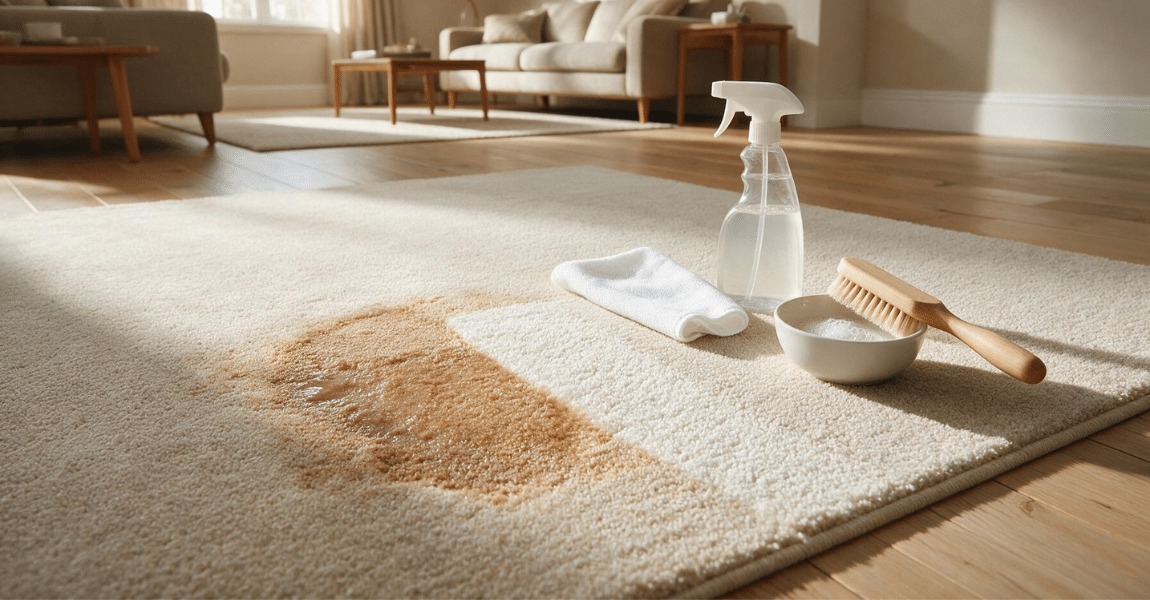
To remove carpet stains, act fast and identify the spill first. Blot it gently with a clean white cloth, working from the outside in so you don’t spread it. Gather carpet cleaner, vinegar, baking soda, and towels, then test any product on a hidden spot. For coffee, tea, or pet messes, use the right cleaner and rinse well. Extract moisture, dry with fans, and prevent stains from setting so you can handle the toughest ones with confidence.
Quick Overview
- Identify the stain source first, because coffee, wine, urine, mud, and grease each need different cleaning methods.
- Blot spills immediately with a clean white cloth, working from the edges inward to avoid spreading the stain.
- Use the right treatment: cold water for blood and coffee, vinegar or club soda for wine, and enzyme cleaner for pet urine.
- Test any carpet cleaner on a hidden area first, then rinse thoroughly and let the carpet dry completely.
- Speed drying with towels, fans, and a dehumidifier, and prevent future stains with mats, runners, and regular carpet care.
Carpet Stain Removal Chart
| Stain | Stain Type | Best First Treatment | Never Use |
|---|---|---|---|
| Coffee / tea | Tannin | Cold water blot, then vinegar rinse (1:3 vinegar to water) | Hot water, scrubbing |
| Red wine | Tannin / dye | Salt or club soda, then dish soap + vinegar mix | Heat, rubbing |
| Pet urine | Protein | Blot, then enzyme cleaner with 5–10 minute dwell time | Steam or heat, ammonia |
| Blood | Protein | Cold water only, then mild dish soap | Warm or hot water |
| Grease / oil | Oil-based | Baking soda or cornstarch, then grease-cutting dish soap | Flushing with water first |
| Ink | Dye / solvent | Rubbing alcohol applied to a cloth, blot gently | Pouring alcohol directly, rubbing |
| Chocolate | Combination | Scrape solids, cold water flush, then dish soap | Hot water |
| Gum / wax | Solid | Freeze with ice, then scrape with a dull knife | Pulling while warm |
| Mud | Particulate | Let dry completely, vacuum, then dish soap solution | Wet blotting while fresh |
| Vomit | Protein | Scrape solids, cold water, then enzyme cleaner | Heat |
Know Your Stain Type: Tannin, Protein, Oil, and Dye
Every carpet stain falls into one of four chemical categories, and the category determines which cleaner works. Matching the treatment to the stain chemistry is the difference between removing a stain in five minutes and setting it permanently.
Tannin stains come from plant-based liquids like coffee, tea, red wine, beer, and fruit juice. Tannins bind to carpet fibers quickly, which is why these spills darken as they dry. They respond best to mildly acidic solutions – a white vinegar and water rinse breaks the tannin bond. Never use heat on a tannin stain, because heat locks the discoloration in.
Protein stains include blood, pet urine, vomit, dairy, and egg. These are organic stains, and the rule is simple: cold water only. Warm or hot water cooks the proteins into the fibers the same way heat sets egg in a pan. For anything with an odor component, an enzyme cleaner breaks down the proteins and uric acid crystals at the source instead of masking them.
Oil-based stains cover grease, butter, cosmetics, lotion, and motor oil. Water alone spreads these stains rather than lifting them. Start with an absorbent powder like baking soda or cornstarch to pull the oil out of the fibers, then follow with a grease-cutting dish soap solution.
Dye stains are the toughest category: ink, mustard, hair dye, and artificially colored drinks like sports drinks or red fruit punch. These don’t sit on the fiber – they recolor it. Solvents like rubbing alcohol can lift some dye stains, but others permanently alter the carpet’s color and can only be fixed by spot dyeing or patching.
Some spills are combination stains. Chocolate carries both grease and sugar, and coffee with cream is tannin plus protein. Treat the protein or oil component first with cold water and absorbents, then address the tannin or dye discoloration.
Identify the Carpet Stain
Before you clean a stain, figure out what made it. Ask residents or witnesses what spilled, then check where it happened.
Dining areas often point to food or drink, while entryways suggest mud, grass, or pet messes. Use color clues to identify the carpet stain: brown may mean blood or coffee, yellow can signal mustard or urine, and whitish marks may be milk.
If needed, scan with UV light in a dark room or test moisture and odor. This carpet stain guide helps you sort tough carpet stains and choose the right treatment.
When possible, use smell to help identify stains – pet urine, red wine, and milk each have distinct odors that point you to the right treatment.
If you’re unsure what caused the stain or how to treat it, the Carpet and Rug Institute’s Spot Solver tool provides step-by-step removal instructions for hundreds of specific spills.
Blot Carpet Stains Without Rubbing
Blot the stain right away with a clean white cloth or paper towel, pressing gently so the liquid wicks up instead of spreading through the carpet.
Use blotting, not rubbing, because constant contact helps capillary action lift the spill while keeping fibers intact.
Fold the cloth, press from the edges toward the center, and switch to clean sections as they fill.
If needed, apply a carpet stain remover to the towel, then let it sit briefly before you keep blotting.
This carpet spot cleaning method prevents deeper penetration, limits spreading, and helps the stain come out faster.
Plain water can also help neutralize residues from cleaning products, which supports better stain removal.
Gather Carpet Cleaning Supplies
You’ll want to gather the essential cleaning tools first, like a vacuum, microfiber cloths, a broom and dustpan, rubber gloves, and labeled spray bottles.
Next, set out basic cleaning solutions such as carpet cleaner, white vinegar, baking soda, and a spot remover so you’re ready for different stains.
Having everything on hand helps you work faster and tackle the stain before it sets.
Essential Cleaning Tools
Start by gathering the right carpet cleaning tools so you can treat stains quickly and effectively. You’ll want a vacuum cleaner with strong suction and an adjustable beater bar to remove loose dirt, dust, and pet hair before you remove carpet stains.
For a wine stain carpet or pet stain carpet, a spot extractor helps you target fibers with high pressure and reliable suction. A carpet rake groomer loosens trapped debris and lifts fibers for better reach.
If you’re tackling old, deep stains, a hot-water extraction machine can help. An air scrubber also clears lingering airborne particles after cleaning. Defoamer can help reduce excess foam during cleaning and speed up drying time.
Basic Cleaning Solutions
Before you tackle a stain, gather a few carpet cleaning supplies so you can match the solution to the mess.
Keep a store-bought cleaner on hand for deep stains, high-traffic spots, or pet odors, and choose low-scent formulas if kids are around. Look for products with the CRI Seal of Approval, which certifies that a cleaner removes stains effectively without damaging carpet or causing rapid resoiling.
For DIY care, mix 1 cup distilled water, 1 cup white vinegar, and 1 tsp dish soap for spot cleaning.
Use hydrogen peroxide blends for organic stains, but test first.
You can also try Oxiclean mixes or baking soda with vinegar for fresh spills, grease, and odor control on synthetic or natural fibers. Homemade carpet cleaner solutions can be a cost-effective option, often costing about $1 per gallon while still handling tough stains and pet odors effectively.
Test Cleaner on Hidden Carpet Fibers
How do you know a carpet cleaner is safe? You test it on a hidden fiber first.
Pick a dusty-free spot behind furniture, under a rug, or along a baseboard. Put on a tiny amount of cleaner, then follow the label’s dwell time.
Blot or rinse as directed and let it dry fully. After 24 hours, check for color bleed, fading, texture changes, or odd odor.
This quick step protects sensitive fibers, matches the cleaner to your carpet, and helps you avoid permanent damage or an expensive replacement.
Wool and other natural-fiber carpets need extra caution – many common cleaners, including ammonia and high-alkaline solutions, can permanently damage wool. For these carpets, use only pH-neutral products or cleaners certified by The WoolSafe Organisation, which tests products to confirm they won’t cause color loss, fiber damage, or rapid resoiling on wool.
Carpet Fiber Matters: Nylon, Polyester, Wool, and Olefin
The same stain behaves differently on different carpet fibers, and a cleaner that’s safe on one can permanently damage another. Before you treat any stain, know what your carpet is made of – check the installation paperwork, a leftover remnant, or the manufacturer’s label on a corner pulled back in a closet.
Nylon is the most common residential carpet fiber and the most resilient. Most nylon is acid-dyed, which means it’s vulnerable to strong dyes (red drink stains are notorious on nylon) and to bleach, which strips its color on contact. Most modern nylon carpet ships with a stain-resistant treatment such as Scotchgard or R2X that blocks spills from reaching the dye sites — but harsh alkaline cleaners and hot water extraction above roughly 150°F can degrade that treatment over time.
Polyester (PET) is usually solution-dyed, meaning the color runs all the way through the fiber like a carrot rather than coating it like a radish. That makes polyester naturally resistant to most water-based stains and even bleach. Its weakness is oil: polyester is oleophilic, so grease, body oils, and cosmetics bond to it aggressively and are harder to remove than on nylon.
Wool is the premium natural fiber and the most sensitive to cleaning chemistry. Never use ammonia, chlorine bleach, hydrogen peroxide in strong concentrations, or high-alkaline cleaners on wool — they cause fiber damage, yellowing, and dye loss. Stick to cold water, minimal moisture, and pH-neutral or WoolSafe-approved products, and let wool dry quickly to prevent browning.
Olefin (polypropylene) is common in berber and indoor-outdoor carpet. Like polyester, it’s solution-dyed and nearly stain-proof against water-based spills – but it wicks oils badly and has a low melt point, so avoid aggressive scrubbing friction and high heat.
Triexta (sold as SmartStrand) is the newest major fiber, with permanent built-in stain resistance that isn’t a topical treatment and can’t wash off. It handles most household stains with water and mild soap alone – but never use acetone on triexta, and skip solvent-heavy products unless the manufacturer approves them.
Remove Coffee and Tea Stains
When you spill coffee or tea, blot it right away with a clean cloth or paper towel to pull up as much liquid as you can.
Then rinse the spot with cold water and keep blotting instead of scrubbing so you don’t push the stain deeper.
If needed, use a vinegar rinse to help break down the remaining stain and lift it from the carpet. Coffee and tea are both tannin stains, which is why the acidic vinegar rinse below works – see the stain type guide above for how tannins bond to carpet fibers.
Coffee And Tea Blotting
A fresh coffee or tea spill needs quick blotting to keep the stain from sinking deeper into the carpet.
Press a paper towel or clean cloth onto the area right away, working from the edges toward the center. Don’t rub, or you’ll drive the liquid deeper into the fibers.
If the spill is still fresh, dampen the cloth with cold water and keep blotting. Swap in a dry section or new towel whenever it gets saturated, so you keep lifting more stain instead of spreading it.
Then move on to the next cleaning step. Quick action helps prevent the stain from setting.
Vinegar Rinse Method
For stubborn coffee or tea stains, a vinegar rinse can help lift the discoloration without harming most carpets.
First, blot any leftover moisture, vacuum loose debris, and test a mix of 1/3 cup white vinegar with 2/3 cup water in a hidden spot.
Spray it lightly on the stain, let it sit 15 minutes, then blot from the edges inward. Don’t rub.
Next, rinse with warm water plus a little dish soap to remove residue. Blot dry, cover with absorbent towels, and let it air-dry completely.
Use only white vinegar to avoid added discoloration. Blot the stain immediately and always use a clean cloth for best results.
Remove Red Wine From Carpet
Spilled red wine on carpet? Blot it right away with a clean, dry white cloth or paper towels, and don’t rub.
Use cold water to dilute the stain, but don’t soak the fibers. Sprinkle salt or cornstarch over the spill, or spread a baking soda paste; let it dry, then vacuum.
You can also pour club soda on the spot and blot until the color fades.
For stubborn stains, spray a mix of dish soap, white vinegar, and water, then blot. If needed, use a peroxide-soap solution carefully.
Cold water helps lift the stain and can keep it from setting into the carpet.
Treat Pet Urine Stains and Odors
If you catch pet urine right away, blot it with thick paper towels or newspaper until the area is barely damp.
Then rinse it with cool water and blot again.
Once you’ve absorbed as much as you can, use an enzyme cleaner made for pet urine so it can break down the odor-causing compounds.
Let the cleaner sit long enough to work, and repeat if any stain or smell remains. For older messes, use a black light to spot hidden soiling before cleaning.
Pet Urine Blotting
Act quickly when you find pet urine on carpet, because blotting it right away helps lift the liquid before it sinks deeper into the fibers and padding.
Use paper towels, clean rags, or a microfiber cloth and press firmly, then replace wet materials with dry ones. Keep blotting until no more moisture transfers.
Don’t rub or scrub; you’ll push urine deeper, spread the stain, and trap odor.
If the spot’s fresh, cover it with towels and stand on them. Then lightly re-wet with cool water and blot again, extending treatment two inches past the visible stain.
Enzyme Odor Removal
Enzyme cleaners can take pet urine odors down at the source by breaking apart the proteins and uric acid crystals that cause the smell, instead of just covering them up. You spray the stain until it’s saturated, give it 5 to 10 minutes of dwell time, and let the enzymes and bacteria work. They’re great on carpet, upholstery, bedding, and hard floors.
- Don’t scrub hard; you’ll stop the enzymes from working.
- Reapply if the spot still smells after drying.
- Test a hidden area first, then vacuum any residue.
They help prevent re-soiling and leave a light citrus scent.
Lift Grease and Oil Stains
Sprinkle baking soda, cornstarch, talcum powder, or flour generously over the grease stain to absorb as much oil as possible.
Then work it gently into the carpet fibers with a spoon or soft brush. Let it sit 15 to 60 minutes, longer for deep spots, then vacuum away clumps.
If oil remains, spray a mix of ½ to 1 teaspoon grease-cutting dish soap and 2 cups warm water, agitate lightly, and blot with a white towel.
Rinse with plain water, then blot dry. For stubborn stains, use diluted ammonia or vinegar carefully.
Get Ink Out of Carpet
When ink lands on carpet, move fast: blot the spill gently with a clean white cloth or paper towel, and don’t rub, since that can push it deeper into the fibers.
If the spot is solid, scrape off excess first. Test any solvent on a hidden area.
- Use rubbing alcohol, hairspray, or ethanol for ballpoint and general pen ink.
- Clean washable marker or rollerball ink with dish soap and lukewarm water.
- Treat printer ink with cold water first, then alcohol and soap; for felt-tip stains, use an enzyme product.
Keep blotting from the edges inward, then rinse and fluff.
Clean Blood and Chocolate Stains
You should blot blood stains right away with a clean white cloth and cold water so you don’t spread the mess or set the stain.
For chocolate spots, lift away any excess first, then treat the area with a gentle cleaning solution and blot from the outside in.
After that, rinse with cold water and dry the carpet thoroughly, repeating the process if the stain’s still there.
Blood Stain Blotting
Start with blood stains immediately: blot up any excess with a dry white cloth or paper towel, then dab the area with cold water only, since warm water can set the proteins into the carpet fibers.
Keep pressing gently with a clean cloth, and work from the outside toward the center so you don’t spread the stain. Repeat until no color transfers.
- Use a mist bottle if the spot starts drying.
- For dried blood, moisten it first and let it sit briefly.
- Never scrub; you’ll push the stain deeper and fray fibers.
Chocolate Spot Treatment
Chocolate stains need a different approach than blood, especially because they can leave behind both grease and sugar.
First, you’ll gently scrape off any solid chocolate with a butter knife or plastic spoon, taking care not to scrub it deeper into the fibers.
Then flush the spot with cold water from the back if you can, and blot, don’t rub.
Next, apply a mild dish soap solution with a clean cloth, working from the outside in.
Let it sit five to ten minutes, blot again, and repeat if needed.
For stubborn marks, try vinegar, ammonia, or an enzyme cleaner.
Rinse And Dry
Once the stain has been treated, rinse the area by blotting it with a clean cloth dampened in plain cold water to lift away any cleaner and leftover residue.
For blood, keep using cold water, and if the spot’s dried, soften it first with a damp cloth.
For chocolate, rinse after the cleaner sits, then blot gently from the edges inward.
- Blot, don’t rub, so you don’t spread the stain.
- Press paper towels on the spot if moisture lingers overnight.
- Open a window or use a fan, then vacuum the dry carpet to fluff the fibers.
Remove Gum, Wax, and Sticky Messes
Gum, wax, and other sticky messes come off carpet best when you tackle them gently and in stages.
Start by freezing gum with an ice pack or cube in a plastic bag for 1-2 minutes, then scrape it with a spoon, dull knife, fork, or blunt spatula. Pull along the fibers, and remove pieces right away. Vacuum residue after.
For stubborn spots, soften the mess with heat, or use WD-40, Goo Gone wipes, or a gel solvent. Work slowly, blot or wipe away residue, and repeat until the carpet’s fibers are clean again.
Other Common Stains: Mud, Grass, Makeup, and Slime
Mud and dirt. Mud is the one stain where waiting is the right move. Let it dry completely – blotting wet mud pushes particles deeper into the pile. Once dry, vacuum thoroughly from several directions, then treat any remaining mark with a dish soap and water solution, blotting from the outside in.
Grass. Grass stains are a dye-protein combination. Blot with cold water first, then apply a mix of one tablespoon dish soap in two cups cool water. If green discoloration remains on synthetic carpet, dab with rubbing alcohol on a cloth – test a hidden spot first.
Makeup, foundation, and lipstick. These are oil-based. Scrape off any excess with a dull knife, then blot with rubbing alcohol on a white cloth for lipstick and mascara, or a grease-cutting dish soap solution for liquid foundation. Work in small strokes and swap cloth sections often so you don’t re-deposit pigment.
Nail polish. Use non-acetone polish remover on a white cloth and blot — never pour it on. Acetone can dissolve carpet backing, damage triexta fibers, and delaminate some carpet adhesives. Test first, work slowly, and finish with a dish soap rinse.
Slime and putty. Freeze what you can with ice cubes in a bag and scrape off the hardened pieces. For the residue, white vinegar is the fix – saturate lightly, let it sit five minutes, and the slime loosens enough to blot away. Vacuum once fully dry to restore the pile.
Rust. Rust needs acid: apply lemon juice or white vinegar, let it sit ten minutes, and blot. Never use chlorine bleach on rust — it makes the stain permanent. Deep rust marks from furniture feet may need a commercial rust remover rated for carpet.
Crayon and marker. Freeze and scrape crayon like gum, then cover residue with a paper towel and apply a warm (not hot) iron briefly so the towel absorbs the wax. Washable marker lifts with dish soap and water; permanent marker needs rubbing alcohol blotted patiently — and may not fully come out.
Mix Homemade Carpet Cleaners
Before you scrub, mix the right homemade cleaner for the stain type: for a general carpet cleaner, combine 1 cup white vinegar with 2 cups warm water, 2 tsp mild dish soap, and 5 to 10 drops of essential oil if you want a fresh scent; for grease, use 4 tbsp baking soda, 2 tsp dish soap, and 2 cups hot water; for organic stains, try 1 cup 3% hydrogen peroxide with 2 tsp dish soap and 2 tsp baking soda.
Stir gently, then test first.
- Use a hidden spot to check colorfastness.
- Keep a spray bottle ready for quick touch-ups.
Let the mix sit 5 minutes, then blot.
Use OxiClean or Hot Water Extraction
If your homemade mix doesn’t fully lift the stain, step up to OxiClean or hot water extraction for a deeper clean.
First, test an inconspicuous spot for colorfastness, and skip wool, silk, or leather.
For a spray method, remove solids, blot moisture, spray OxiClean to saturate the carpet and pad, wait 10 minutes, then blot with a clean white cloth.
For a steam cleaner, add one scoop of real OxiClean per hot water fill. Most home “steam cleaners” are technically hot water extractors – true steam vapor is rarely used on carpet.
After drying, vacuum the area and repeat if needed.
Use plain water or a mild soap rinse for stubborn residue.
How to Remove Old, Set-In Carpet Stains
Old carpet stains are harder because the spill has dried, bonded to the fibers, and often been ground in by foot traffic – but most set-in stains can still be lifted with patience and the right sequence.
Start by rehydrating the stain. Dried stains resist cleaners, so mist the spot with warm water (cold water if you suspect a protein stain like blood) and let it sit for five minutes to soften before treating.
Next, apply a solution matched to the stain type: dish soap and warm water for general grime, a vinegar rinse for tannins, or an enzyme cleaner for old pet accidents – enzymes still work on dried urine and are the only fix for the uric acid crystals causing lingering odor.
For stubborn organic stains like old coffee, wine, or blood on synthetic carpet, use the hydrogen peroxide method: apply 3% hydrogen peroxide to the spot, let it sit 10 to 15 minutes, then blot. Test in a hidden area first, and never use peroxide on wool or dark carpet without testing, since it can lighten fibers.
If discoloration remains, make a baking soda and vinegar paste, work it gently into the fibers, let it dry completely, and vacuum. Repeat the cycle – many old stains come out on the second or third pass, not the first.
Your last DIY step is hot water extraction, which flushes deep residue that surface treatments can’t reach. Skip straight to a professional if the carpet is wool, silk, or antique.
Finally, know when a stain is permanent. Bleach spots, hair dye, and some red drink dyes don’t stain the fiber – they chemically change its color. No cleaner reverses that. At that point your options are spot dyeing, patching the area with a remnant, or living with it strategically under a rug.
Treat Stains From the Outside In
To keep a stain from spreading, work from the outside edges toward the center as soon as you start treating it. Use a towel or layered paper towels to blot with gentle wicking, and don’t scrub the carpet fibers.
- Start at the rim, not the middle.
- Guide your cloth or soft brush inward in small strokes.
- Repeat until the towel stops picking up color.
If you’re treating blood, mud, or older spots, dip the cloth in your solution and move edge first. This keeps the stain tight, controlled, and easier to remove without enlarging the mark.
Rinse, Extract, and Blot Dry
Once the stain has been loosened and you’ve worked from the edges inward, rinse away the remaining cleaner so it doesn’t leave a residue.
Lightly mist the spot with plain cold water or a diluted soap rinse, then dab with a clean cloth to lift leftover detergent.
If the stain still feels damp, use a wet/dry vacuum or carpet machine’s wet setting to extract the solution.
After that, press a white towel or paper towels onto the area and blot until you’ve removed as much moisture as possible.
Keep using clean sections of the towel until the carpet looks clear. Thorough extraction prevents wicking – the process where residue deep in the pad travels back up the fibers as the carpet dries, making the stain reappear.
Dry Carpet Faster After Cleaning
After you’ve blotted out the excess moisture, speed up drying by pulling even more water from the carpet with clean towels or a wet/dry vacuum.
Press towels firmly, step on them, and swap in dry ones until they stop soaking up water. If you use a wet/dry vacuum, make slow, overlapping passes so you lift moisture from the pile and backing without stressing fibers.
- Aim fans across the carpet, not straight down.
- Move air movers to damp spots hourly.
- Run a dehumidifier nearby to lower humidity and dry faster.
Prevent Carpet Stains From Setting
Act fast when a spill hits, because the quicker you respond, the less chance it has to set into the carpet fibers.
Blot the area with a clean white cloth instead of rubbing, so you don’t push liquid deeper. Use cold water for blood, coffee, and other stains that can lock in with heat.
Apply a small amount of absorbent cleaner, then rinse thoroughly to stop residue from wicking back up. Vacuum after drying.
In busy areas, use runners, mats, and a no-shoes rule to block dirt, mud, and spills before they settle.
Frequently Asked Questions
How Do I Remove Old Carpet Stains?
You can remove old carpet stains by testing a cleaner, applying dish soap or hydrogen peroxide, blotting, then rinsing. For stubborn spots, use baking soda and vinegar, or an enzyme cleaner, and repeat gently.
Can I Use Club Soda on Carpet Stains?
Yes, you can use club soda on fresh carpet stains. You’ll blot first, pour a little, let the bubbles work, then blot again. It won’t help much with old, set-in stains.
What if the Stain Keeps Returning After Cleaning?
If it keeps returning, you’re likely seeing wicking or residue. You’ll need to blot again with clean water, use less moisture, and extract thoroughly. If it still comes back, you may need professional cleaning.
How Do I Clean Carpet Stains on Delicate Rugs?
You should blot gently with a clean white towel, test a mild solution first, and use minimal moisture. Don’t rub or soak. For delicate rugs, vacuum first, and call a professional if needed.
When Should I Call a Professional Carpet Cleaner?
You should call a professional carpet cleaner when stains won’t budge, odors linger, allergies flare, traffic areas look worn, or it’s been over a year since cleaning. They’ll protect your carpet and restore freshness.
Conclusion
You can tackle carpet stains faster when you act right away and use the right method for the spill. Start by identifying the stain, blotting gently, and testing any cleaner first. Then work from the outside in, rinse well, and extract as much moisture as you can. Finish by drying the area quickly to prevent new damage. With these simple steps, you’ll keep your carpet looking cleaner and stop stains from setting for good.